Abbas Delays Palestinian Elections, Raising New Questions for Washington
The vote is now set for September 2027 as Israel accuses the Palestinian Authority leader of avoiding accountability.
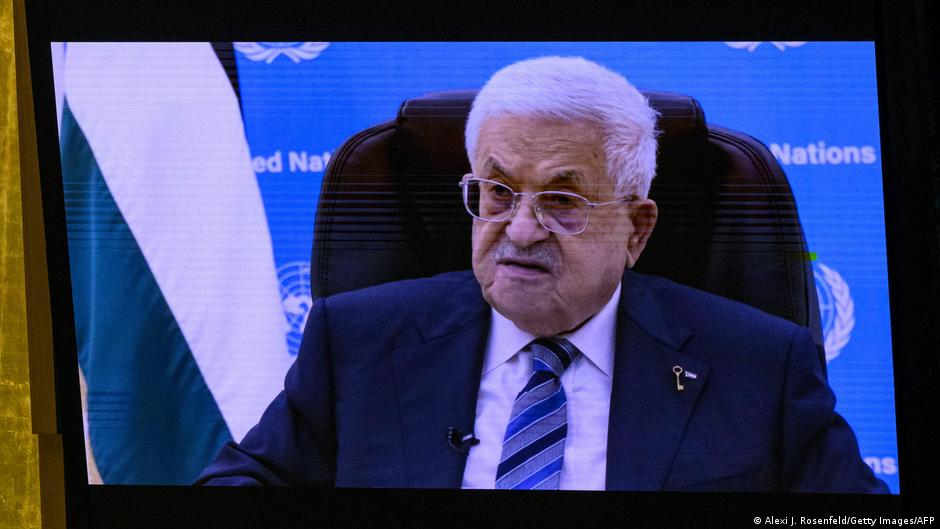
Palestinian Authority President Mahmoud Abbas has postponed long-awaited elections in the Palestinian territories from late November to September 11, 2027, according to the WAFA news agency, a decision that adds a fresh complication for Washington as it tries to move a Gaza ceasefire plan toward a more durable political settlement.
The decree delays both parliamentary and presidential votes, which are now scheduled to take place on the same day. The elections would be the first nationwide Palestinian vote in more than two decades, according to dpa. For the United States, the delay lands directly in the middle of a policy problem that has long shadowed American diplomacy in the region: how to support a postwar governance framework for Gaza while the Palestinian Authority faces persistent questions over democratic legitimacy, internal cohesion and its ability to assume control.
WAFA cited Israeli military restrictions, the expansion of Jewish settlements, attacks by armed settlers and limits on freedom of movement as reasons for delaying elections in the West Bank, East Jerusalem and the Gaza Strip. In Gaza, the agency also pointed to an unstable security environment and the postponed deployment of international security forces.
Israeli Foreign Minister Gideon Saar accused Abbas of misleading the international community and making false claims that Israel had created obstacles to voting.
Saar said the 90-year-old Abbas was trying to evade responsibility and accountability. Criticism of the postponement also came from within Fatah, the Palestinian national liberation movement to which Abbas belongs, underscoring that the move is not only a dispute between Israeli and Palestinian officials but also a source of friction inside the Palestinian political establishment.
Washington’s Stake in Palestinian Governance
The postponement is likely to matter in Washington because the United States has been central to the ceasefire framework that followed the Gaza war. In October 2025, Israeli authorities and Hamas agreed to a ceasefire under a peace plan developed by the administration of President Donald Trump. The United States, Turkey, Qatar and Egypt acted as guarantors of the arrangements between Israel and Hamas.
During the first phase of that agreement, Hamas returned all remaining living Israeli hostages in exchange for the release of Palestinian prisoners from Israeli jails. The hostage issue had been one of the most politically sensitive elements of the conflict for both Israeli leaders and U.S. policymakers, and its resolution under the first phase gave Washington a stake in keeping the broader framework alive.
In mid-January, the White House said the second phase of Trump’s plan to end hostilities in Gaza had begun. Under that stage, a National Committee was expected to take over administration of the region until the Palestinian Authority was ready to assume that task. Abbas’s decision to push elections into 2027 therefore raises a direct question for U.S. officials: whether the PA can credibly be presented as a future governing authority while national elections remain delayed.
For American companies, the immediate commercial exposure is less direct than the political risk. U.S. firms with interests in regional logistics, energy, construction, security technology, telecoms, humanitarian contracting and infrastructure planning are watching whether the ceasefire framework can hold and whether a stable administrative structure emerges in Gaza. Delayed elections do not by themselves change the terms of the ceasefire, but they may make the political environment harder to read and could slow decisions tied to reconstruction, aid delivery and future investment.
The Palestinian territories have not held nationwide elections for more than two decades, and that absence has shaped how foreign governments, donors and investors assess institutional risk. Earlier this year, in April, the city of Deir al-Balah in the Gaza Strip held its first municipal elections in 20 years. Candidates on most electoral lists were close to Fatah or ran as independents. That local vote did not resolve the larger question of national representation, but it showed the continuing sensitivity around electoral politics in Gaza.
A Conflict Still Defining the Political Calendar
The regional context remains the war that erupted after October 7, 2023, when Hamas, designated as a terrorist organization by the United States and the European Union, launched a large-scale attack on Israel. Militants fired a mass rocket barrage, crossed into Israeli territory and carried out the deadliest massacre of civilians in the history of the modern Israeli state, killing about 1,200 people.
Hamas militants also seized about 250 hostages and took them to the Gaza Strip. Some hostages were later exchanged or released, while others died. Israel responded by declaring war on Hamas.
That sequence still frames U.S. policy choices. Washington is seeking to support Israel’s security, sustain Arab and regional guarantees around the ceasefire, and advance a mechanism for Gaza’s administration that does not return Hamas to power. The PA has been part of that discussion because the Trump plan envisions a transition in which a National Committee manages Gaza until the Palestinian Authority is ready to take over.
The election delay makes that transition more politically delicate. Abbas’s office points to security restrictions, settlement growth, settler violence, movement limits and Gaza’s instability as reasons voting cannot proceed as originally planned. Israel’s foreign minister says those explanations are false and that Abbas is avoiding accountability. The gap between those accounts will give U.S. officials another dispute to manage as they try to preserve the ceasefire architecture.
For Washington, the bottom-line issue is whether political uncertainty inside the Palestinian system will weaken the next stage of the Gaza plan. For U.S. businesses, the concern is practical: instability, delayed governance arrangements and contested legitimacy can slow reconstruction planning, complicate contracts and increase the risk attached to any future commercial engagement tied to Gaza or the wider region.