Ukraine Says Starshield Speed Limits Persist Despite Trump’s Claim
Zelensky says SpaceX has not restored full satellite speeds, raising questions in Washington about wartime communications and US commitments.
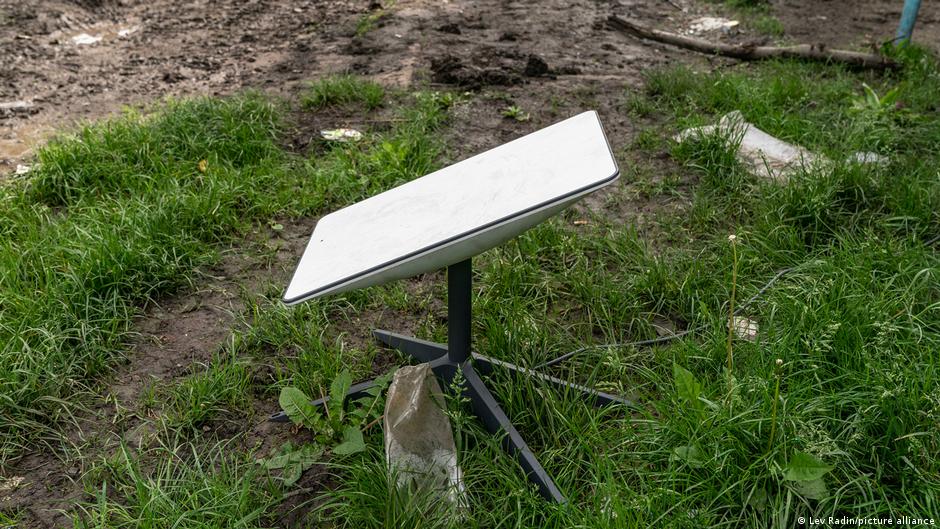
Ukrainian President Volodymyr Zelensky said speed restrictions affecting the country’s Starshield satellite communications service remain in place, contradicting US President Donald Trump’s statement that SpaceX had restored full Starlink operations in Ukraine.
Speaking by video link to the Hudson Institute, a conservative US think tank, on Friday, Oct. 23, Zelensky gave a direct assessment of the service used by Ukraine under Starshield, the military package of SpaceX’s Starlink satellite communications system.
“The speed has not been restored,” Zelensky said.
The dispute puts an American technology company and the Trump administration at the center of renewed questions about Ukraine’s access to critical battlefield infrastructure. It also carries implications for Washington because the performance of a privately operated US satellite network is closely connected to the effectiveness of Ukrainian military operations.
SpaceX Algorithms or an End to Restrictions
Zelensky adviser Serhiy Beskrestnov said connection speeds could, in individual cases, rise slightly above the imposed limit. He cautioned, however, that those instances might reflect the operation of SpaceX algorithms or particular conditions of use rather than the removal of the restriction itself.
Trump said a day earlier that SpaceX, the US company founded by Elon Musk, had restored Ukraine’s full access to Starlink. He did not answer a question about who had ordered the restrictions, which had been observed in Ukraine since Oct. 14, to be lifted.
Both Trump and Musk had previously denied that either of them instructed anyone to slow Starlink service. The latest Ukrainian statements leave a factual gap between the White House’s public account and the conditions reported by officials in Kyiv.
For US policymakers, that gap raises practical questions about how decisions affecting commercially supplied military communications are verified and communicated. It also highlights the consequences for American companies whose products become embedded in wartime operations, where changes in service can carry strategic effects beyond an ordinary commercial relationship.
Battlefield and Business Stakes
The Ukrainian military uses Starshield in part to guide unmanned aerial vehicles during attacks on targets in territories occupied by Russia in the course of its war against Ukraine. Zelensky has previously said Starlink disruptions slow frontline logistics and restrict drone operations.
Those effects make network performance a bottom-line operational issue for Ukraine and a reputational issue for SpaceX. The company’s service is not merely supporting routine connectivity in this setting; according to Ukrainian officials, interruptions affect the movement of supplies and the use of drones on the battlefield.
The disagreement also underscores a broader Washington concern: the extent to which essential capabilities supplied by American businesses align with stated US policy. Trump’s assertion that full access had returned suggested the immediate problem was resolved, while Zelensky’s account indicates that the relevant speed cap remained active.
Beskrestnov’s explanation adds technical uncertainty. Connections exceeding the limit in some circumstances do not necessarily demonstrate that SpaceX has changed its policy or system settings. From Kyiv’s perspective, the decisive measure is whether normal speeds have been consistently restored, and Zelensky said they had not.
Zelensky Flags Delayed Interceptors
During the same Hudson Institute appearance, Zelensky said deliveries of interceptor missiles intended to defend Ukrainian territory against Russian ballistic missiles were delayed. He said Ukraine was still waiting for interceptors that had already been agreed upon.
“We are waiting for interceptors that were already agreed upon. But they still have not arrived. This is a real problem because the Russians attack us almost every day,” Zelensky said.
The statement adds another element to the pressure on Washington over the reliability and timing of support for Ukraine. Satellite communications and missile defense serve different battlefield purposes, but Zelensky presented both as unresolved constraints while Russian attacks continue.
The interceptor delay may attract particular attention among US officials and defense businesses because Zelensky described the expected weapons as already agreed upon, rather than as the subject of a new request. He did not provide a delivery schedule or specify quantities in the remarks included in the source account.
Zelensky nevertheless said the Ukrainian military continued to hold its defenses. “I am proud of how strong our people are,” he added.
For the Trump administration, the competing accounts over Starshield leave a clear test: whether the restoration announced by the president can be confirmed in the service experienced by Ukraine. For SpaceX, the episode places renewed scrutiny on the operation of a US-built network that Ukrainian forces say directly affects frontline logistics and drone use.