AfD Victory in Saxony-Anhalt Raises New Risks for Berlin and Business
The far-right party’s strong state election win leaves coalition math uncertain and highlights pressure points for Germany’s economy and U.S. firms.
The far-right Alternative for Germany won a decisive first-place finish in the eastern German state of Saxony-Anhalt, according to preliminary official results, creating a political puzzle with implications that reach beyond regional government formation and into Berlin’s broader business climate.
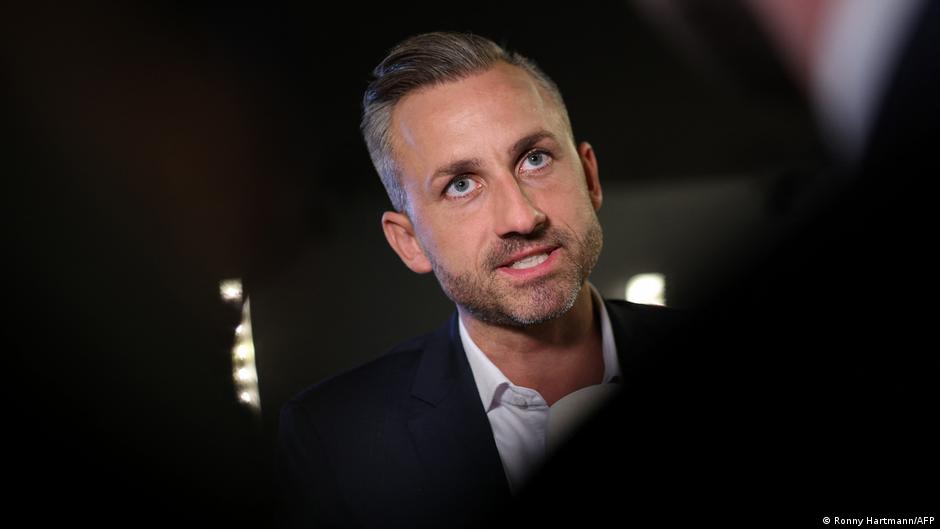
In the Sept. 6 election for the state parliament, the AfD took 43.8 percent of the vote after ballots from all polling stations were counted, according to results released overnight into Sunday, Sept. 7. The party’s candidate for state premier is 35-year-old Ulrich Siegmund, and AfD co-chair Tino Chrupalla has already said Siegmund will put himself forward for the post.
The result marks a major setback for the Christian Democratic Union, the party of incumbent state premier Sven Schulze. The CDU won 17.2 percent, nearly half its result from the previous election. The Social Democratic Party received 9.3 percent, the Greens 8.9 percent, and the Left Party 8.6 percent. The Sahra Wagenknecht Alliance, known as BSW, entered the parliament with 5.3 percent. The Free Democratic Party and other parties failed to clear the 5 percent threshold. Turnout was 77.8 percent.
On those figures, the 83 seats in the Saxony-Anhalt parliament would be distributed as follows: 39 for the AfD, 15 for the CDU, eight each for the Left Party, Greens and SPD, and five for BSW. The numbers leave the AfD just short of an outright majority, but make any governing arrangement without it difficult and politically fragile.
A State Vote With National Consequences
For Washington and U.S. companies watching Germany, the election adds to evidence that Europe’s largest economy is facing deeper political fragmentation at a time when transatlantic policy coordination is already under pressure. Germany remains central to U.S. strategy on sanctions, energy security, defense, industrial policy and supply chains. A regional election does not set federal policy by itself, but the scale of the AfD’s win is likely to sharpen debate in Berlin over migration, Russia policy, energy costs and the economic anxieties that are feeding voter backlash.
The business impact is not confined to Saxony-Anhalt. American companies with manufacturing, logistics, automotive, chemical, technology or energy exposure in Germany rely on regulatory predictability, stable coalitions and alignment between state and federal authorities. A protracted coalition fight in an eastern state would add another layer of uncertainty to an already complex operating environment marked by high energy costs and political strain over sanctions on Russia.
The election also delivered a symbolic blow to Schulze personally. The 47-year-old CDU premier lost not only at state level but also in his own electoral district in Magdeburg. With 31.7 percent, he was defeated by AfD candidate Christian Mertens, who won 35.2 percent. Schulze became state premier at the beginning of 2025, after previously serving as economy minister and as a member of the European Parliament.
The CDU failed to win a single direct mandate. Its candidates lost in all 41 electoral districts. AfD candidates won 38 districts, including Siegmund in Genthin. Only in the major cities of Magdeburg and Halle did the AfD fail to secure a convincing victory. In the 2021 state election, the CDU won direct mandates in 40 of 41 districts, while the AfD won one.
Coalition Math Centers on BSW
The clearest route for the AfD to power would involve the Sahra Wagenknecht Alliance, the only party entering the new parliament that has indicated openness to talks with the far right. Thomas Schulze, BSW’s lead candidate in Saxony-Anhalt, said after the vote that his party was prepared to speak with all parties, including the AfD.
“We stated that we would hold talks with all parties. That includes the AfD,” Thomas Schulze told dpa, adding that BSW was not interested in a “firewall.”
Asked about common ground, Schulze pointed above all to Russia. He said the parties had points of contact on opposition to sanctions, which he said were “literally destroying our economy.” Both parties also advocate what they describe as affordable energy, including renewed oil and gas supplies from Russia.
That position is likely to draw attention in Washington, where German unity on Russia sanctions has been a critical part of the Western response to Moscow. Any regional political force that strengthens calls for easing sanctions or restoring Russian energy flows complicates the backdrop for U.S. policymakers, even if foreign policy remains a federal competence.
Still, BSW has stressed that differences with the AfD remain significant. Thomas Schulze said AfD education policy was entirely incompatible with BSW’s position and that the parties were “very, very far apart” on that issue. He also said BSW takes a much more socially oriented approach on economic policy. The party has proposed a nonpartisan state premier who would govern through shifting majorities involving the AfD.
Siegmund, however, rejected the idea of a nonpartisan premier and said the AfD would not abandon its values or goals for political games. Citing Reuters, he ruled out coalitions that would require major compromises, saying voters should finally receive after elections what they voted for. He said cooperation would be possible only with those who supported the AfD’s demand for a clear change of course in the state, whether through a parliamentary group or individual lawmakers. Chrupalla, speaking on ARD, said the AfD was ready for compromises in talks with other parties, including on migration and economic policy, if they accepted a change of direction.
The outgoing Saxony-Anhalt coalition of the CDU, SPD and FDP suffered a crushing defeat. Apart from BSW, none of the parties entering the new parliament has expressed willingness to join a coalition with the AfD.
That leaves government formation unusually difficult. A possible minority government made up of the CDU, SPD and Greens, with full support from the Left Party, would have 40 seats, just one more than the AfD. In that scenario, BSW lawmakers could become decisive.
But Schulze repeatedly said before the election that he did not want to depend on either the right or the left. Inside the CDU, there is also resistance to any cooperation with the Left Party. If Schulze is nominated again for state premier, defections from his own ranks could become a risk. CDU state lawmaker Eva Feussner has already warned Stern magazine that if there are attempts to cooperate with the left, entire local party branches could leave unanimously.
For U.S. business and policy audiences, the immediate question is not simply who governs Saxony-Anhalt. It is whether this result signals a durable shift in German politics toward parties skeptical of sanctions, hostile to existing migration policy and focused on energy relief through a renewed relationship with Russia. The state’s coalition deadlock may be local, but the strategic signal is national, and Washington will be watching how Berlin responds.