Army Secretary Driscoll to Exit After Clash With Hegseth, Reports Say
Daniel Driscoll has asked President Donald Trump to accept his resignation after months of disputes over military policy and officer dismissals.
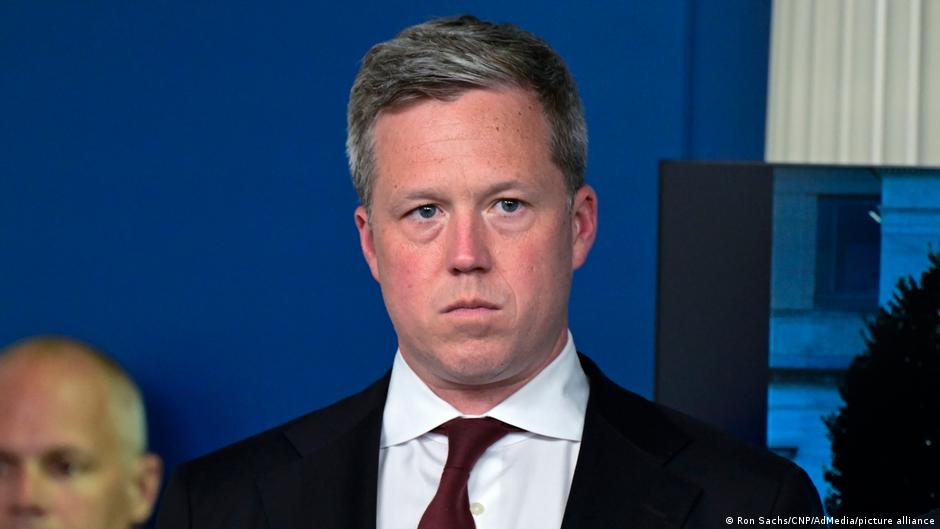
U.S. Army Secretary Daniel Driscoll has asked President Donald Trump to accept his resignation after months of disagreements with Defense Secretary Pete Hegseth over the direction of the armed forces and the dismissal of several officers, according to reports published late Monday by The Wall Street Journal and later carried by Reuters and the Associated Press.
NBC News, citing sources, reported that the White House has accepted Driscoll’s resignation. The Wall Street Journal said Driscoll is expected to leave the Pentagon within days, a departure that would add to a broader reshaping of Pentagon leadership during Trump’s second term.
For Washington, the reported resignation is more than another personnel dispute. It points to continuing friction inside the national security apparatus at a time when the administration is pressing its defense priorities, managing active military operations and signaling a tougher view of internal dissent. For U.S. businesses, especially major defense contractors and suppliers tracking Army procurement, Driscoll’s exit could remove a senior civilian official who had argued for a more flexible acquisition approach and for buying lower-cost weapons.
That stance mattered because Reuters said Driscoll, during his tenure as Army secretary, pushed what it described as a “flexible approach,” backed the purchase of cheaper weapons and criticized large manufacturers. In practical terms, that made him a notable voice in debates over how the Army should balance readiness, firepower and budget discipline. Any leadership change at that level has the potential to alter procurement signals reaching prime contractors, second-tier suppliers and investors watching the defense sector.
Pentagon Turnover Draws Fresh Attention in Washington
The Wall Street Journal had previously reported on August 21 that Driscoll was planning to resign at the end of the year because of his conflict with the defense secretary. Reuters said at the time that his departure would leave the Army without a Senate-confirmed leader while the United States was seeking to end the war against Iran that it had begun alongside Israel nearly six months earlier.
The new reports suggest the timeline has accelerated sharply. If Driscoll leaves in the coming days, the Pentagon would face another abrupt turnover at a sensitive moment for military planning and chain-of-command stability. Reuters framed the move as another step in leadership changes at all levels of the Pentagon during Trump’s second presidential term.
That context is central for political and business audiences alike. Rapid senior-level turnover can complicate budgeting, delay contracting decisions and inject uncertainty into long-range force planning. It also tends to sharpen congressional scrutiny, particularly when the official departing was Senate-confirmed and had a distinct position on procurement and force development.
“Secretary Driscoll effectively advanced President Trump’s ‘Make America Strong Again’ agenda in the Department of the Army,” White House deputy press secretary Anna Kelly said in a statement quoted by The Wall Street Journal and the AP.
According to the same statement, Kelly said Driscoll showed “outstanding leadership” during historic military operations, restored priority to combat readiness and weapons lethality, and contributed to negotiations between Russia and Ukraine, among other areas. The statement praised his work rather than addressing the reported dispute with Hegseth directly.
Even so, the underlying clash described by the reports is significant. The disagreement was said to involve both the future course of U.S. military development and the firing of officers, two issues that go to the heart of civil-military management under the Trump administration. In Washington terms, that combination suggests a conflict not merely of style, but of control, priorities and institutional direction.
Driscoll’s profile also gives his resignation broader political resonance. He is a friend and former classmate of Vice President J.D. Vance, according to the source article. In November 2025, he was appointed as Trump’s new special envoy for Ukraine, replacing Keith Kellogg. That background made him more than a conventional service secretary: he had ties into the administration’s political network as well as a role in a major foreign policy file.
He has served as Army secretary since February 2025. Reuters noted that in that job he advocated the purchase of less expensive weapons and was critical of large producers. For U.S. defense companies, that is a material detail. A successor more closely aligned with Hegseth could reinforce or reverse that pressure, depending on how the Pentagon chooses to define modernization, readiness and industrial policy in the months ahead.
For corporate Washington, the immediate question is not only who comes next, but what the departure says about decision-making inside the administration. A Pentagon leadership team undergoing repeated change can create near-term uncertainty for contractors, lobbyists and investors seeking reliable signals on program priorities. It can also affect the pace at which acquisition reforms are pursued or abandoned.
Politically, the reported resignation gives fresh ammunition to critics who argue that the administration’s defense management has become increasingly centralized and combative. Supporters, by contrast, may view the move as part of a broader effort to align the Pentagon more tightly with Trump’s agenda. Either way, the departure of a Senate-confirmed Army secretary after months of internal conflict is likely to reverberate beyond the Pentagon, with consequences for Capitol Hill oversight, defense procurement and the business climate around U.S. military spending.