Berlin Election Win by The Left Signals New Risks for US Business in Germany
The Left’s first-place finish in Berlin raises coalition questions over housing policy, antisemitism concerns and the investment climate in Germany’s capital.
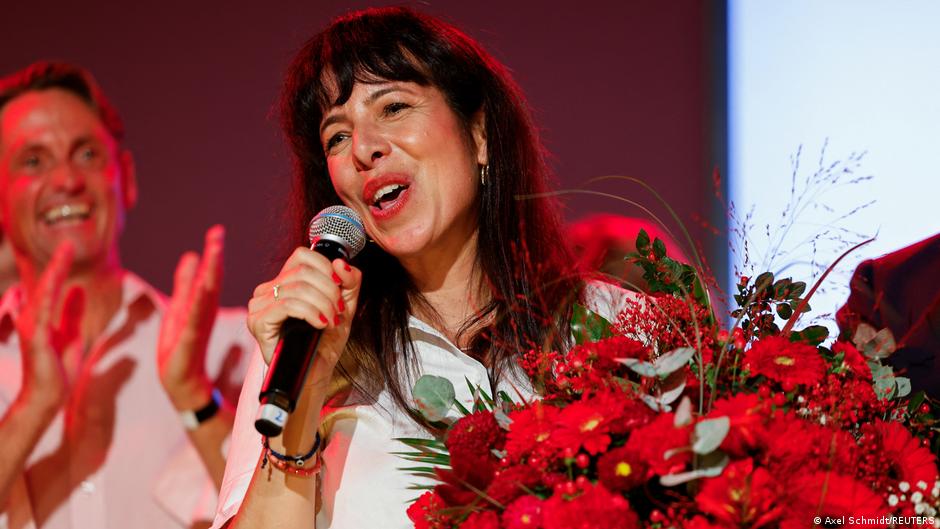
The Left party has won the election to Berlin’s House of Representatives, taking first place in Germany’s capital with 25.7% of the vote, according to official preliminary results released overnight on Monday, September 21. The result marks a gain of 13.5 percentage points compared with the 2023 election and puts the party in a strong position to shape the next city government.
For Washington and US companies with operations in Berlin, the vote is more than a local political upset. Berlin is a major European hub for technology firms, startups, real estate investors, cultural businesses and diplomatic engagement. A possible left-led coalition could bring new pressure on housing policy, corporate landlords and city governance at a time when American investors are already watching Germany’s economy and political fragmentation closely.
The conservative Christian Democratic Union, the party of German Chancellor Friedrich Merz, placed second with 18.8%. The far-right Alternative for Germany came third with 16.3%, followed by the Greens with 14.3% and the Social Democratic Party with 12.1%. The left-populist Sahra Wagenknecht Alliance received 4.7%, while the liberal Free Democratic Party won 2.5%. Both fell below the 5% threshold required to enter Berlin’s parliament.
Based on the preliminary result, The Left will receive 47 seats in the new House of Representatives. The CDU will have 35 seats, the AfD 29, the Greens 26 and the SPD 22. Voter turnout was 74.2%.
Coalition Talks Could Put Housing Policy at the Center
Elif Eralp, The Left’s leader in Berlin, said she expects to become the governing mayor of the German capital. Her party’s likely coalition partners are the Greens and the SPD, though negotiations are expected to be difficult because of disputes over several issues.
“The people of Berlin have given us a clear mandate to lead the city,” Eralp said.
The most significant issue for business may be housing. The Left and the Greens want to implement a decision approved in a 2021 city referendum to expropriate more than 200,000 apartments from large housing companies. The Social Democrats oppose the plan.
That dispute matters well beyond Berlin’s city hall. Any move toward expropriation would be closely watched by American real estate investors, pension funds, property managers and companies whose German operations depend on Berlin’s labor market. Housing affordability is a central political issue in Berlin, but an expropriation push would also raise questions about property rights, regulatory risk and the predictability of investment rules in one of Europe’s most visible capitals.
For US businesses, the bottom-line implications would vary by sector. Real estate investors would face the most direct exposure, especially if the city government moves from political commitment toward legal and administrative implementation. Technology and services firms could see indirect effects through employee housing costs, office-location decisions and the broader business climate. Companies weighing expansion in Berlin may now have to factor in a more complex policy environment.
Political Sensitivities Add Pressure
Another issue likely to shape coalition talks is antisemitism. Eralp has repeatedly stressed that she wants to support and develop Jewish life in Berlin, but The Left has faced criticism from potential coalition partners. Felix Banaszak, co-chair of the Greens, has already described a coalition with The Left as possible, but only if the party demonstrates a clear position against antisemitism.
The matter has particular resonance in Germany and is also relevant to transatlantic politics. Berlin’s handling of antisemitism, Jewish community security and public order is closely watched by international partners, including the United States. A coalition dispute over the issue could complicate early governance and affect the city’s political standing beyond Germany.
The post-election atmosphere was further complicated by reports that Issa Remmo was seen at The Left’s election-night gathering in Berlin’s Neukolln district. German media describe Remmo as the head of the well-known Remmo clan of Arab origin.
The Left has distanced itself from Remmo. Party representatives said the event was open and that anyone could attend. Speaking on ZDF, Eralp said: “We have nothing to do with organized crime.”
Other parties have criticized The Left over the episode. Nina Stahr, head of the Greens’ Neukolln branch, demanded explanations from the potential coalition partner and linked the matter to negotiations on forming Berlin’s next government.
The result leaves Berlin facing a complicated governing puzzle. The Left has the clearest claim to leadership after its first-place finish, but it will need partners to govern. The Greens and SPD are the most likely route to a majority, yet the policy gaps among the three parties are substantial. Housing expropriation, antisemitism concerns and the Remmo controversy could all influence the pace and tone of talks.
For the United States, the immediate takeaway is that Berlin may be entering a period of sharper local intervention in markets, particularly housing, while Germany’s national politics also remain under strain. The CDU’s second-place showing in the capital gives Chancellor Merz’s party a foothold but not control. The AfD’s third-place result underscores the continued strength of the far right in German politics, even in a city long associated with progressive politics.
American companies are unlikely to make abrupt decisions based on preliminary coalition signals alone. But the election creates a new layer of political risk in a city that matters to US investors, employers and policymakers. If The Left leads the next Berlin government and pushes ahead with its housing agenda, the debate over the capital’s economic direction could quickly become a test case watched far beyond Germany.