China Warns US Against Space War Preparations After Weapons Disclosure
Beijing’s warning follows a rare U.S. acknowledgment of orbital systems with defensive and offensive capabilities, raising stakes for defense firms and satellite operators.
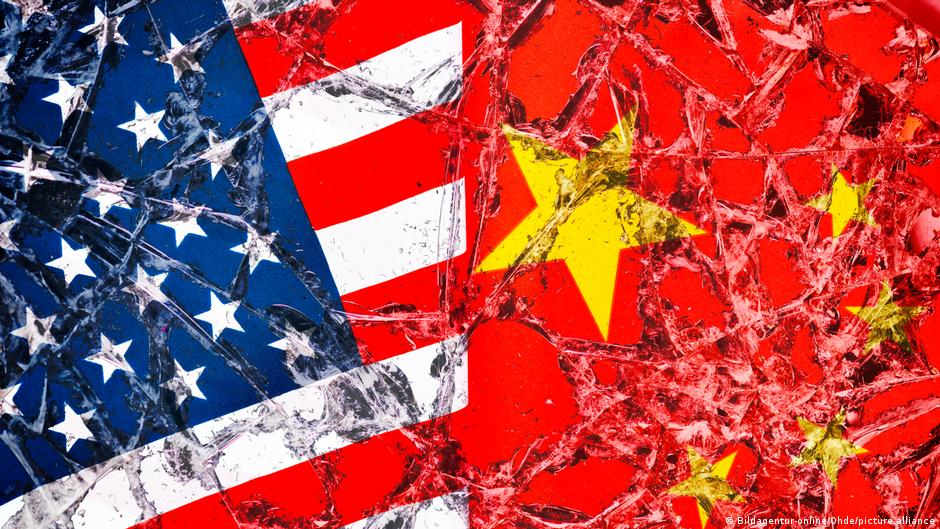
China urged the United States to stop preparing for war in space after Washington for the first time officially confirmed that it has weapons systems deployed in orbit, a disclosure with direct implications for U.S. defense policy, satellite infrastructure and companies that depend on space-based communications, navigation and observation.
The Chinese Foreign Ministry issued the warning on Tuesday, September 15, after the U.S. Space Force confirmed that it possesses orbital assets capable of both defensive and offensive operations. The U.S. statement cited threats in space from China and Russia, placing the announcement squarely inside Washington’s broader competition with Beijing and Moscow over military technology and strategic deterrence.
“We urge the American side to stop building up military capabilities and preparing for war in space,” Chinese Foreign Ministry spokesman Guo Jiakun said at a briefing.
Guo also warned against the “militarization of space,” its transformation into a battlefield and an arms race in outer space. The comments came one day after U.S. Air Force Secretary Troy Meink said on September 14 that the United States has “space control assets located in orbit.” He said those assets, operated by the U.S. Space Force, are capable of protecting a joint force from hostile actions, while offering no details about the weapons themselves.
Washington’s Strategic Shift
For Washington, the acknowledgment marks a significant step in how openly the U.S. government discusses military capabilities in orbit. Space systems are already central to American power projection, supporting communications, missile warning, surveillance, targeting and navigation. The latest statement signals that U.S. officials now see control of space not only as a support function but as a contested military domain.
The Space Force statement said space control includes capabilities “necessary to ensure control over and protection of space” and that such systems may be used for both offensive and defensive purposes. It also referred to the use of kinetic and non-kinetic means, a formulation that can cover a broad range of actions, from physical interference with objects in orbit to electronic, cyber or other disruptive measures.
The statement specifically named China and Russia. It said China is developing and operating space-related capabilities and counterspace defense systems as part of its military modernization strategy. Russia, according to the statement, views space as a theater of military operations and assumes that dominance in space will be a decisive factor in future conflicts.
The political context is especially important in Washington. Donald Trump established the United States Space Force in 2019 during his first presidential term, creating it as a separate branch of the armed forces in response to potential threats from Russia and China. The latest disclosure reinforces the premise behind that decision: that military rivalry among major powers is extending further into orbit.
Business Risks Beyond the Pentagon
For American companies, the bottom-line implications reach well beyond traditional defense contractors. Satellite operators, launch providers, cybersecurity firms, telecom companies, geospatial intelligence businesses and cloud infrastructure providers all sit close to the expanding market for military and dual-use space capabilities. A more explicit U.S. posture on orbital weapons could increase demand for space surveillance, satellite hardening, resilient communications and anti-jamming technologies.
At the same time, it raises risk for commercial firms whose systems may become strategically relevant during conflicts. The war in Ukraine has already underscored the importance of commercial satellite networks in military operations. Russia is suspected of developing weapons against Starlink satellites used by Ukrainian forces, according to the source article’s account of AFP reporting. That concern illustrates how privately operated systems can become part of military planning, even when they are not traditional government platforms.
Current areas of concern include hacking satellites and interfering with their operations. Such threats matter to U.S. businesses because commercial satellite services increasingly underpin logistics, energy operations, financial timing systems, agriculture, aviation, shipping and emergency response. Any escalation in space competition could therefore translate into higher compliance costs, insurance concerns, procurement shifts and pressure to build more resilient systems.
The legal framework remains uneven. In 1967, the Outer Space Treaty banned the placement of nuclear weapons in space. The United States, Russia and China are among the treaty’s participants. The agreement requires space exploration to be conducted for “peaceful purposes,” but it does not cover conventional weapons placed on satellites or spacecraft. That gap is now becoming more consequential as major powers study options outside the treaty’s limits.
According to AFP, Russia, the United States, China and India are examining ways to operate beyond the treaty framework, including by striking adversaries’ satellites that play key roles in military communications, observation and navigation. For U.S. policymakers, that creates a difficult balance: deterring attacks on American and allied space assets while avoiding moves that accelerate the arms race Beijing says it opposes.
The immediate diplomatic result is a sharpened exchange between Washington and Beijing. The longer-term consequence may be a new phase of defense spending and industrial planning, with orbit treated as an arena where U.S. strategic advantage, commercial infrastructure and national security are increasingly intertwined.



