Dodik Allies Win Bosnia Vote, Testing U.S. Policy in a Fragile Balkan State
Preliminary results show ruling-party candidates prevailing in Bosnia and Herzegovina, reinforcing pro-Dodik forces in Republika Srpska.
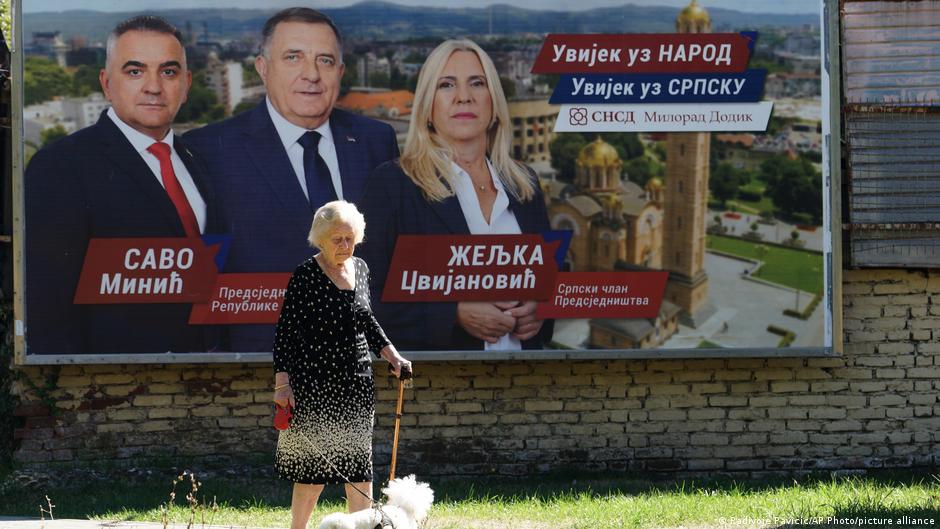
Ruling-party candidates and political allies of Milorad Dodik, the former president of Republika Srpska known for his close ties to Russia, emerged as the winners in Bosnia and Herzegovina’s latest elections, according to preliminary results released by the country’s Central Election Commission on Sunday evening, October 4.
The outcome matters beyond Bosnia’s borders. For Washington, the vote reinforces a familiar challenge in the Western Balkans: how to manage a fragile postwar political system while Russia-friendly leaders retain influence inside institutions shaped by U.S.-backed diplomacy. For American companies, especially those watching infrastructure, energy, finance, and compliance risk in Southeast Europe, the result signals continuity rather than a political reset.
Savo Minic, the prime minister of Republika Srpska, won the race for president of the region. He was backed by Dodik, whose party, the Alliance of Independent Social Democrats, or SNSD, remains the dominant force among Bosnian Serbs. Dodik’s ally Zeljka Cvijanovic also secured support for another term in Bosnia and Herzegovina’s tripartite presidency, according to preliminary figures.
Ruling Parties Hold Their Ground
The elections covered members of the state presidency, the central parliament, two regional parliaments, and the presidency of Republika Srpska, the predominantly Serb entity within Bosnia and Herzegovina. The vote produced few surprises. Based on the preliminary results published by the Central Election Commission, candidates from ruling parties prevailed across key contests.
With 95% of ballots counted, Denis Becirovic, who had previously served as chairman of the presidency, remained the leading candidate to represent Bosnian Muslims in the presidency. He received around 38% of the vote. Darijana Filipovic was preliminarily set to represent Croats in the presidency with about 48% of the vote. Cvijanovic, who had also previously served in the presidency, won support from Serb voters with about 55%.
Bosnia and Herzegovina has one of Europe’s most complex executive systems. The duties of head of state are shared by three presidency members: one representing Croats, one representing Bosnian Muslims, and one representing Serbs. The arrangement was created under the 1995 Dayton Accords, which were negotiated to settle disputes among Bosnian Muslims, Orthodox Serbs, and Catholic Croats and brought the civil war to an end. Many analysts consider the resulting system inefficient.
For Washington, the preliminary results point less to a sudden shift than to the durability of the political structures that have long complicated U.S. policy in Bosnia.
The most closely watched race was the presidency of Republika Srpska. In that contest, Minic faced opposition candidate Branko Blanusa. Preliminary results showed Minic ahead in most electoral districts in Republika Srpska. Blanusa won some districts, but according to Central Election Commission data, those gains did not change the overall outcome.
Dodik’s Influence Persists Despite Ban
Minic and Cvijanovic both ran as candidates of SNSD, the party founded by Dodik, a former president of Republika Srpska. In 2025, Dodik was forcibly removed from office for failing to comply with decisions of Bosnia and Herzegovina’s Constitutional Court and with international agreements.
Despite that removal, Dodik’s political network remains central to Bosnian Serb politics. According to the Central Election Commission, SNSD is also winning elections to the Republika Srpska parliament, known as the National Assembly. Most Bosnian Serb voters also backed the party in elections to the lower chamber of the national parliament, the House of Representatives of the Parliamentary Assembly.
Dodik has already congratulated both Minic and Cvijanovic on their victories. Under a court decision, Dodik himself is banned from political activity for six years. He has refused to recognize the ruling and traveled to Moscow seeking support. Dodik and Minic met Russian President Vladimir Putin in the Kremlin on September 29.
That timing gives the results a sharper geopolitical edge for U.S. officials. The Balkans remain a region where Washington, Brussels, and Moscow compete for influence through diplomacy, investment, security policy, and political relationships. A strong performance by Dodik’s party does not change Bosnia’s institutional framework, but it preserves the leverage of a political camp that has openly challenged state-level authority and cultivated ties with Moscow.
For U.S. businesses, the immediate bottom-line impact is likely to be indirect but real. Political continuity in Republika Srpska may reduce uncertainty for firms already familiar with the region’s governance patterns, but it also keeps alive the risk premium associated with fragmented regulation, sanctions exposure, and disputes between entity-level and state-level institutions. Companies considering entry into Bosnia and Herzegovina will continue to face a political environment shaped by overlapping authorities and contested mandates.
The preliminary results also matter for compliance departments. Dodik’s court-imposed political ban, his refusal to accept the decision, and his outreach to Moscow are all signals that U.S.-linked companies will need to watch closely. Any American firm with partners, vendors, or public-sector exposure in Bosnia must assess not only commercial prospects but also political relationships, reputational concerns, and the possibility of future Western policy responses.
In Washington, the elections are likely to reinforce arguments that Bosnia and Herzegovina remains a test case for the durability of the Dayton order. The system created in 1995 ended a war, but its layered institutions have often slowed decision-making and left room for nationalist parties to consolidate power within ethnic constituencies. The latest vote suggests that, at least in Republika Srpska, Dodik’s camp remains politically resilient even after his removal from office.
Final results could still refine the margins, but the preliminary picture is clear: the candidates of power prevailed, SNSD retained its central position among Bosnian Serbs, and Dodik’s allies secured major offices. For U.S. policymakers and businesses alike, Bosnia’s election outcome is another reminder that political risk in the Western Balkans remains a live issue, not a legacy concern.