Drone Barrage Around Moscow Kills Two and Disrupts Key Russian Infrastructure
Regional officials reported nearly 250 drones downed near Moscow as fires hit residential buildings, a refinery site and a warehouse complex.
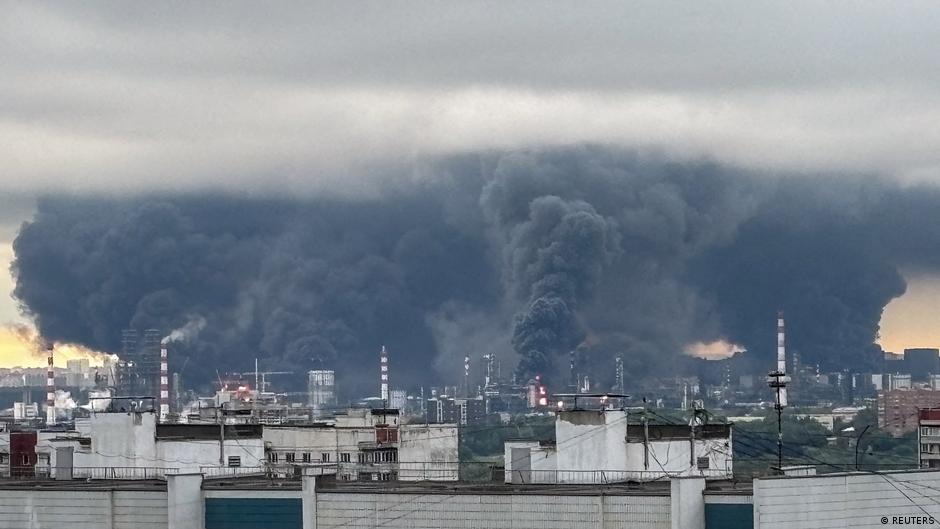
A mass drone attack around Moscow and its surrounding region killed two people and injured at least six, according to regional Governor Andrei Vorobyov, in one of the largest reported strikes on the Russian capital’s perimeter since the start of the war. The attack, reported on Sunday morning, September 20, also disrupted airport operations and triggered fires at residential buildings, a warehouse complex and an oil-refining site.
Vorobyov wrote on Telegram that 249 Ukrainian unmanned aerial vehicles had been shot down over the Moscow region. Moscow Mayor Sergei Sobyanin separately said 186 drones had been intercepted on approach to the capital. The figures could not be independently verified from the source material, but the scale described by Russian officials points to a significant escalation in pressure on infrastructure close to Moscow.
For Washington and U.S. business audiences, the reported strike is a reminder that the war’s operational geography is not limited to Ukraine’s front lines. Drone attacks near Moscow can affect energy assets, logistics nodes and civil aviation, all of which matter to companies monitoring sanctions exposure, insurance risk, fuel markets, supply chains and Russia-related political risk.
“A facility on the territory of the Moscow oil refinery was damaged. There were no casualties,” Sobyanin said, according to the report.
Energy and logistics sites come under pressure
Vorobyov said a warehouse complex caught fire in Sofyino after the attack. The anonymous Telegram channel VChK-OGPU claimed that a logistics complex of about 850,000 square meters was fully engulfed in flames. The governor also reported drone impacts and fires in three apartment buildings and one private home.
Sobyanin said an object on the grounds of the Moscow oil refinery had been damaged, adding that no one was hurt there. VChK-OGPU reported that the refinery in Moscow’s Kapotnya district was burning. The same refinery had already been attacked in June, according to the source article.
The reports also described additional incidents in nearby communities. In Lyubertsy, drones attacked a thermal power plant, VChK-OGPU claimed. In Kotelniki, the same channel said a drone struck a residential building. The Telegram channel Ostorozhno, Novosti, citing local residents, reported a fire in a residential complex in Kotelniki.
In Istra, falling drone debris damaged an apartment in a residential building, according to municipal district head Tatyana Vitusheva. The combined reports suggest a broad pattern of scattered damage across the metropolitan region, involving both civilian housing and infrastructure with economic relevance.
Airports halted as Moscow assesses damage
The attack also affected air travel. Moscow’s Vnukovo, Domodedovo and Zhukovsky airports suspended operations, according to the source report. Temporary airport closures around Moscow have become a recurring consequence of drone activity, but each disruption carries costs for airlines, passengers, cargo handlers and companies with time-sensitive shipments.
For American firms, the direct commercial exposure to Russia has been sharply reduced by sanctions and corporate withdrawals since 2022. Even so, events around Moscow still matter for multinational risk teams. Aviation disruptions can affect regional routing assumptions, energy infrastructure incidents can influence market sentiment, and attacks near logistics facilities can signal broader vulnerability in Russia’s domestic distribution networks.
The bottom-line impact for U.S. businesses is less about immediate physical exposure in Moscow and more about second-order consequences. Companies active in energy trading, insurance, shipping, aerospace, cybersecurity and compliance must track whether Russia responds with new restrictions, retaliatory strikes or expanded domestic security measures. Any escalation that touches refineries, airports or power generation can feed into volatility and raise the cost of operating near the conflict’s economic perimeter.
The reported damage also lands in a politically sensitive moment for Washington. Drone attacks on Russian territory test the balance U.S. policymakers have tried to maintain: backing Ukraine’s defense while managing escalation risks with Moscow. Russian officials routinely attribute such attacks to Ukraine, and Kyiv typically avoids detailed public claims for operations inside Russia. The source article attributes the drones to Ukraine’s armed forces, reflecting the Russian reporting and official statements it cites.
Capitol Hill and the White House are likely to view the latest reports through several overlapping lenses: Ukraine’s capacity to strike strategic targets, Russia’s ability to protect its capital region, and the possible consequences for energy and transport infrastructure. For U.S. policymakers, the repeated targeting or disruption of assets around Moscow complicates debates over military aid, export controls and long-term sanctions enforcement.
There was no report in the source article of casualties at the refinery site. The confirmed human toll described by Vorobyov was two dead and at least six injured in the Moscow region. The full extent of damage to the warehouse complex, residential buildings, power infrastructure and refinery grounds remained unclear in the initial accounts.
What is clear is that drone warfare continues to impose costs far from the front. Around Moscow, those costs now include deaths, injuries, fires, disrupted air travel and renewed concern over the security of energy and logistics assets near Russia’s political and business center.