Drone Strike on Russia’s Arctic Gas Region Raises New Energy Risks for Washington
The reported attack on Yamal, Russia’s dominant gas-producing region, could sharpen U.S. scrutiny of energy security, sanctions, and market exposure.
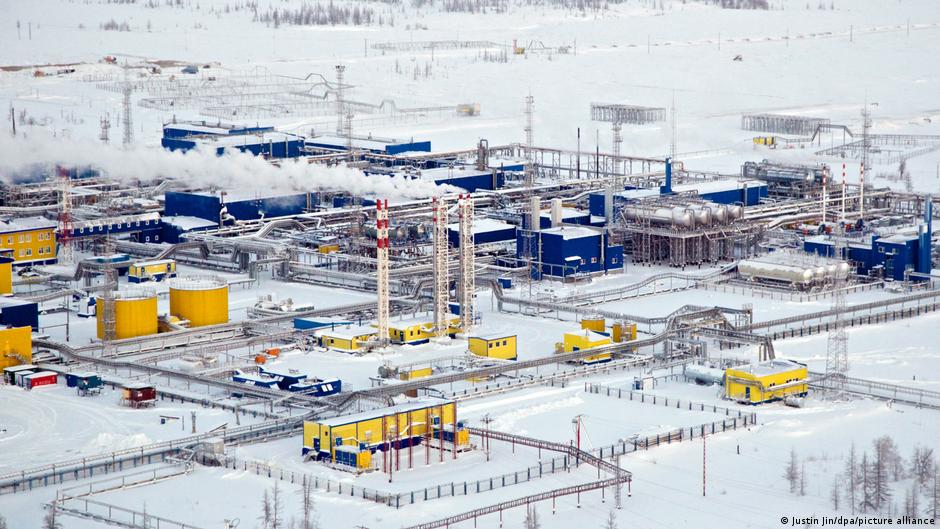
Ukrainian drones attacked Russia’s Yamalo-Nenets Autonomous District for the first time, according to regional authorities, marking a potential expansion of the war into one of the most important gas-producing regions in the Russian Federation. The incident, reported on Wednesday, September 9, caused a fire at an industrial facility in Novy Urengoy, a city central to Russia’s natural gas infrastructure.
Dmitry Artyukhov, the governor of the Yamalo-Nenets Autonomous District, said the drone attack had been repelled, but that falling debris from an unmanned aerial vehicle ignited a fire on the grounds of an enterprise. Official information indicated there were no deaths or injuries. Artyukhov said the scale and nature of the damage were still being assessed.
For Washington, the reported strike matters less as an isolated battlefield event than as a signal about the vulnerability of Russian energy infrastructure far from the Ukrainian border. The Yamal region accounts for a major share of Russia’s gas output, and disruption there would carry implications for global energy flows, sanctions enforcement, and the commercial calculations of U.S. companies exposed to energy prices, liquefied natural gas demand, shipping costs, and European industrial activity.
Russian officials said the attack targeted a fuel-and-energy complex facility in Yamal, while the specific enterprise was not identified.
Artem Zhoga, the Russian presidential envoy to the Urals Federal District, said the target of the attack was a facility in Yamal’s fuel-and-energy complex. According to him, personnel at the enterprise had been evacuated in advance.
A Strike Near Russia’s Gas Core
Russian authorities did not specify which facility was attacked. However, several media outlets and analytical projects that track strikes on Russian territory reported that the target may have been the condensate preparation plant for transportation in Novy Urengoy, part of Gazprom’s gas infrastructure. The facility is considered one of the key sites for processing gas condensate in the region.
Novy Urengoy lies roughly 2,800 kilometers, or about 1,740 miles, in a straight line from the Russian-Ukrainian border. If reports that the drones were launched from Ukrainian territory are confirmed, the attack could represent the longest known Ukrainian strike on Russian territory since the start of the full-scale war.
That distance is likely to attract attention in Washington, where policymakers have monitored Ukraine’s growing long-range strike capabilities alongside concerns about escalation and energy-market volatility. The United States has supported Ukraine militarily and financially while also attempting to prevent shocks that could destabilize allies or drive inflationary pressure through fuel and power markets.
The Yamalo-Nenets Autonomous District is Russia’s key gas-producing region. Estimates cited in the source material indicate it accounts for around 80 percent of Russian natural gas production. The Novy Urengoy plant processes gas condensate from the Urengoy, Yamburg and other fields in the region. Its design capacity is estimated at about 19.5 million tons of raw material per year.
Why U.S. Businesses Will Watch the Fallout
For American companies, the immediate issue is not direct trade with the targeted facility, given the broad sanctions environment around Russia’s energy sector. The larger concern is the possible knock-on effect of sustained attacks on Russian energy infrastructure. Even limited damage to facilities associated with gas production, processing or condensate handling can influence risk premiums in energy markets if traders view the campaign as widening into assets previously considered insulated by distance.
U.S. liquefied natural gas producers could see strategic implications if European buyers perceive additional risk around Russian supply reliability. Since the full-scale invasion of Ukraine, Europe has moved away from Russian pipeline gas and increased reliance on LNG imports, including from the United States. A confirmed ability to strike deep into Yamal would reinforce the perception that Russian energy infrastructure remains exposed, even far from the front line.
At the same time, higher uncertainty around global gas and condensate markets can raise costs for energy-intensive American industries. Chemical producers, manufacturers, airlines, logistics operators and utilities all remain sensitive to fuel-market expectations, even when physical supply chains do not run through Russia. The bottom-line impact would depend on whether the incident proves isolated or becomes part of a sustained campaign against northern Russian energy assets.
The political implications are also significant. Members of Congress and officials in the administration are likely to weigh the attack against several competing priorities: maintaining pressure on Moscow, supporting Ukraine’s military effectiveness, avoiding uncontrolled escalation, and protecting consumers and businesses from renewed energy-price stress.
The reported strike also underscores the challenge facing U.S. sanctions policy. Washington has sought to restrict Russia’s energy revenues while managing the risk of market disruption. A widening battlefield that reaches major production regions could complicate that balance. If Russia’s energy infrastructure becomes more vulnerable, market pressure may achieve some of the economic effects sanctions aim for, but through less predictable channels.
For now, Russian officials have reported no casualties and have not publicly detailed the damage. The uncertainty surrounding the specific target, the extent of the fire and the origin of the drones leaves key questions unresolved. Still, the first reported drone attack on the Yamalo-Nenets Autonomous District places Russia’s Arctic energy heartland into the war’s operational map, with consequences that will be watched closely in Washington boardrooms as well as in government agencies.