Drone Wave Toward Moscow Disrupts Airports and Raises Business Risk Questions
Russian officials said air defenses destroyed more than 100 drones headed toward Moscow as airport limits forced diversions and regional strikes caused casualties.
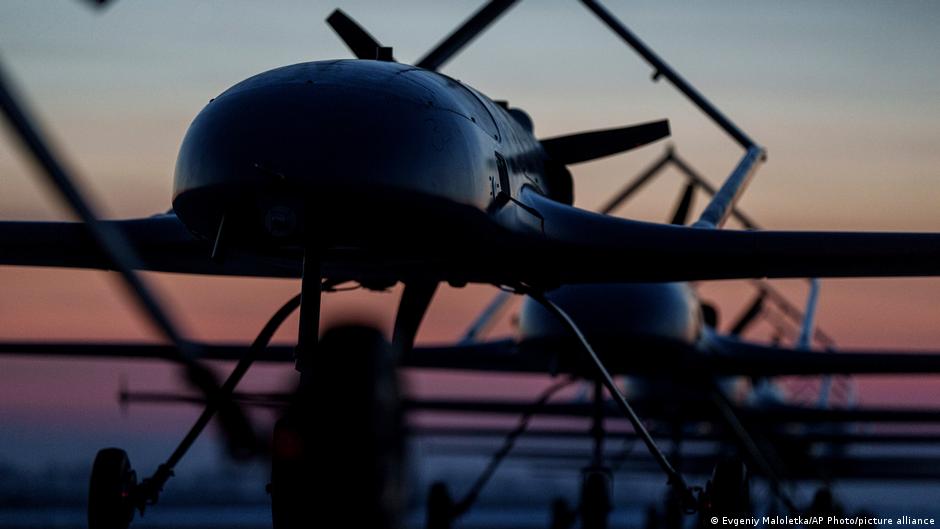
Russian authorities said more than 100 Ukrainian drones heading toward Moscow were destroyed overnight into Wednesday, October 14, in a large-scale attack that briefly disrupted the capital's aviation system and underscored the widening operational risks created by the war far from the front line.
Moscow Mayor Sergei Sobyanin reported on Telegram that Russian air defense systems had destroyed more than 100 unmanned aerial vehicles, or UAVs, that were moving in the direction of the Russian capital. He did not specify the exact districts of the Moscow region where the drones were intercepted, nor did he identify any potential targets.
The reported attack had immediate consequences for air travel. Temporary restrictions on arrivals and departures were introduced on the evening of October 13 at all four major Moscow-area airports: Vnukovo, Domodedovo, Sheremetyevo and Zhukovsky, according to notices published by the Telegram channel “Govorit Rosaviatsiya,” which carries information from Russia’s aviation authorities.
For Washington and for U.S. companies still monitoring exposure to Russia, the incident is another reminder that the economic consequences of the war extend beyond sanctions lists and energy markets. Airspace disruption, infrastructure uncertainty and the risk of strikes near industrial zones can affect insurance pricing, logistics assumptions, aviation routing and the broader risk models used by multinationals, investors and suppliers with indirect ties to the region.
Aviation Disruption Spreads Beyond Moscow
Russia's state news agency TASS reported that more than 30 aircraft flying to Moscow were redirected to other cities. According to the report, 19 aircraft bound for Vnukovo instead landed in Nizhny Novgorod, St. Petersburg, Minsk, Pskov and Istanbul.
The Telegram channel “Ostorozhno, Novosti,” associated with journalist Ksenia Sobchak, wrote that, according to data from St. Petersburg’s Pulkovo Airport, 20 aircraft flying to Moscow were redirected there because of the restrictions.
The disruption was not limited to the capital's airport system. According to “Govorit Rosaviatsiya,” temporary restrictions were also introduced overnight into October 14 at airports in Volgograd, Nizhny Novgorod, Samara, Penza, Saratov and Yaroslavl. The airline Pobeda also reported schedule adjustments because of prolonged restrictions at airports in the Moscow aviation hub and the Volga region, “Ostorozhno, Novosti” noted.
For businesses, such interruptions matter even when they do not directly involve U.S. carriers. Moscow remains a major regional aviation node, and disruptions can ripple through code shares, aircraft positioning, cargo planning and executive travel. Companies with compliance, security or humanitarian operations in neighboring markets may face delays when aircraft are rerouted or airport restrictions are imposed with limited notice.
Russian aviation notices said temporary restrictions were imposed at Moscow’s Vnukovo, Domodedovo, Sheremetyevo and Zhukovsky airports during the attack.
The broader signal for U.S. policymakers is that the war continues to impose costs on Russian domestic infrastructure, including systems that are central to commerce and state capacity. For the Biden-era sanctions framework and its successors in Washington, attacks that disrupt aviation and threaten industrial areas may reinforce arguments that Russia’s wartime economy remains vulnerable despite efforts to adapt.
Regional Casualty and Industrial-Zone Concerns
Russian regional officials also reported damage and casualties away from Moscow. Saratov region Governor Roman Busargin said at least one person was killed in a drone attack. He wrote on Telegram that several residential buildings in the city of Balakovo had been damaged and that, according to preliminary information, one person had died. Emergency services were working at the scene, he said.
In the Stavropol region, Governor Vladimir Vladimirov reported that air defenses had repelled a drone raid aimed toward the industrial zone of Nevinnomyssk. He did not specify which industrial facilities may have been targeted.
The reference to an industrial zone is significant for analysts tracking the war's economic dimension. Russia's industrial sites are central to energy processing, chemicals, manufacturing and military-related supply chains. Even when officials do not identify targets, drone activity near such areas can force companies, insurers and governments to reassess the security of production facilities and transport corridors.
For U.S. businesses, the bottom-line impact is primarily indirect but still material. Firms that exited Russia may still have suppliers, counterparties or legacy obligations affected by Russian aviation delays and regional instability. Companies in energy, commodities, aerospace, insurance and logistics are especially sensitive to disruptions that affect transport reliability or raise the perceived risk of operating near Russian infrastructure.
The incident also carries political implications in Washington. Members of Congress debating aid to Ukraine, sanctions enforcement and export controls are likely to view attacks reaching toward Moscow as evidence that the conflict has entered a phase in which Russia’s home-front infrastructure is increasingly exposed. At the same time, any civilian casualty reports, such as the death announced in the Saratov region, may shape diplomatic messaging and international scrutiny.
Russian officials did not provide details on the potential targets of the drones approaching Moscow, the specific locations where they were destroyed, or the industrial sites that may have been at risk in Nevinnomyssk. The lack of detail leaves businesses and governments to make decisions under uncertainty, a familiar condition in a war that continues to affect markets, transport networks and political calculations well beyond Ukraine's borders.
As of the reports cited by Russian officials and Telegram channels, the most immediate measurable effect was the disruption of civil aviation across Moscow and several regional airports, along with the confirmed death reported by authorities in the Saratov region. For U.S. decision-makers, the attack adds another data point to a broader question: how much operational and financial pressure the war can generate inside Russia, and how that pressure should shape policy, investment risk and corporate planning.



