EU Budget Talks Stall as Digital Levies Raise Stakes for US Firms
European leaders will resume negotiations in December as competing spending priorities and proposed digital taxes divide the 27-member bloc.
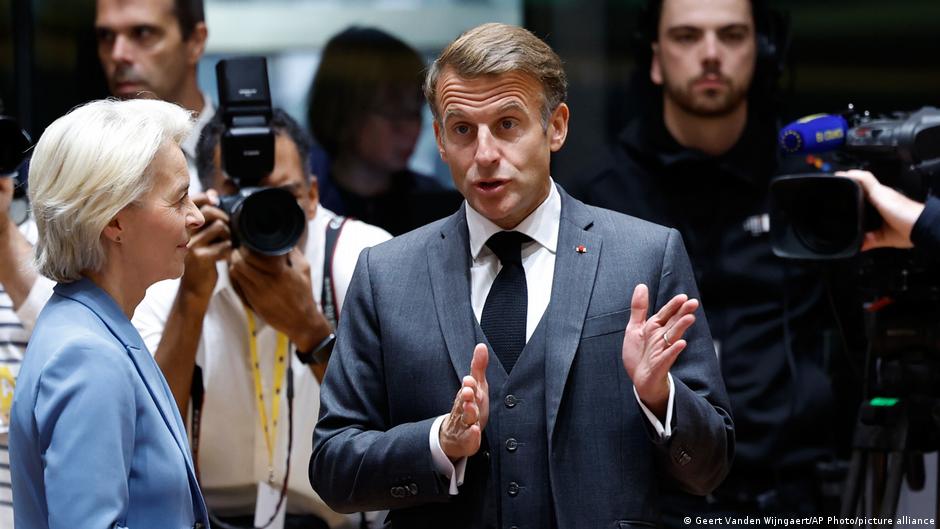
European Union leaders failed to reach an agreement on the bloc’s next seven-year budget during the first day of a summit in Brussels, leaving negotiations to continue in December and extending uncertainty over spending priorities that could affect US companies operating in Europe.
Several member states, led by Germany, are pressing for lower spending, while France and other governments favor a larger budget supported partly by new EU-wide levies. The dispute matters in Washington and across corporate America because the proposals under discussion include charges on digital services, crypto assets and online gambling—sectors in which US companies have a significant commercial presence.
AFP reported early Friday, October 16, citing German federal government sources, that negotiations among EU heads of state and government had produced no breakthrough. The sources described the summit discussions as “contradictory debates,” reflecting positions that were already evident before the leaders convened.
Member States Split Over Spending
Germany, Austria, Sweden, Denmark, the Netherlands and Finland are calling for budget restraint. France, Spain and Poland are among the countries seeking an increase in EU spending.
The European Commission presented a draft long-term budget worth nearly €2 trillion during the summer. Ireland, which holds the rotating presidency of the Council of the EU, proposed reducing that amount by €140 billion, or approximately 8%.
Under Ireland’s proposal, spending would be cut in areas including competitiveness, scientific research, defense and foreign policy. Those categories have implications beyond Europe: reductions in research and competitiveness funding could shape the environment for US technology and life-sciences companies with European operations, while changes to defense and external-policy spending would be closely watched in Washington as the United States weighs Europe’s contribution to shared security priorities.
France used the summit to promote new EU-wide revenue sources that could expand the budget without raising the direct contributions paid by member states. The measures discussed include levies on digital services, crypto assets and online gambling.
The central business question is whether Europe finances a larger budget through national contributions or turns to new cross-border charges that may reach US-based companies.
A digital-services levy would be particularly relevant to American technology groups selling advertising, marketplace or platform services in the European market. The source article did not specify proposed rates, thresholds or the companies that might be covered. Those details would determine the direct financial exposure and the extent to which Washington might view the measure as disproportionately affecting US businesses.
Washington Faces a Familiar Tax Policy Challenge
The emerging debate presents US policymakers with two competing considerations. A larger EU budget could support European research, competitiveness, defense and foreign-policy initiatives that overlap with American economic and strategic interests. Financing that budget through sector-specific levies, however, could increase costs for US companies and revive transatlantic disagreements over digital taxation.
For businesses, the immediate bottom-line impact remains uncertain because the EU has not agreed on either the total budget or its revenue structure. Companies exposed to European digital commerce, cryptocurrency markets and online gambling will nevertheless have reason to monitor the December summit, national negotiating positions and any subsequent legislative proposals.
The next EU summit is scheduled for December. Many of the bloc’s 27 members want to approve the long-term budget before the end of the year, concerned that elections in several countries in 2027 could bring Eurosceptic and populist forces to power and make a compromise harder to secure.
In France, far-right politician Marine Le Pen could win the presidential election. AFP reported that President Emmanuel Macron has already warned that reaching an EU budget agreement would be “difficult” in that event.
Before the Brussels negotiations began, German Chancellor Friedrich Merz called for a “substantial” reduction in the European Commission’s proposed budget. He also categorically rejected allocating additional money to two traditionally large spending categories: agriculture and cohesion policy, which is intended to reduce economic disparities among EU regions.
Austrian Chancellor Christian Stocker did not rule out the possibility that negotiations could drag on into next year. Such a delay would prolong uncertainty for recipients of EU funding and for companies making investment decisions around European research programs, regional development and defense procurement.
The December talks will therefore test whether EU governments can reconcile pressure for fiscal restraint with demands for greater collective spending. For Washington, the outcome will also provide a measure of Europe’s willingness to fund shared priorities. For American businesses, the decisive issue will be whether the eventual compromise relies on spending cuts, higher national contributions or new levies aimed at fast-growing cross-border industries.



