EU Defense Panel Scrapped After German and Italian Resistance
The last-minute cancellation exposes friction over Europe’s defense planning as Washington presses allies to shoulder more security costs.
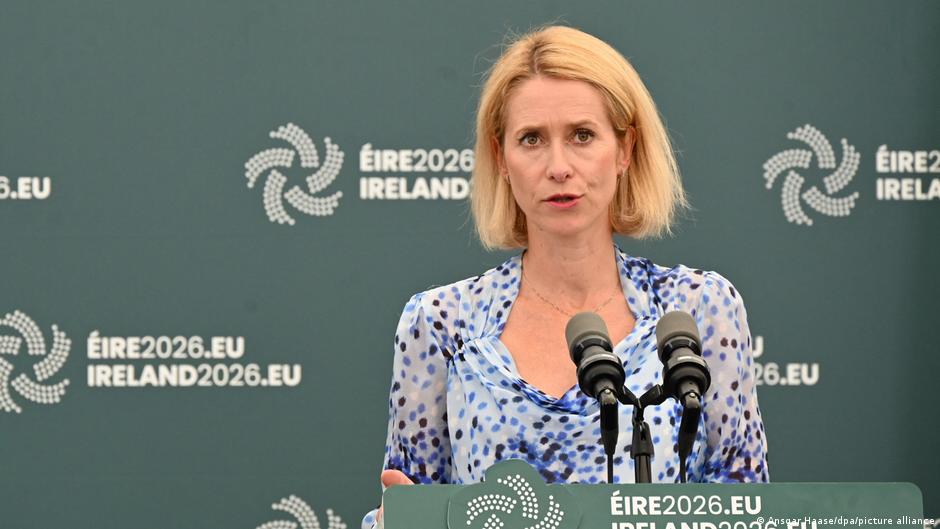
European Union foreign policy chief Kaja Kallas canceled the planned launch of a high-level defense expert group at the last minute after several member governments, including Germany and Italy, opposed the initiative, according to dpa.
The group had been scheduled to be presented on Monday, September 7, as part of an effort to strengthen European defense policy. But an EU official in Brussels told dpa late on September 6 that the plan would not go forward in its proposed form after consultations with EU defense ministers.
“Some member states considered that this is not the right step at the moment,” the EU official said, according to dpa.
For Washington, the decision matters because the United States has repeatedly urged Europe to move faster on defense readiness, procurement and industrial capacity. Any delay in building a more coherent European defense policy has implications for NATO burden-sharing, transatlantic weapons production and the role of American defense contractors in meeting Europe’s capability gaps.
Berlin and Rome Push Back
According to dpa, the governments of Germany and Italy were among those that had previously opposed the creation of the expert group. The panel was supposed to work under Kallas’s leadership and develop proposals on how Europe could close military capability gaps more quickly and efficiently. It was also expected to produce a report with concrete recommendations.
The planned membership was politically significant. The group was to include senior political and military representatives from several EU countries, as well as the United Kingdom and Ukraine. Its members were expected to be introduced at a launch event on the morning of September 7.
Germany’s resistance may be linked to Berlin’s critical view of Kallas personally as head of the EU’s foreign policy service, dpa reported. In defense policy, German authorities tend to rely on NATO planning processes. At the same time, Berlin is currently advocating for merging a significant part of the European External Action Service, which Kallas oversees, with the European Commission.
That institutional dispute is not just an internal Brussels matter. For U.S. policymakers, the question is whether Europe can create defense capacity through EU-led structures without duplicating or weakening NATO mechanisms. Germany’s preference for NATO-based planning aligns with a long-standing American priority: keeping the alliance’s command and planning systems central to European security.
Still, the cancellation also suggests that Europe’s political machinery remains slow at a moment when officials themselves say the threat environment requires speed. The EU official quoted by dpa said the European foreign policy service would examine new ways to cooperate with EU countries on defense policy.
“The diagnosis remains the same: Europe must move faster in defense,” the source said.
The official added that Europe should not look back in several years and conclude that it had been so focused on where it needed to be in 2035 that it missed the chance to do what was necessary in 2027.
Ukraine’s Role Remains Unclear
Kallas had announced on September 1, after an informal meeting of EU defense ministers in Wicklow, Ireland, that Ukraine would be involved in finding solutions to strengthen Europe’s defense capabilities. Kyiv was expected to join “a new high-level group” alongside senior politicians and military officials from EU countries and the United Kingdom.
At that meeting, a DW correspondent asked Kallas who would represent Ukraine in the new group, noting that former Ukrainian defense minister Mykhailo Fedorov had been brought in by Italy as a defense adviser. Kallas did not name Ukraine’s representative or representatives, saying instead that the full composition of the group would be presented on September 7.
The canceled rollout leaves that question unresolved. It also delays a formal channel through which Ukraine’s battlefield experience could have been integrated into EU defense planning. Kallas had emphasized that most EU countries are also NATO members, while noting that the alliance still has defense capability gaps that European countries need to fill.
She also argued that Europe had been moving too slowly despite a rising threat level. Explaining Ukraine’s inclusion, Kallas said Kyiv had “great experience” and called Ukraine a “world leader in battlefield innovation.”
For American companies, the practical stakes center on procurement and industrial strategy. If Europe struggles to coordinate its own capability planning, demand may continue to flow through established NATO channels and national purchasing programs, where U.S. defense firms already play a major role. But if EU-led initiatives eventually gain traction, they could steer more funding toward European industrial capacity and joint procurement schemes.
The immediate bottom line is that a proposal intended to accelerate Europe’s defense response has instead highlighted unresolved disputes over authority, process and leadership. The United States will be watching whether the EU finds another route to close its military gaps, or whether NATO remains the primary venue for turning political urgency into actual capabilities.