EU Move on Ukraine and Moldova Accession Talks Raises Stakes for Washington
The opening of internal market and competitiveness negotiation chapters signals a deeper EU track for Kyiv and Chisinau with implications for U.S. policy and companies.
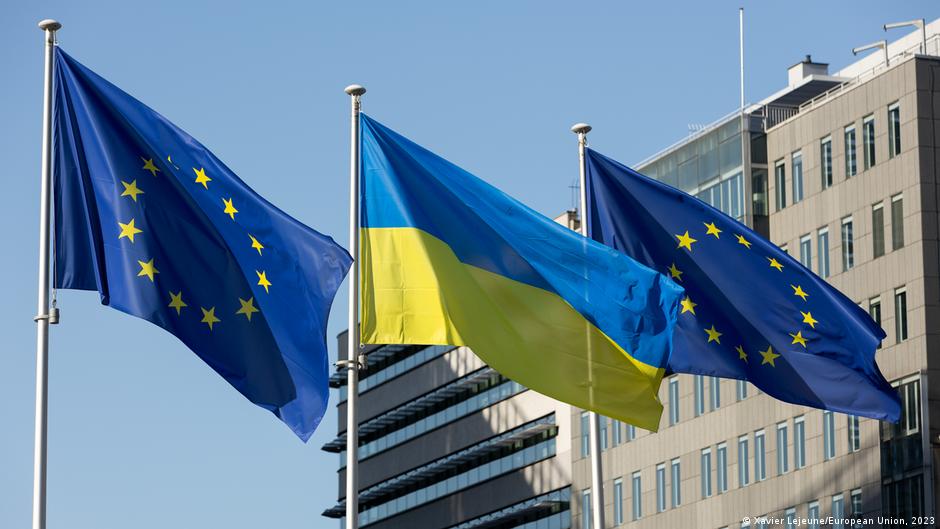
European Union member states have agreed to open negotiating clusters 2 and 3 in accession talks with Ukraine and Moldova, a step that pushes both countries further along the formal path toward EU membership and carries consequences well beyond Brussels. Irish Minister for European Affairs Thomas Byrne announced the agreement on X on Monday, October 12, saying all EU governments had backed the move.
The decision concerns two major areas of the accession process: the “Internal Market” cluster and the “Competitiveness and Inclusive Growth” cluster. For Washington, the development matters because it links Ukraine’s wartime reform agenda more tightly to Europe’s economic and regulatory architecture, while also shaping the environment in which American companies may operate in Ukraine, Moldova and the wider European market in the years ahead.
“I can confirm that all EU member states have agreed to open clusters 2 and 3 for Ukraine and Moldova,” Byrne wrote, also referring to steps involving Albania and Montenegro.
Byrne framed the announcement as part of a broader week of EU enlargement activity. He wrote that after “Montenegro Monday” there would be a “Super Tuesday” for Albania, Moldova and Ukraine. According to his statement, EU states agreed to open clusters 2 and 3 for Ukraine and Moldova, close chapters 17, 18 and 19 for Albania, and close chapter 20 for Montenegro.
Why the Clusters Matter for U.S. Business
The two clusters now set to open are central to how a candidate country aligns itself with the EU’s rules for commerce, regulation, competition and growth. The internal market cluster is especially significant for companies because it relates to the legal and policy framework that governs market access inside the European Union. The competitiveness and inclusive growth cluster is also important because it touches the rules and reforms that influence productivity, investment conditions and long-term economic integration.
For American businesses, the practical significance is not immediate market transformation but the direction of travel. Ukraine and Moldova are being asked to bring their laws, standards and institutions closer to EU norms. Over time, that can affect compliance requirements, procurement conditions, investment protections, labor and education rules, and the competitive landscape for U.S. firms active in technology, logistics, energy, agriculture, manufacturing, finance and reconstruction-related services.
The announcement also reinforces a broader political reality for U.S. policymakers: Ukraine’s Western integration is not only a NATO and security question. It is also a commercial and regulatory project. As the EU deepens the accession framework, Washington will face a Ukraine policy shaped increasingly by Brussels-led reforms, EU budget tools and European market rules.
Hungary’s Role and Ukraine’s Education Law
The agreement followed action in Kyiv earlier the same day. On October 12, Ukraine’s Verkhovna Rada approved amendments to the country’s education law in two readings and as a whole. The amendments concerned the rights of national minorities and were described as necessary to secure Hungary’s consent for opening the second and third accession negotiation clusters for Ukraine.
Later on October 12, Ukrainian lawmaker Yaroslav Zhelezniak said on Telegram that President Volodymyr Zelensky had signed the adopted law. The timing underscored how individual EU member states can shape the pace of accession talks and how domestic legislation in Ukraine can have direct consequences for the country’s diplomatic trajectory.
For the United States, the episode is a reminder that Ukraine’s reform agenda is now operating under multiple pressures at once: the demands of war, the expectations of Western financial and military partners, and the unanimity-based politics of EU enlargement. Even highly specific legislative changes can become pivotal in unlocking broader strategic movement.
The Enlargement Framework
EU accession negotiations are organized into six large thematic sections known as clusters. These cover different areas of law and public policy. During negotiations, the European Union assesses how ready a candidate country is to apply EU rules and standards.
The six clusters are called “Fundamentals,” “Internal Market,” “Competitiveness and Inclusive Growth,” “Green Agenda and Sustainable Connectivity,” “Resources, Agriculture and Cohesion,” and “External Relations.” The first of the six clusters for Ukraine, “Fundamentals,” was opened on June 15.
The latest agreement therefore moves Ukraine beyond the initial foundational stage and into areas with direct economic relevance. Moldova is advancing on the same track, reinforcing a shared enlargement path for two countries whose alignment with Europe has become a major geopolitical issue since Russia’s full-scale war against Ukraine.
On October 5, EU Enlargement Commissioner Marta Kos said at a press conference after a Moldova-EU Association meeting that the EU could open two accession negotiation clusters for Ukraine and Moldova during an intergovernmental conference on the sidelines of the EU General Affairs Council scheduled for October 13 in Luxembourg.
Kos said Ukraine and Moldova were carrying out systemic reforms “in very difficult conditions” and were part of a group of four countries leading in accession negotiations. She also said the European Commission would publish a detailed assessment of reform progress across all areas in candidate countries on October 28 in its annual enlargement report.
Kos urged observers not to forget that Ukraine is fighting for survival while also pursuing EU accession and implementing reforms, including reforms needed to receive additional funds for the budget and the needs of the army. That message is likely to resonate in Washington, where debates over Ukraine assistance have increasingly focused on burden sharing, oversight and long-term sustainability.
The opening of clusters 2 and 3 does not make EU membership imminent. Accession remains a long, technical and politically demanding process. But it does deepen the institutional pathway for Ukraine and Moldova and may gradually reshape the commercial assumptions of firms that view Eastern Europe through the lens of risk, reconstruction and future EU integration.
For U.S. businesses, the bottom line is that Ukraine and Moldova are moving further into the EU regulatory orbit. For Washington, the political implication is that Europe is adding structure to its long-term commitment to Kyiv and Chisinau at a moment when U.S. policy toward Ukraine remains closely watched by allies, investors and adversaries alike.