EU to Fund Drones and Missiles for Kyiv as Ukraine Tops Brussels Agenda
The European Union is preparing new support for Ukraine’s air defense as leaders weigh financing needs and international backing for the year ahead.
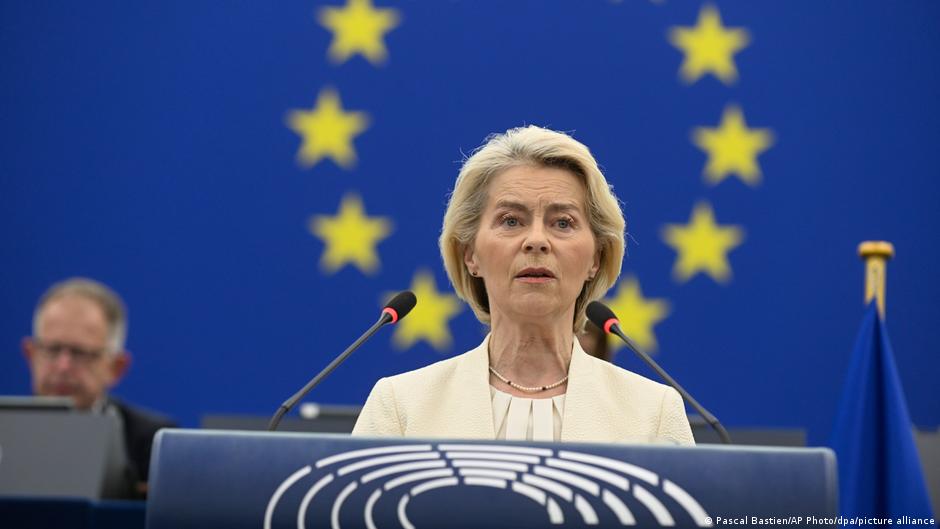
The European Union will provide additional financing to Kyiv in mid-October for the purchase of drones and missiles, European Commission President Ursula von der Leyen said Sunday, Oct. 11, placing Ukraine’s defense needs back at the center of Europe’s political agenda and keeping pressure on Washington and allied capitals to sustain support.
Von der Leyen announced the move on X after a phone call with Ukrainian President Volodymyr Zelensky. She said the funding was needed to strengthen Ukraine’s defenses and protect its airspace, but she did not specify the size of the package or identify the sources of the money.
“This is necessary to strengthen Ukraine’s defense and protect its airspace,” von der Leyen said.
The announcement comes as the situation in Ukraine is set to be one of the central issues at this week’s European Council meeting, according to officials in Brussels. EU leaders are expected to discuss Ukraine’s financing needs for the coming year and ways to mobilize new international support.
For the United States, the EU decision carries both political and business implications. A fresh European commitment to drones and missiles signals that Brussels intends to keep defense procurement moving even as the war strains public budgets and tests Western unity. It also adds another layer to the transatlantic debate over burden-sharing, a persistent issue in Washington as U.S. policymakers evaluate how much military and financial support should come from American taxpayers versus European governments.
Defense Funding and the Transatlantic Ledger
The new EU funding is focused on drones and missiles, two categories that have become central to Ukraine’s defense against Russian strikes and battlefield pressure. Although von der Leyen did not disclose whether the funds would flow through EU programs, national procurement channels or other mechanisms, the timing matters. Brussels is preparing to review Ukraine’s broader financing needs for the next year, and the outcome may influence allied planning on both sides of the Atlantic.
American defense firms, suppliers and logistics companies are watching Europe’s support packages closely because European demand for air defense, missiles, drone systems and related components has risen sharply during the war. Even when funding is European, procurement decisions can affect U.S. companies directly or indirectly through partnerships, supply chains and allied weapons inventories. The bottom-line issue for U.S. business is whether Europe’s next support phase translates into sustained demand for defense production, technology integration and replenishment of allied stockpiles.
At the same time, the EU’s move may shape political arguments in Washington. Supporters of continued aid to Ukraine can point to Brussels’ new financing as evidence that Europe is taking responsibility for its own security neighborhood. Skeptics may still press for clearer accounting, defined end goals and limits on U.S. exposure. The absence of a disclosed amount or funding source in von der Leyen’s statement leaves those debates unresolved.
Brussels also plans to unlock two new clusters of topics in Ukraine’s negotiations with the EU. That step reflects the bloc’s continued effort to tie wartime assistance to a longer-term political and economic path for Ukraine. For U.S. businesses, the progress of Ukraine’s EU track may affect future market access, reconstruction standards, regulatory alignment and investment conditions, though those outcomes remain dependent on the negotiations and the course of the war.
Cease-Fire Call and Economic Stakes
Von der Leyen said she fully supported Zelensky’s call for a cease-fire that would help protect global food supplies and energy infrastructure in Ukraine and Russia. That element of the discussion has direct relevance for global markets. Ukraine remains tied to food supply chains, and attacks on energy infrastructure can affect broader price expectations, insurance costs and business confidence well beyond the battlefield.
The European Commission president described the war as entering a new, darker phase. She said Russia is waging a prolonged war on the battlefield and striking civilians far beyond the front line. That assessment underscores why air defense remains a core priority for Kyiv and its partners. It also highlights the risk that the conflict will continue to drive volatility in commodities, energy infrastructure planning and defense budgeting.
The latest drone and missile funding follows a separate EU financial step earlier this month. On Oct. 2, the European Commission approved a 2.9 billion euro tranche for Kyiv under the Ukraine Facility, a mechanism designed to provide long-term financial assistance to Ukraine.
The Ukraine Facility covers the period from 2024 to 2027 and is intended to allow the EU to provide Ukraine with up to 50 billion euros in stable and predictable financial assistance over that period, according to Brussels. Payments are closely linked to Ukraine’s implementation of a specific recovery and reform plan, as well as support for democratic mechanisms, the rule of law and human rights.
The Commission has said disbursements are made quarterly after verification that the conditions for receiving the funds have been met. That conditional structure matters for Western governments and private-sector actors alike because it ties financial support not only to wartime survival but also to reforms that could shape Ukraine’s reconstruction economy.
For Washington, the EU’s mid-October funding plan is another signal that Ukraine will remain a live issue in allied diplomacy, budget politics and defense markets. The immediate question is how much money Brussels will allocate for drones and missiles and where it will come from. The larger question is how the U.S. and Europe divide the cost of supporting Ukraine while managing the business consequences of a long war: defense demand, energy security, food supply risk and the future shape of Ukraine’s reconstruction.



