Fed Raises Rates for First Time in Three Years as Inflation Pressures Washington
The unanimous FOMC move lifts the federal funds rate to 3.75%-4%, creating new borrowing costs for companies and a political clash with Trump.
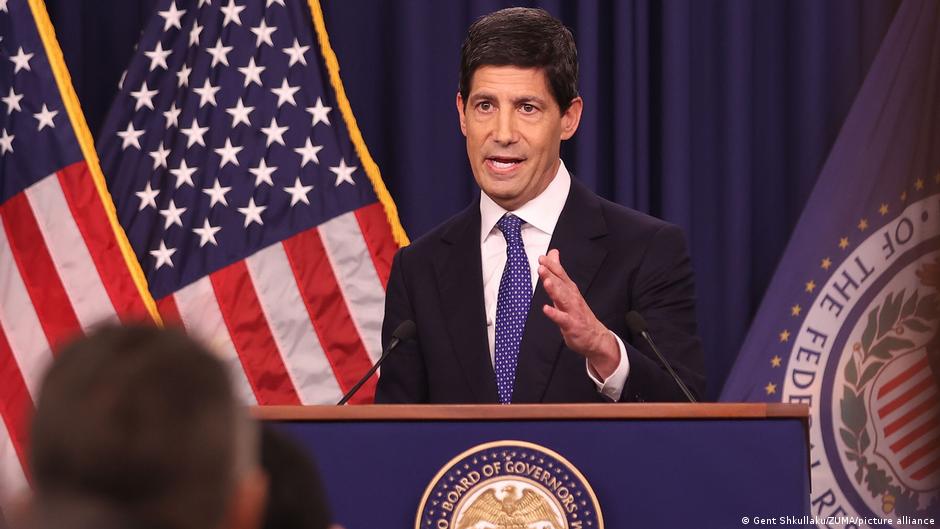
The Federal Reserve raised its benchmark federal funds rate by 25 basis points on Wednesday, September 16, lifting the target range to 3.75% to 4% annually in its first rate increase in three years. The central bank said the decision was driven by the need to confront inflation that remains above its target, a move with immediate consequences for Washington, financial markets and American businesses facing higher borrowing costs.
The decision was unanimous among all 12 members of the Federal Open Market Committee, according to the Fed's announcement. It marks a sharp change in direction after three rate cuts in 2024 and three more in 2025, underscoring the pressure on policymakers to respond to price growth even as elected officials look for lower rates to support housing, investment and consumer spending.
Fed Chair Kevin Warsh framed the move as a matter of the central bank's core responsibility. Speaking at a press conference, he said the Fed's focus under its mandate was price stability.
"Simply put, inflation is too high, and it has been that way for too long. That is a fact," Warsh said.
For U.S. businesses, the practical impact is straightforward: credit is getting more expensive. Companies that rely on floating-rate debt, short-term financing, commercial loans or bond issuance could face higher financing costs. The increase may also filter into mortgage rates and consumer credit, affecting real estate, retail sales and capital spending. While a quarter-point move is modest in isolation, the political and economic signal is larger: the Fed is prepared to tighten policy again if inflation does not move closer to its 2.0% target.
Washington Faces a Monetary Policy Fight
The rate increase also opens a new confrontation between the central bank and President Donald Trump, who sharply criticized the FOMC decision. Speaking to reporters in North Carolina on September 16, Trump said the move was driven by "political motives" and argued that rate-setters were acting against him.
"Kevin Warsh is a good man," Trump said. "However, no matter how well he does his job, he has to deal with hostile leadership." He added that FOMC members were raising the benchmark rate "to cause as much harm as possible to Trump" and said they were doing so for political reasons.
The remarks highlight a familiar tension in Washington: the Fed's independence versus the president's preference for lower borrowing costs. Trump had expected Warsh, whom he nominated to lead the Fed, to help preserve low interest rates. Lower rates would, among other effects, make real estate loans more affordable, a politically valuable goal at a time when households and businesses are sensitive to the cost of credit.
Warsh took office in mid-May after being nominated by Trump. He previously served on the Federal Reserve Board of Governors from 2006 to 2011 and earlier worked as a banker at Morgan Stanley, where he specialized in mergers and acquisitions. He also advised Trump on economic policy. That background makes the current split particularly notable: a Fed chair chosen by Trump is now defending a rate increase that the president says is politically motivated.
Inflation Keeps Pressure on Companies
Warsh said on September 16 that inflation in the United States has exceeded the Fed's 2.0% target for five years. In July and August of the current year, inflation stood at 3.4%. That level is below the peaks that shaped earlier monetary debates, but it remains high enough for the central bank to argue that price stability has not yet been restored.
The Fed's mandate differs from that of the European Central Bank, headquartered in Frankfurt am Main. While the ECB is commonly described around price stability, the Fed has a dual mandate: to ensure price stability and a strong labor market. That dual responsibility makes the current decision especially important for the U.S. economy. Higher rates can help restrain inflation, but they can also slow hiring, investment and demand if credit conditions become too tight.
According to AFP, the war by the United States and Israel against Iran, which has been underway since late February, led to a sharp increase in energy prices and, in turn, fueled inflation. For American companies, energy costs can move through supply chains quickly, raising expenses for transportation, manufacturing, logistics, utilities and consumer-facing businesses. The Fed's move suggests officials see those pressures as significant enough to justify a tighter stance, even at the risk of political backlash.
The bottom-line impact will vary by sector. Banks may benefit from wider interest margins, while highly leveraged companies could see earnings pressure from higher debt-service costs. Homebuilders, commercial real estate firms and mortgage lenders may face weaker demand if financing becomes less affordable. Retailers and consumer brands could also feel the effect if households respond to higher borrowing costs by cutting discretionary spending.
The unanimous vote gives the decision institutional weight. It also signals that, at least inside the FOMC, inflation concerns outweighed worries about political criticism. For corporate executives and investors, the message is that the era of easier money may not be as durable as many had expected after the series of cuts in 2024 and 2025.
In Washington, the rate increase is now both an economic decision and a political event. The Fed says it is acting to restore price stability. Trump says the move is aimed at damaging him. Businesses, meanwhile, will have to plan around a more expensive cost of capital and the possibility that monetary policy remains restrictive until inflation moves closer to target.



