Flávio Bolsonaro Leads Brazil Vote, Setting Up Lula Runoff With US Stakes
Brazil’s presidential election heads to an Oct. 25 runoff after Flávio Bolsonaro won 47.03% to President Lula da Silva’s 45.16%.
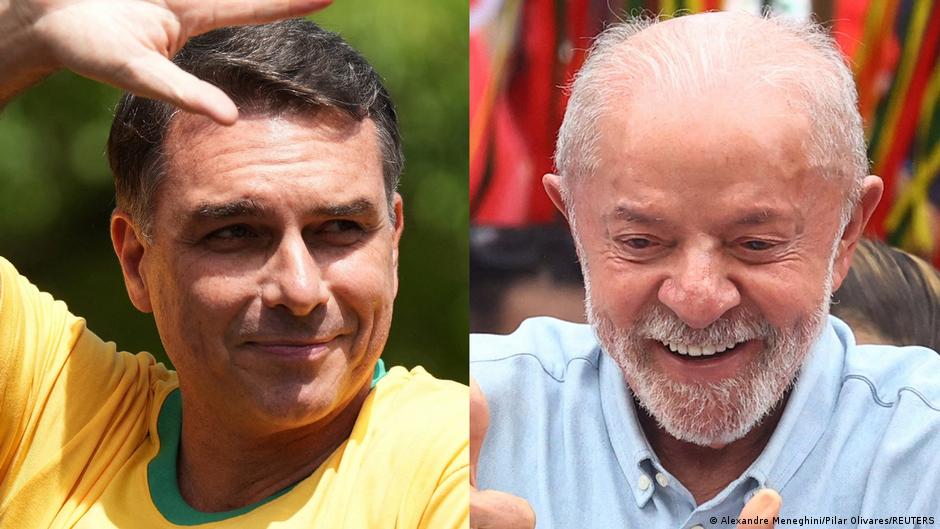
Brazil’s presidential election is moving to a second round after neither leading candidate cleared the 50% threshold, setting up a high-stakes contest between President Luiz Inácio Lula da Silva and Sen. Flávio Bolsonaro, the eldest son of former President Jair Bolsonaro.
With 99.99% of first-round ballots counted, Flávio Bolsonaro emerged as the narrow front-runner with 47.03% of the vote, according to data from Brazil’s electoral authorities published overnight into Monday, Oct. 5. Lula, the leftist incumbent, followed with 45.16%. Turnout was 78.92%.
The runoff is scheduled for Oct. 25, extending a pattern that has become familiar in Brazilian presidential politics. Since the early 2000s, every presidential election in the country has required a second-round vote.
For Washington and US companies, the result matters well beyond the symbolism of another Bolsonaro-Lula confrontation. Brazil is Latin America’s largest economy, a major commodities producer, a significant market for American manufacturers, technology firms and financial institutions, and a political heavyweight in debates over trade, sanctions, climate policy and relations with China. A close runoff raises the prospect of several more weeks of market volatility and policy uncertainty for businesses exposed to the country.
A familiar family name returns to the center of Brazilian politics
The matchup revives the political confrontation that defined Brazil’s 2022 election, when Lula defeated Jair Bolsonaro in a second-round vote. The former president refused to recognize the result, and his supporters took to the streets in protest. Jair Bolsonaro was later sentenced to a lengthy prison term for an attempted coup.
This time, Lula’s opponent is not the former president himself but his 45-year-old son, Flávio Bolsonaro, a senator from Rio de Janeiro state. His first-round lead makes him the favorite heading into the runoff, though the narrow margin over Lula leaves the race open and places intense weight on late campaign dynamics, turnout and the ability of each side to consolidate voters who backed other candidates in the first round.
With no candidate crossing the 50% mark, Brazil’s election will be decided in a second round on Oct. 25.
Flávio Bolsonaro’s campaign has leaned in part on promises to fight crime, a message with clear resonance in a country where public security remains a central political issue. That platform could also interest US firms assessing operating risk in Brazil, from logistics and retail companies to investors in infrastructure and energy. At the same time, the candidate’s own legal and reputational history may complicate perceptions among foreign investors.
In 2019, Flávio Bolsonaro faced investigations over alleged payments to people listed among his staff who did not actually work, as well as suspicious transfers into his bank account. The source article states that he was suspected in the past of corruption and unlawful appropriation of funds. Those allegations now sit alongside his anti-crime message as the campaign enters its decisive phase.
US sanctions politics and investor risk
The Bolsonaro family’s relationship with US politics has become an unusually direct part of Brazil’s domestic story. In June 2026, Brazil’s Supreme Court sentenced Eduardo Bolsonaro, another son of the former president and also a political figure, to four years and two months in prison. The criminal case stemmed from Eduardo’s calls for the United States to impose sanctions on Brazil over the sentence handed to his father. Eduardo lives in the United States, and the case against him was heard in absentia.
That episode gives the runoff an immediate Washington angle. Any future Brazilian administration led by Flávio Bolsonaro would take office against the backdrop of a family political movement that has already appealed to the United States as a pressure point in domestic Brazilian disputes. For US policymakers, the question is not only who governs Brazil, but whether bilateral relations become more transactional and more entangled with legal conflicts involving the Bolsonaro family.
For American businesses, the bottom-line issue is predictability. Brazil’s policy direction can affect supply chains, agricultural trade, energy development, financial markets, digital regulation and infrastructure investment. A Lula victory would likely be read through the lens of continuity for the current administration. A Flávio Bolsonaro victory could signal a sharper political turn, with potential implications for regulatory appointments, law-and-order policy, state involvement in the economy and Brazil’s posture toward Washington.
The campaign is also unfolding as Brazil continues an investigation involving Banco Master and its largest shareholder, Daniel Vorcaro. Authorities are examining allegations of fraudulent investment-raising amounting to tens of millions of dollars from state and private funds through promises of high returns that could not be fulfilled. In effect, the source describes the matter as a possible financial pyramid scheme.
Vorcaro is also known as one of the producers of a complimentary biographical film about Jair Bolsonaro, “Dark Horse,” whose plot develops the former president’s claims about a “stolen election.” Media outlets have previously published correspondence between Vorcaro and Flávio Bolsonaro that may indicate the politician knew about the alleged fraudulent scheme and could have helped facilitate it, including through cover allegedly provided by costly film production.
Those allegations do not determine the electoral result, but they add another risk factor for investors watching Brazil’s politics. A runoff involving a candidate connected by media reports to an ongoing financial investigation could sharpen scrutiny from markets, compliance teams and foreign counterparties, especially in sectors where public funds, state-linked institutions and private capital overlap.
The next three weeks will test whether Flávio Bolsonaro can turn a first-round lead into a mandate, or whether Lula can close the gap and repeat his 2022 success against the Bolsonaro political machine. For the United States, the runoff is not a distant foreign election. It is a contest in a major democratic partner whose choices can influence trade flows, corporate risk, sanctions diplomacy and the broader political balance in the Americas.