Flydubai Halts Israel Flights After Reported Cockpit Attack on Dubai Route
The suspension adds a new aviation-security flashpoint for Washington, Gulf carriers and companies with travel exposure to Israel.
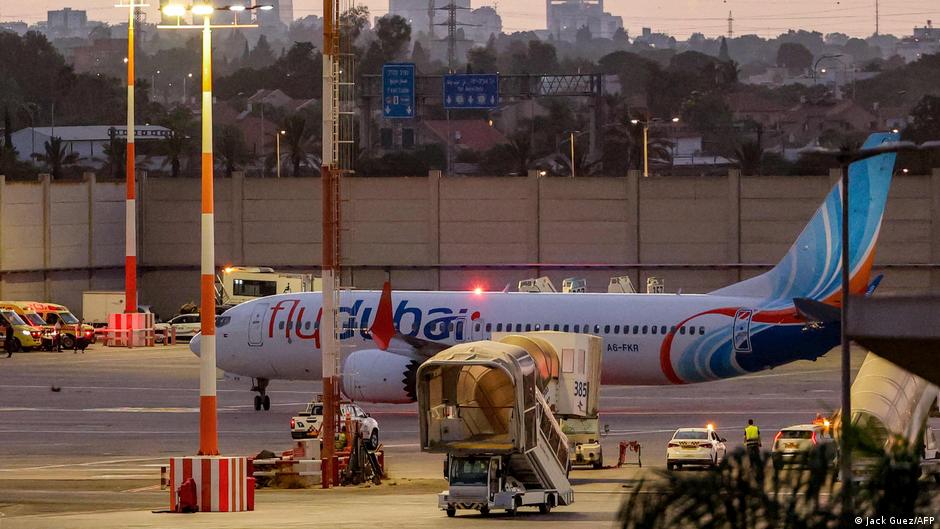
Flydubai has suspended all flights to and from Israel while authorities investigate an incident involving a Boeing 737 MAX 8 traveling from Dubai to Tel Aviv that made an emergency landing in Saudi Arabia.
The airline said the temporary halt would allow the relevant authorities to continue their work and establish the circumstances of the incident. A Flydubai spokesperson said overnight Thursday, October 1, that the carrier was “closely coordinating” with the government of the United Arab Emirates and other stakeholders. A decision on when to resume service will be made as additional information becomes available, the spokesperson added.
For U.S. business and policy circles, the case is more than a regional aviation disruption. It touches several Washington priorities at once: civil aviation security, the durability of Israel-Gulf normalization, the risk environment for multinational travel, and the commercial reliability of air links that many companies have treated as part of a broader Middle East integration story.
Security Incident Tests Israel-Gulf Air Links
The incident occurred on Flydubai flight FZ1073 from Dubai to Tel Aviv. According to the account in the source article, the aircraft made an emergency landing at the airport in Tabuk, Saudi Arabia, at about 9 a.m. local time after a signal indicating an attempted hijacking. The suspected trigger was a fight in the cockpit.
Under the main version described, the co-pilot allegedly attacked the aircraft commander with a knife and tried to take control of the plane. During the struggle, the aircraft reportedly descended sharply over Saudi territory, dropping from 9,410 meters to 5,105 meters in 29 seconds.
There were 174 people aboard the Boeing 737 MAX 8, including 27 children, most of them Israeli citizens. Some passengers said they first heard shouting from the cockpit, then saw the cockpit door open and one pilot wounded, his clothing bloodied. First aid was provided, with one passenger identified as a doctor. Crew members and passengers also managed to overpower the attacker.
The landing in Saudi Arabia was carried out by two other pilots who were aboard as passengers. CNN, according to the source article, described them as “backup pilots” who were supposed to operate the next flight. Israel Hayom reported that the two were Ukrainian and Russian, though there has been no official confirmation. Other reports said the aircraft may have been landed by citizens of South Africa and New Zealand.
“The temporary suspension will allow the relevant authorities to continue their work and establish all circumstances of the incident,” Flydubai said, according to the source article.
Washington Watches Aviation, Security and Normalization Risks
After the morning incident, Israeli Transport Minister Miri Regev demanded the cancellation of all Flydubai flights to Israel. She urged the Civil Aviation Authority to investigate whether the UAE had violated its aviation agreement with Israel. That agreement, as described in the source article, stipulates that only pilots holding passports from countries with diplomatic relations with Israel may land in the country. Israel does not have such relations with Oman.
Israeli Prime Minister Benjamin Netanyahu later said Saudi authorities had arrested the pilot who stabbed his colleague. Media reports cited in the source article identified the alleged attacker as an Omani citizen. Sources in Israeli intelligence cited by the British newspaper The Telegraph did not rule out that he intended to seize control of the aircraft and direct it toward a skyscraper in Tel Aviv.
One of those sources was quoted as saying the suspected scenario resembled September 11, with a co-pilot killing the pilot and crashing the aircraft in Israel with passengers aboard, most of them Israelis. Israeli Defense Minister Israel Katz called the Flydubai incident an “attempted jihadist terrorist attack.”
The injured pilot was identified as the captain, Indian citizen Smith Machhar. Netanyahu wrote on X that, despite serious injuries, Machhar resisted, opened the cockpit door, and allowed passengers and crew to neutralize the attacker, preventing an in-air disaster. Machhar’s condition was described as stable.
Following the emergency landing of FZ1073 in Saudi Arabia, Flydubai sent a second aircraft to transport passengers onward to Israel. That aircraft landed at Ben Gurion Airport in Tel Aviv.
Business Fallout for U.S. Companies
The immediate commercial effect is the suspension of Flydubai’s Israel operations, but the broader business implications could extend to American companies with personnel, suppliers, clients or investors moving through Gulf-Israel routes. Since the normalization of relations between Israel and the UAE, direct air travel has been an important symbol and practical tool for business connectivity. A security investigation involving a Dubai-Tel Aviv flight may force corporate travel departments to reassess routing, insurance, emergency protocols and employee duty-of-care policies.
U.S. airlines are not directly described in the source article as involved in the incident. Still, American aviation-security officials, aircraft manufacturers, insurers, travel-management firms and multinational employers are likely to monitor the findings closely. The aircraft involved was a Boeing 737 MAX 8, a U.S.-made model, though the source article does not indicate any technical failure or aircraft-design issue. The reported focus is instead on cockpit security, crew vetting and compliance with bilateral aviation terms.
For Washington, the incident lands at the intersection of counterterrorism, civil aviation and Middle East diplomacy. Any prolonged disruption to Israel-UAE routes could complicate the commercial logic that underpins regional normalization. It may also sharpen scrutiny of how airlines assign crew to politically sensitive routes, how cockpit access and emergency procedures are enforced, and how governments verify compliance with aviation agreements.
Flydubai said flights will resume only as more information becomes available. Until investigators clarify the chain of events, the suspension leaves businesses with a fresh reminder that Middle East market access can depend not only on demand and diplomacy, but also on the credibility of aviation-security systems that connect the region.