Foreign Retailers in Russia Face Asset Controls as U.S. Firms Watch Risk
Temporary management imposed on Western retail assets in Russia underscores political and balance-sheet risks for companies exposed to hostile jurisdictions.
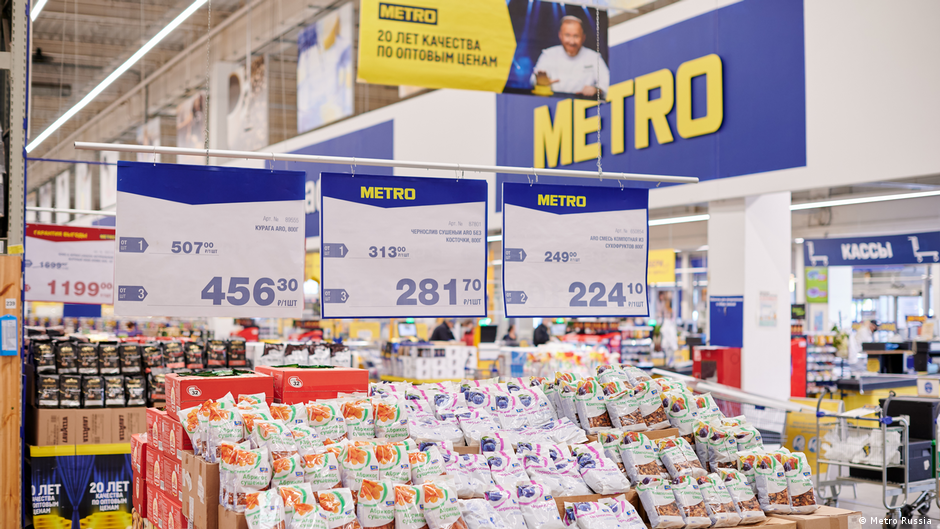
Foreign retailers that kept or once held operations in Russia are facing a sharper test of control over their local businesses, as Russian authorities move assets of several Western chains into temporary management and owners lose access to them. The situation is drawing attention beyond Europe because it speaks directly to the risk calculations facing U.S. companies, investors and policymakers as Washington continues to weigh the business consequences of operating in politically adversarial markets.
The question now is whether the Russian businesses of foreign retailers are heading toward nationalization. Assets connected to some companies have already been placed under temporary management, a step that can effectively strip owners of day-to-day control even before any formal transfer of ownership. The affected names include the French chains Auchan and Leroy Merlin, Germany’s Metro and other companies with retail operations or legacy assets in Russia.
For American executives, the immediate lesson is not limited to retail. The broader issue is whether foreign corporate assets can remain protected when geopolitical conflict becomes the dominant frame for commercial decisions. Temporary management in Russia signals that legal ownership may not be enough to guarantee operating authority, cash access or the ability to exit on commercial terms.
Temporary Management Becomes a Strategic Warning
The cases involving Auchan, Leroy Merlin, Metro and other companies show how foreign-owned or formerly foreign-owned retail operations can become exposed to state intervention. In practical business terms, temporary management can mean that the foreign owner no longer directs the Russian asset, even if the final legal fate of the business remains unresolved.
That distinction matters for U.S. businesses. Washington has spent years tightening sanctions and export controls connected to Russia, while corporate boards have had to decide whether to exit, suspend operations, sell under pressure or maintain limited exposure. The experience of European retailers in Russia provides a cautionary example for American companies with assets in markets where political retaliation, capital controls or administrative takeover are plausible risks.
Temporary management of foreign assets raises a core boardroom question: who controls the business when politics overrides normal commercial law?
Retail is especially visible because it touches consumers directly and depends on physical infrastructure, supply chains, leases, inventories and local staff. Those features make retail assets harder to remove quickly than software, services or financial exposures. For companies with stores, warehouses or distribution systems, a political shift can trap value inside the country where the assets sit.
The uncertainty also complicates accounting and valuation. If owners lose operational access to Russian assets, they may face write-downs, legal uncertainty and reputational pressure from shareholders. Even when no immediate dollar figure is available, the bottom-line impact can be material because control, recoverability and exit value are central to how corporate assets are assessed.
Schroeder’s Role Adds Political Sensitivity
The case of Globus adds another political dimension. Former German Chancellor Gerhard Schroeder has joined the supervisory board of the former Russian subsidiary of the German holding company Globus. His involvement is notable because it places a high-profile European political figure inside the governance structure of a business connected to the wider reshaping of Western retail assets in Russia.
For U.S. policymakers, that kind of development raises familiar questions about how former officials, corporate governance and cross-border business interests intersect after geopolitical rupture. It also highlights the uneven paths Western companies and executives may take as they seek protection, influence or continuity for assets that remain exposed to Russian jurisdiction.
The presence of political figures around these businesses does not, by itself, determine whether nationalization will occur. But it does underline the extent to which corporate outcomes in Russia are no longer merely commercial. The fate of foreign retailers now sits at the intersection of state policy, ownership rights, sanctions pressure and political relationships.
Washington’s Business Lens
From a U.S. business and politics perspective, the Russian retail cases reinforce the importance of country-risk planning. American companies with direct operations, joint ventures, franchise structures or trapped capital in politically sensitive jurisdictions face a basic strategic question: how quickly can they protect value if local authorities restrict control?
The implications extend to insurers, lenders, auditors and institutional investors. A company’s exposure to Russia or similar high-risk markets can affect credit judgments, disclosure expectations and investor confidence. Even businesses that have already reduced their Russian presence may still have unresolved claims, stranded assets or reputational exposure tied to prior operations.
Washington may also see these developments as evidence supporting tougher corporate-risk guidance and sanctions enforcement. If foreign-owned assets can be placed under temporary management, then U.S. officials and business groups may push companies to reassess whether continued exposure creates unacceptable vulnerability, not only to legal penalties but also to asset loss.
The central fact remains stark: foreign retail chains are losing the ability to manage assets in Russia one after another. For the companies directly affected, the issue is immediate control. For U.S. business leaders, the message is broader and strategic. In markets where the rulebook can change under political pressure, ownership may not be the same as command, and staying too long can turn a commercial investment into a geopolitical liability.



