Former Ukrainian Commander Says Ukraine Will Never Join NATO, Urges New Defense Alliances
Ukraine’s ex-top general warns NATO membership is unlikely and advocates for emerging coalitions like the Joint Expeditionary Force amid ongoing conflict.
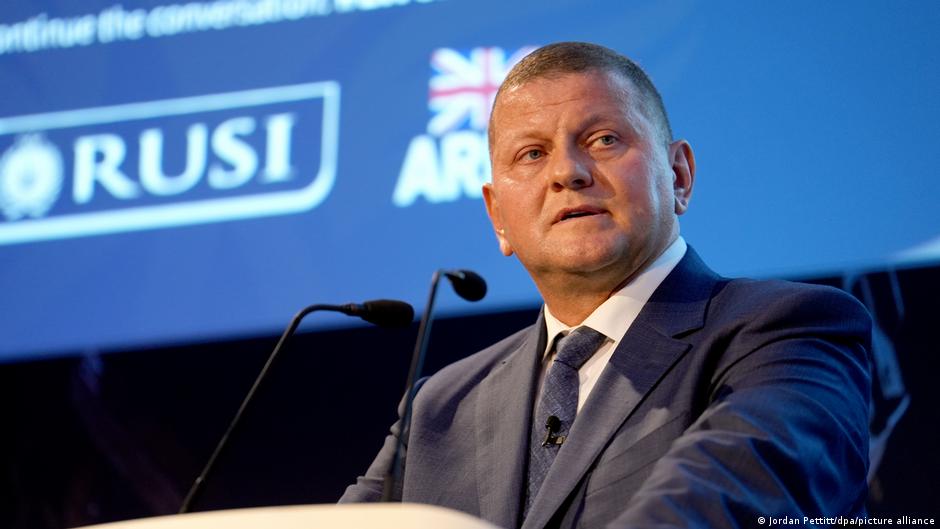
Ukraine will never join NATO due to incompatible military doctrines, according to Ukraine's ambassador to the UK and former commander-in-chief of the Ukrainian Armed Forces, Valeriy Zaluzhny. However, he emphasized that Kyiv still requires NATO technologies to enhance its defense capabilities, especially amid ongoing Russian missile attacks.
Ukraine's NATO Membership Prospects and Alternative Alliances
Speaking at a meeting of Ukrainian ambassadors in Kyiv on August 3, Zaluzhny expressed skepticism about Ukraine’s NATO membership prospects, suggesting alternative security arrangements might better suit Kyiv’s needs. The comments come as Ukraine continues its resistance against Russia's military aggression and seeks international support.
"I have known NATO very well—about 12 years personally working to align our forces with NATO standards. Every year I heard stories that we would join NATO imminently. Unfortunately, we never will," Zaluzhny stated.
Zaluzhny cited fundamental structural and doctrinal differences between the Ukrainian Armed Forces and NATO. He explained that Ukraine’s current military development level does not match NATO’s requirements, which he characterized as based on World War II-era doctrines. He also expressed doubt that NATO would significantly reform its internal organization in the near future to accommodate Ukraine’s integration.
"Most likely, NATO will remain as it is, and it will take about 12 years for Ukraine to reach standards that even approach half the level of the Russian Federation," Zaluzhny added.
Despite the pessimism on membership, Zaluzhny acknowledged Ukraine’s need for advanced military technologies currently available within NATO countries, particularly missile defense systems. This aligns with concerns voiced by Ukrainian President Volodymyr Zelensky, who highlighted the importance of U.S. Patriot missile systems to defend against persistent Russian rocket strikes.
As an alternative path to enhancing Ukraine’s security, Zaluzhny pointed to emerging defense coalitions such as the Joint Expeditionary Force (JEF), a 10-nation coalition led by the UK focused on regional security in Northern Europe.
Ukraine was granted expanded partnership status with JEF in December 2025, signaling deepening ties. The coalition comprises Denmark, Finland, Estonia, Iceland, Latvia, Lithuania, the Netherlands, Sweden, and Norway, aiming to bolster security particularly in the Baltic and Arctic regions. JEF’s collaboration with NATO includes maritime deterrence against Russia and readiness to counter Russia’s "shadow fleet." However, JEF currently lacks collective defense obligations akin to NATO’s Article 5 commitment.
Zaluzhny expressed regret that Ukraine has not fully pursued membership within JEF, noting that the coalition’s command structures remain underdeveloped and not yet fully suitable for Ukraine’s participation.
For Washington and American businesses, Zaluzhny’s remarks underscore the complex security landscape in Eastern Europe. While full NATO expansion may stall, the U.S. must consider supporting alternative multilateral defense arrangements that can serve as platforms for technology transfer and strategic partnerships.
Furthermore, U.S. defense contractors providing systems like Patriot missiles remain critical to Ukraine’s defense and the broader geopolitical calculus. Prolonged conflict and evolving alliances may affect American military aid programs and influence Pentagon budgeting priorities, as well as defense industry supply chains.
In light of Zaluzhny’s analysis, Washington’s approach to supporting Ukraine may increasingly emphasize flexible coalitions and technology cooperation over formal alliance expansion, shaping future U.S. policy and transatlantic security commitments.