German and Austrian Raids Highlight Russia Sanctions Risks for Auto Trade
Investigators say two businessmen routed 53 cars and six trucks to Russia through third countries, underscoring compliance risks for Western exporters.
Authorities in Germany and Austria have searched properties linked to two businessmen suspected of sending vehicles to Russia through third countries in breach of European Union sanctions, a case that carries wider implications for Washington’s sanctions strategy and for companies exposed to global trade compliance risk.
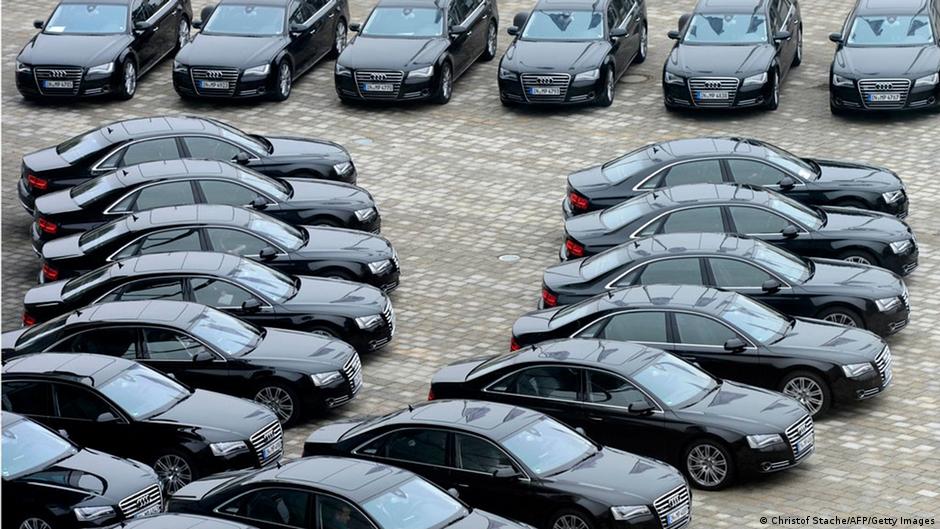
The Kaiserslautern prosecutor’s office said on Tuesday, September 29, that the suspects are believed to have exported 53 passenger cars and six tractor units to Russia between autumn 2022 and the end of 2024. Investigators allege the shipments were structured to evade EU restrictions by using intermediary countries, including Belarus, Kyrgyzstan and Georgia.
German, Austrian and Belgian law enforcement agencies took part in searches on September 8 at residential and commercial premises in Neustadt an der Weinstrasse, in the German state of Rhineland-Palatinate, and in Vienna. At the request of prosecutors, the Kaiserslautern district court authorized the seizure of assets worth about 7 million euros, described by investigators as the suspected proceeds from the illegal exports.
Prosecutors said both suspects have so far exercised their right to remain silent while the investigation continues.
During the searches, authorities in Germany seized two vehicles, a Porsche and a Mercedes-Benz. In Austria, investigators seized 85,000 euros in cash. A further 278,000 euros was frozen in bank accounts in Germany, Austria and Belgium. Officials also found three hunting rifles and ammunition at the Neustadt premises of one of the entrepreneurs, prompting an additional investigation into a possible violation of weapons laws.
Why Washington Will Be Watching
Although the case is being handled by European prosecutors under EU sanctions rules, it touches a policy priority shared by Washington: closing the gaps that allow restricted goods to reach Russia through indirect routes. Since Russia’s full-scale invasion of Ukraine, U.S. and European sanctions have depended not only on headline bans but also on enforcement against rerouting, false end-user declarations and third-country intermediaries.
For U.S. policymakers, cases involving Belarus, Kyrgyzstan and Georgia are likely to reinforce concerns that Russia-facing trade has shifted into jurisdictions where customs declarations, resale channels and corporate ownership structures can obscure the final destination. American agencies have repeatedly warned companies that sanctions exposure can arise even when goods do not move directly from the United States or Europe to Russia.
The auto sector is especially sensitive because luxury vehicles, commercial trucks and high-value parts can move through dealer networks, brokers and logistics firms before reaching the ultimate buyer. The German and Austrian investigation is another sign that enforcement authorities are focusing not only on arms, microchips or dual-use electronics, but also on high-value consumer and transport goods whose shipment to Russia is restricted.
Compliance Pressure on American Companies
For U.S. businesses, the bottom-line lesson is broader than the European auto market. American manufacturers, distributors, insurers, lenders, leasing companies and logistics providers can face reputational and regulatory exposure if their goods, financing or services become part of a sanctions-evasion chain. Even companies with no direct Russia sales may need to assess whether resellers or trading partners are routing products through third countries later linked to Russian end users.
The alleged use of third countries in this case is particularly relevant for compliance teams reviewing export controls and sanctions screening. If a buyer, freight forwarder or financing counterparty is located outside Russia, that does not eliminate risk. The commercial signals that often matter include unusual order volumes, rapid resale patterns, newly formed intermediaries, payment structures that do not match the buyer’s stated business, or requests to classify new vehicles as used goods.
The financial consequences can be substantial. In this investigation alone, prosecutors sought asset seizures of about 7 million euros, alongside cash seizures, vehicle seizures and account freezes across three European countries. For companies operating internationally, enforcement can therefore translate into frozen funds, disrupted contracts, seized inventory, legal costs and long-term damage to banking relationships.
The case also lands against a wider pattern of German investigations into luxury-car exports to Russia. In March, a court in Wurzburg sentenced a Bavarian car dealer to six years in prison for supplying 111 luxury cars to Russia in violation of sanctions. According to investigators in that case, the vehicles reached employees of the FSB, the Federal Protective Service, Rosneft and the Russian presidential administration. In July 2025, an employee of a car dealership in Hesse received a five-year prison sentence for selling 71 luxury cars to Russia, also in circumvention of sanctions.
German prosecutors have been examining more than 40 cases related to the supply of expensive cars to Russia, according to reporting from May 2025. Media accounts described a push by German justice authorities against dishonest car dealers, while experts cautioned that enforcement was stopping only a small share of shadow shipments.
The scale of the challenge was also underlined by a Reuters report in February that said tens of thousands of vehicles, including German luxury cars, were being exported to Russia in circumvention of sanctions through China. Some of those cars are produced in China by foreign companies, while others are imported into China from abroad. Reuters reported that new vehicles were being registered as used, a practice that allowed sellers to avoid obtaining manufacturer authorization for sales to Russia.
For Washington and for U.S. boardrooms, the message is that sanctions enforcement is becoming a supply-chain issue, not just a legal department concern. The latest raids show European authorities are willing to pursue dealers, seize proceeds and coordinate across borders. American companies with global distribution footprints should expect continued scrutiny of indirect trade flows, especially where premium goods, transport assets or sensitive markets intersect with Russia-linked demand.