German Foreign Minister Presses Kyiv to Include Berlin’s Defense Firms
Johann Wadephul said Germany’s defense industry should benefit from Berlin’s support for Ukraine as procurement talks continue.
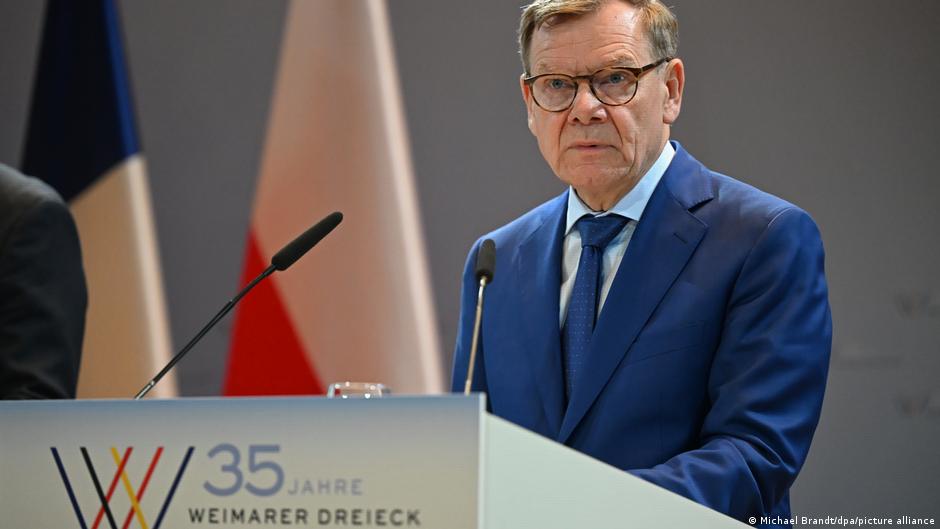
German Foreign Minister Johann Wadephul has publicly urged Kyiv to pay closer attention to Germany’s interests, saying Berlin’s defense industry should benefit from the scale of German financial and military backing for Ukraine. His remarks, made in an interview with Bild published on Tuesday, September 8, add a sharper commercial and political edge to Europe’s ongoing military support for Kyiv.
Wadephul criticized Ukrainian President Volodymyr Zelensky and framed his message around accountability to German taxpayers. Germany, he said, is currently Ukraine’s strongest supporter in terms of financial and military aid. For Berlin, that position now comes with a clear expectation: German manufacturers should have a seat at the table in defense-related procurement.
“At the moment, we are Ukraine’s strongest supporter in terms of financial and military support,” Wadephul said, adding that Germany’s defense industry “must naturally benefit from this.”
The comments matter beyond Berlin. For Washington, they underscore a policy tension that has become increasingly visible among Ukraine’s Western backers: governments are still committed to supporting Kyiv, but they also want domestic industrial returns, political cover at home and clearer evidence that aid spending feeds back into their own economies. That logic is already familiar in the United States, where defense assistance is often tied to contracts, production lines and jobs in American states and congressional districts.
Berlin’s Message to Kyiv
According to Wadephul, he raised the issue directly with Zelensky during a recent visit to Kyiv. He described his message as supportive but explicit: Germany stands with Ukraine and will continue to back it, but Berlin must also be able to justify that support to German taxpayers. At minimum, he said, German defense companies should participate in all procurement processes.
That statement stops short of demanding exclusive treatment for German firms. But it does signal that Germany wants its industrial base included systematically as Ukraine buys or receives military equipment and support systems. The implication is that Western aid is not only a matter of strategic solidarity; it is also part of a broader defense-industrial contest in which European suppliers, American contractors and other partners are competing for influence, production orders and long-term relationships with Kyiv.
For U.S. businesses, especially defense and aerospace companies, the German foreign minister’s remarks are a reminder that Ukraine-related procurement is becoming more politically managed. American companies have played a major role in the Western response to Russia’s war in Ukraine, but European governments are increasingly emphasizing their own industrial capacity. As Germany presses for its firms to be included, Washington may face parallel pressure to defend the position of U.S. suppliers while also encouraging European burden-sharing.
Wadephul visited Kyiv on August 22. During a joint press conference with Ukrainian Foreign Minister Andrii Sybiha, he announced an additional 60 million euros in aid for Ukraine. The package was presented as part of Germany’s continuing support for the country.
Germany will also transfer another 10 million euros to a NATO fund, according to the announcement. Money from that fund is used, among other things, for supplies of energy carriers, medical equipment and systems to protect against drones. Those categories are especially relevant for Ukraine’s civilian and military resilience, as energy infrastructure, medical logistics and anti-drone defenses remain central needs.
Implications for Washington and U.S. Contractors
Wadephul also said he planned further talks with partners from various countries on supplying Ukraine with additional air defense systems. That point has direct relevance for Washington, where air defense has been one of the most politically sensitive and operationally urgent parts of Ukraine assistance. Systems capable of intercepting missiles and drones are expensive, production-constrained and strategically important for both battlefield defense and protection of cities and infrastructure.
The German position could influence how allied governments divide responsibilities in future support packages. If Berlin insists that German defense companies participate in procurement tied to German funding, other donors may apply similar expectations. That would make Ukraine aid more closely linked to national industrial policy across the alliance.
For American companies, the bottom-line impact depends on how procurement rules and allied coordination evolve. If Germany’s approach becomes more common, U.S. firms could face more structured competition from European suppliers in Ukraine-related contracts. At the same time, increased European spending on defense production may reduce some pressure on Washington to carry the largest share of Ukraine’s military supply burden.
Politically, Wadephul’s remarks also mirror debates in the United States over how to explain Ukraine aid to voters. The argument that military support strengthens domestic industry has been used repeatedly in Washington, where lawmakers have emphasized that much of the spending flows through American factories and supply chains. Berlin is now making a comparable case in its own terms: support for Kyiv must be paired with visible benefits for Germany’s defense sector.
The message to Kyiv is therefore not a withdrawal of support, but a demand for more attention to the economic interests of a major backer. For Ukraine, which depends on continued military, financial and infrastructure assistance from Western partners, that means procurement decisions are likely to carry increasing diplomatic weight.
For Washington, the episode is a sign that allied support for Ukraine remains strong but is becoming more transactional in presentation. Governments want to show that aid is defensible not only as foreign policy, but as industrial policy. That shift could shape future negotiations over air defense, drone protection, medical equipment, energy supplies and broader defense contracts tied to Ukraine’s long-term security needs.