German Lawmaker’s Belarus and Russia Outreach Tests Western Unity Signals
Sven Hornauf’s planned delegations come as Washington watches European political fractures over Russia, sanctions, defense spending and local diplomacy.
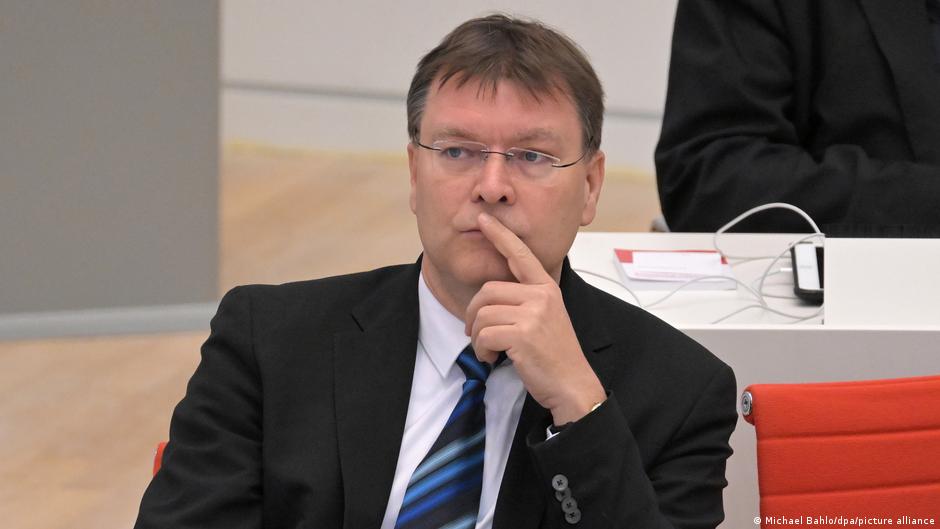
A German state lawmaker from the left-populist BSW party says he is assembling delegations of politicians and civil society representatives for trips to Belarus and Russia, a move that could carry political significance beyond municipal diplomacy as Washington continues to press European allies to maintain a united front over Moscow.
Sven Hornauf, a member of the Brandenburg state parliament from the Alliance for Social Justice and Reasonable Economic Policy, known as BSW and formerly associated with Sahra Wagenknecht, told the regional newspaper Märkische Oderzeitung that he plans to travel by bus to Vitebsk in November with a delegation of like-minded participants from different German parties. Larger German outlets, including dpa, Tagesspiegel and Die Welt, reported on the plans the following day.
Hornauf said the aim is to restart cooperation between German municipalities and sister cities in Belarus and Russia, presenting the effort as a grassroots bid to rebuild direct contacts. He also plans a visit to Russia in April 2027.
Hornauf said he wants to send “a signal in favor of understanding between peoples” and restore regular contacts “directly at the level of people.”
For U.S. policymakers and companies operating in Europe, the effort underscores a persistent tension inside Germany: while Berlin remains a core NATO ally and a central player in sanctions policy, local and regional political actors continue to test the boundaries of engagement with Russia and Belarus. That matters for American businesses because political drift in Europe can affect sanctions enforcement, defense procurement, energy strategy and the operating climate for U.S. firms with German exposure.
Local Diplomacy With Geopolitical Consequences
According to Hornauf, the Belarus trip is expected to include 30 to 40 people, most of whom do not belong to any political party. He said participants include several BSW members as well as representatives of the Greens and the far-right Alternative for Germany, or AfD. The final composition of the delegation will be determined during preparatory meetings, he said.
Hornauf indicated that from November 6 to 11 a delegation from his home city, Frankfurt an der Oder, will visit Vitebsk. Other participants in the trip intend to travel to Minsk and several other Belarusian sister cities. In each case, the stated purpose is to restore sister-city ties.
Many of the sister-city relationships linking German, Belarusian and Russian municipalities were suspended after Russia’s full-scale invasion of Ukraine. But a 2026 survey by the Redaktionsnetzwerk Deutschland media group of around 100 German cities and communities found that only one had fully terminated its partnership with a Russian sister city.
The same reporting said informal contacts with Russia continued after 2022 in about 40% of the municipalities surveyed, including invitations for Russian municipal representatives to visit Germany. In 42% of responding German municipalities, officials supported resuming partnerships with Russia in the event of a peace settlement in Ukraine.
Those figures suggest that beneath Germany’s federal posture toward Moscow, a more mixed picture remains at the municipal level. For Washington, that is relevant because U.S. strategy toward Russia has relied heavily on allied cohesion, including sanctions, military assistance to Ukraine and NATO deterrence. Any normalization effort, even at the city level, may become part of a broader debate over how quickly Europe should reengage with Russia if the war moves toward a settlement.
Business Stakes for U.S. Firms
The immediate business impact of Hornauf’s initiative is limited. Sister-city contacts do not rewrite sanctions law or reopen restricted markets. But the political signal is more consequential. U.S. companies in defense, energy, technology, logistics and financial services have spent years adapting to sanctions, export controls and reputational risks tied to Russia and Belarus. If parts of Germany begin pressing more visibly for renewed contact, American firms may face a more complicated policy environment across Europe.
The issue is especially sensitive for U.S. defense contractors and suppliers. Hornauf has criticized Germany’s expanded defense measures in response to Russia’s aggressive policy. In particular, he opposed the deployment of the U.S.-Israeli Arrow 3 missile defense system at the Bundeswehr base in Holzdorf. The missile defense system entered operational service in Germany at the end of 2025.
That opposition places the municipal outreach in a wider German debate over defense spending, NATO commitments and the country’s role in European deterrence. For U.S. firms involved in missile defense, aerospace, cybersecurity and military logistics, German political divisions can affect procurement timelines, public acceptance and parliamentary scrutiny. The bottom line is that local politics can feed into national debates that influence billion-dollar defense and infrastructure decisions.
Hornauf has previously drawn media attention for Russia-related outreach. In spring 2026, he was one of the initiators of a visit by BSW members and supporters to the Russian embassy in Berlin. He has also faced criticism in the past for supporting several AfD initiatives.
BSW’s positioning is important because it blends left-populist economic messaging with skepticism toward aspects of Germany’s security posture. The participation of AfD figures, as described by Hornauf, adds another layer of controversy because the far-right party has long challenged elements of Germany’s mainstream Russia policy. The presence of Green representatives, if finalized, would show that the delegation is not confined to one faction, although Hornauf has said the final list remains subject to preparatory meetings.
From a U.S. business and politics perspective, the central question is not whether one Brandenburg lawmaker can change Germany’s foreign policy. He cannot do that alone. The larger issue is whether municipal and regional efforts to revive contacts with Russia and Belarus become a pressure channel inside Europe at a time when Washington is focused on alliance discipline, sanctions durability and long-term defense planning.
For American executives watching Germany, the practical takeaway is caution. Any movement toward renewed local engagement may create expectations among European partners, customers and suppliers, but formal legal constraints remain central. U.S. companies must continue to treat Russia and Belarus exposure through the lens of sanctions compliance, export controls and reputational risk, regardless of sister-city diplomacy. Still, Hornauf’s planned trips show that the politics of reengagement are not dormant, and that Germany’s local institutions may become an early testing ground for future debates over normalization.