German Local Runoffs Dent Far Right in Signal for Washington and U.S. Firms
Lower Saxony’s municipal results showed AfD candidates losing three mayoral contests while Greens held Hanover and gained other city posts.
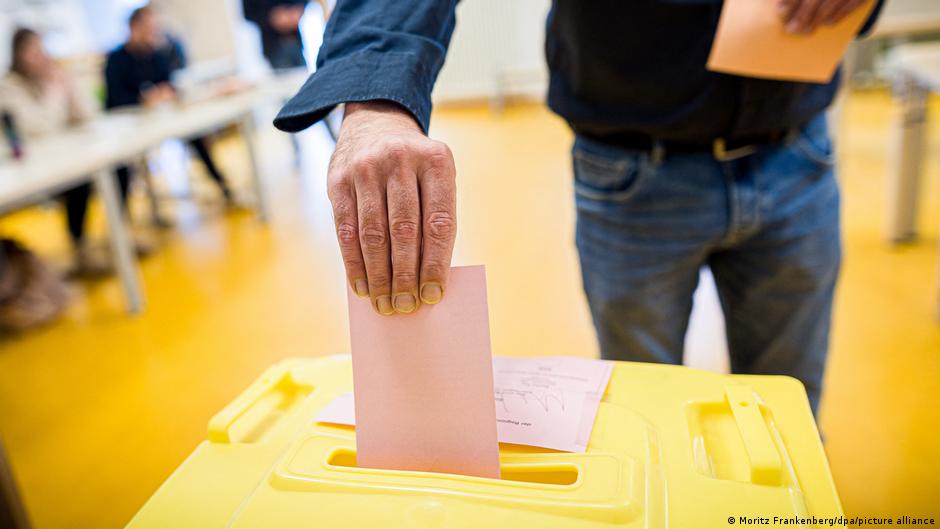
Germany’s far-right Alternative for Germany failed to convert its first-round gains into executive power in three Lower Saxony municipalities, a result likely to be read in Washington and corporate boardrooms as a modest but meaningful signal about the resilience of Germany’s local political center.
In runoff municipal elections held on Sunday, September 27, voters across 123 communities in the northwestern state chose mayors and other local leaders. AfD candidates were competing for three top municipal posts: in Salzgitter, a city of about 100,000 residents, and in the smaller towns of Munster and Bockenem, with populations of about 15,000 and 9,000 respectively. All three AfD candidates lost by wide margins.
For U.S. policymakers, the results matter less as a single state-level contest than as another data point in Germany’s struggle with far-right politics at a time when Berlin remains central to NATO, Ukraine policy, industrial strategy and transatlantic trade. For American businesses, especially companies with operations or customers in Germany, the vote offered a picture of continued institutional resistance to the AfD’s advance in local executive offices, even as the party remained a significant force in the first round.
AfD Loses Three Executive Contests
In Salzgitter, incumbent mayor Frank Klingebiel of the Christian Democratic Union won a commanding victory with 74.72 percent of the vote. Klingebiel has held the office since 2006. His AfD challenger, Patricia Mair, received 25.3 percent.
In Munster, independent candidate Anna Adamczak won with 80.5 percent, while AfD candidate Christoph Weynand took 19.5 percent. In Bockenem, independent candidate Jens Luer won with 69.6 percent against AfD candidate Felix Mull, who received 30.4 percent.
The central business takeaway is not that the AfD has disappeared, but that its path from protest vote to local executive power remains contested.
The defeats came after the AfD placed third in the main phase of Lower Saxony’s municipal elections on September 13. According to data as of September 14, the CDU led with 27.2 percent of the vote. The Social Democratic Party followed with 24.6 percent, while the AfD received 15.9 percent. The Greens took 14.1 percent and the Left Party received 6 percent.
Turnout, according to the election commission’s September 14 figures, stood at 64.6 percent, 7.6 percentage points higher than in the 2021 state election. That higher participation rate will interest political analysts in the United States because turnout is often treated as a measure of whether mainstream parties can mobilize voters when the far right is gaining ground.
Greens Hold Hanover and Gain Ground
The Greens had one of the most visible results of the night in Hanover, the administrative capital and largest city in Lower Saxony. Belit Onay of Alliance 90/The Greens, who has led the city since 2019, retained the post of mayor after defeating Axel von der Ohe of the Social Democratic Party in the runoff.
Hanover is not merely a regional capital. For U.S. companies and investors, it is part of the broader German urban network that helps shape procurement, transport planning, climate policy, housing and business regulation at the municipal level. A Green victory there points to continued local support for policy priorities that can affect energy, infrastructure and urban investment decisions.
The Greens also won in Oldenburg, the state’s third-largest city, where Jascha Rohr defeated Ulf Prange of the Social Democratic Party. Prange had run for the SPD in place of Juergen Krogmann, who had served as mayor since November 2014. In Goettingen, the fifth-largest city in Lower Saxony, Green candidate Onyeka Oshionwu defeated CDU candidate Ehsan Kangarani in the second round.
Those outcomes give the Greens prominent municipal footholds even though the party finished behind the CDU, SPD and AfD in the overall first-round vote tally. The distinction is important: proportional strength in a broad local election does not always translate into control of mayoral offices, where second-round coalitions, local reputation and anti-extremist consolidation can shape the result.
Center Parties Retain Key Cities
The Social Democrats and Christian Democrats also held important mayoral offices. In Braunschweig, the state’s second-largest city, SPD incumbent Thorsten Kornblum kept his post after defeating Maximilian Pohler of the CDU. Kornblum has led the city since November 2021.
In Osnabrueck, Lower Saxony’s fourth-largest city, CDU mayor Katharina Poetter retained office by defeating Volker Bajus of the Greens. Poetter has also headed the city since November 2021.
For Washington, the pattern suggests Germany’s mainstream parties remain competitive across major urban centers despite fragmented local politics. For U.S. businesses, it indicates that regulatory and investment environments in key Lower Saxony cities will continue to be shaped by familiar governing parties and independents rather than by AfD leadership.
Constitutional Scrutiny Remains a Business Risk Marker
The election also underscored a legal and institutional issue that U.S. executives monitoring Germany cannot ignore. Four AfD candidates were denied admission to the elections because of doubts about their commitment to Germany’s constitutional order. The party’s Lower Saxony organization is under observation by the domestic intelligence agency responsible for protecting the constitution as a right-wing extremist group. The AfD is challenging that decision in court.
That unresolved legal fight adds a layer of uncertainty around the party’s role in German public life. For American companies, the immediate implication is reputational and operational rather than purely electoral. Firms with German public-sector contracts, workforce exposure or long-term capital projects must weigh not only tax and infrastructure policy, but also the stability and constitutional legitimacy of local political actors.
The Lower Saxony runoffs did not erase the AfD’s electoral base. A party that drew 15.9 percent in the first round remains relevant, and in Bockenem its runoff candidate still captured 30.4 percent. But the party’s losses in all three contests where it sought top municipal jobs suggest limits to its ability to win executive authority when voters are presented with a direct choice.
For the Biden-era transatlantic agenda’s successors in Washington, and for American companies navigating Europe’s largest economy, the result is therefore mixed but clarifying. Germany’s far right continues to command a measurable share of the electorate, yet in this round of local contests, voters in Lower Saxony’s runoffs kept city leadership in the hands of Greens, Social Democrats, Christian Democrats and independents.



