German Military Opt-Out Filings Triple as Draft Debate Tests NATO Readiness
A surge in German conscientious-objector filings highlights political strain behind Berlin’s recruitment drive and its implications for NATO planning.
Germany recorded at least 12,102 declarations of unwillingness to serve in the armed forces from January through the end of August 2026, a sharp increase that underscores the political pressure behind Berlin’s effort to rebuild military manpower at a time of heightened European security concerns.
The filings were submitted to the Federal Office for Family and Civil Society Affairs, known as BAFzA, according to the Funke media group, which reported the figures on Monday, October 5. For all of 2025, German authorities received 3,879 applications refusing military service. That means the number of objectors in just the first eight months of 2026 was more than three times the total recorded for the previous full year.
The increase comes as Germany implements a reform of Bundeswehr recruitment that took effect on January 1. Under the law, 18-year-old men are required from 2026 to complete a questionnaire asking whether they are willing to join Germany’s armed forces. Young people are allowed to state in advance that they refuse military service, a provision that appears to be driving part of the jump in filings.
For Washington, the trend is more than a domestic German story. Germany is central to NATO’s European defense architecture, hosts major U.S. military facilities, and is a crucial market for American defense contractors, logistics firms and technology suppliers tied to allied rearmament. Any sign that Berlin may struggle to meet personnel targets complicates the broader U.S. goal of pushing European allies to carry more of the continent’s defense burden.
A manpower problem with alliance consequences
Germany suspended compulsory military service in 2011, but the current law leaves open the possibility that mandatory service could be partially restored by a decision of the Bundestag. Officials describe the concept as a form of military obligation to be used when necessary. It is expected to be activated if Germany fails to reach the required number of volunteers.
The Defense Ministry’s planning goal is ambitious: by 2035, the Bundeswehr should have as many as 260,000 personnel serving at the same time. That target reflects Germany’s attempt to adapt to a more dangerous security environment and answer allied pressure for stronger European defense capacity.
But the rising number of refusal declarations shows the political and generational limits of that effort. A BAFzA representative said many objectors make mistakes when submitting their applications. The content of some filings “does not meet the requirements for recognizing the refusal as justified,” the official was quoted as saying, meaning such applications “have to be returned without consideration.”
“The content does not meet the requirements for recognizing the refusal as justified,” a BAFzA representative said, according to German media.
The administrative detail matters. Some filings may not ultimately be accepted, and the headline number does not necessarily equal the final count of legally recognized conscientious objectors. Still, the volume of applications signals widespread anxiety among young Germans about military service and the potential return of compulsory obligations.
Recruitment gains, political resistance
The Bundeswehr has expanded its search for recruits in recent years, including by setting up a presence at Gamescom, one of the world’s largest video game trade fairs, held in Cologne. The move reflects a broader attempt to reach younger audiences through channels more associated with entertainment and digital culture than traditional military recruiting.
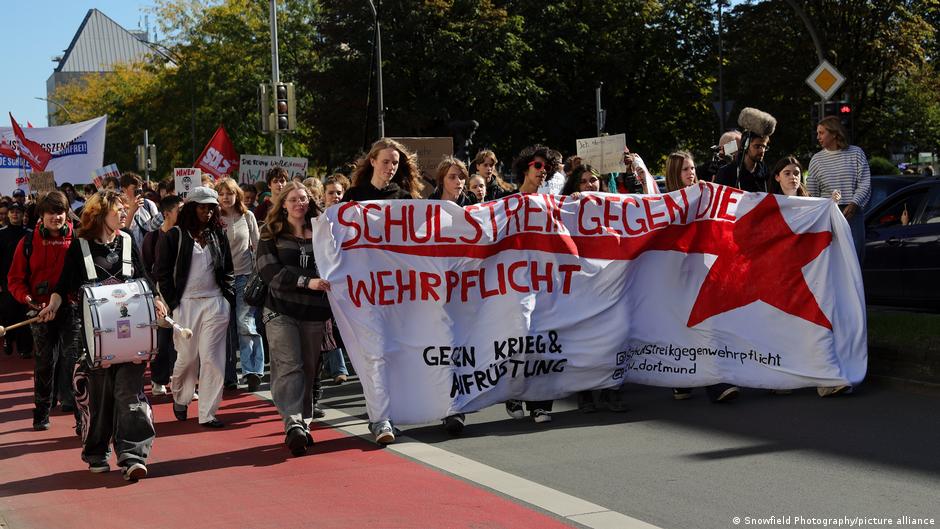
At the same time, German students have criticized the possible return of military obligation when necessary. In September, large protests linked to the issue took place in several German cities. That resistance presents a political dilemma for Berlin: the government is trying to grow the armed forces while avoiding a public backlash that could make defense reforms harder to sustain.
The refusal numbers also sit alongside signs that Germany’s recruitment system is generating momentum. In late July 2026, the German Defense Ministry said the Bundeswehr had reached its highest personnel level in 13 years, with 186,700 service members. Compared with July 2025, that represented an increase of more than 2%, or 3,700 personnel.
The ministry also said that of roughly 378,000 people who had received questionnaires since the start of 2026, about 2,630 completed the suitability assessment process in July alone. That was 35% more than in the previous month.
By that point, around 12,100 volunteers and short-term contract soldiers were already serving in the Bundeswehr under the new recruitment system, about 6% more than a year earlier. The ministry also recorded significant growth in applications and admissions for contract military service. In July 2026, 47,300 people submitted such applications, a 26% increase from the same month a year earlier. As of the end of July, the number of new recruits stood at 15,400, up 12% compared with 2025.
Those figures point to a mixed picture: Germany is attracting more volunteers and contract applicants, but the same reform that expands the recruitment pipeline is also prompting thousands of young people to register their refusal in advance.
What it means for U.S. business and policy
For U.S. policymakers, the German debate will feed into familiar questions about allied burden-sharing. American administrations have long pressed NATO members to invest more in defense. Personnel shortages in Europe’s largest economy could limit how quickly new equipment, weapons systems and support capabilities translate into deployable forces.
For American companies, the bottom-line implications are more complex. A sustained German defense buildup could support demand for U.S. weapons, cybersecurity tools, communications systems, training services and dual-use technology. But if Berlin cannot recruit enough personnel, procurement plans may face political scrutiny or be redirected toward automation, unmanned systems, digital command infrastructure and other capabilities that reduce manpower demands.
The surge in refusal filings therefore matters not only as a measure of youth sentiment in Germany, but as an indicator of how difficult Europe’s military expansion may be in practice. Germany is increasing the size of the Bundeswehr and drawing more applicants into contract service, yet public resistance to compulsory service remains visible. For Washington and U.S. businesses watching NATO’s next phase, that tension is likely to shape both alliance planning and defense-market expectations through the end of the decade.



