Germany Sends Eurofighters to Latvia as NATO Guards Election Airspace
The deployment underscores how Baltic security demands are shaping NATO’s posture and raising stakes for Washington and U.S. defense firms.
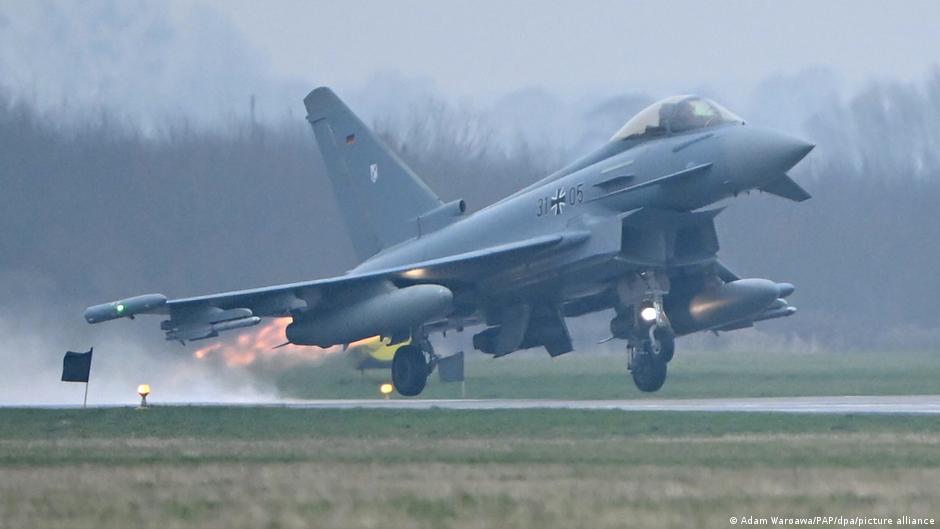
Germany has deployed four Eurofighter jets to Latvia for a little more than a week to help secure the country’s airspace during parliamentary elections scheduled for October 3, a move that highlights the growing operational burden on NATO’s northeastern flank and the continuing security implications for Washington and U.S. businesses with exposure to Europe.
The aircraft, drawn from the Bundeswehr’s 74th Tactical Air Wing at Neuburg an der Donau air base, were transferred to the Lielvarde military airfield in central Latvia. Latvia’s defense ministry announced the deployment on Thursday, September 24. The Eurofighters will support NATO’s integrated air and missile defense system while Latvia holds its Saeima election.
For U.S. policymakers, the deployment is another reminder that Baltic airspace remains a pressure point in the alliance’s broader deterrence posture after Russia’s full-scale invasion of Ukraine. For American defense contractors and companies operating in Europe, it reinforces a business environment in which air defense, surveillance, drones, communications and logistics have moved from specialist concerns to board-level risk factors.
NATO Reinforces a Vulnerable Flank
Latvia requested allied support after repeated violations of Baltic airspace, according to the dpa news agency. NATO has conducted air policing over Estonia, Latvia and Lithuania since the three Baltic states joined the alliance in 2004. The mission has taken on additional urgency since Russia launched its full-scale war against Ukraine, with drones repeatedly entering Baltic airspace.
In August, NATO fighter jets shot down a drone that had violated Latvian airspace. That incident sharpened concerns in Riga and among allied governments that the region faces not only conventional military risk but also persistent lower-level incursions that can test response times, command structures and political resolve.
Latvia’s prime minister called Germany’s response “a concrete sign of NATO solidarity” and a shared commitment to protecting Latvian airspace and public security.
Prime Minister Andris Kulbergs thanked Germany on X for its “readiness to help and close cooperation.” He said the move demonstrated the alliance’s common commitment to the protection of Latvia’s airspace and the security of the Latvian population.
The deployment is temporary, but it fits a longer pattern. From December 2026, Eurofighters are again expected to take on NATO airspace surveillance for an extended period from Estonia under the NATO Air Policing mission. Through March 2027, five Eurofighter jets and their flight crews are set to be based at Amari air base in northwestern Estonia.
Washington’s Stake in Baltic Air Defense
Although this particular deployment is German-led, the implications run directly through Washington. The United States remains the central military power in NATO, and every additional air policing requirement in the Baltics adds to the alliance-wide debate over burden sharing, readiness and the allocation of scarce high-end assets.
For U.S. officials, the Latvian case comes at the intersection of election security and military deterrence. Securing airspace during a parliamentary vote is not only about protecting aircraft lanes or responding to drones. It is also about signaling that political processes in frontline NATO states will not be left exposed to coercion, intimidation or disruption.
That message matters in U.S. politics, where debates over Ukraine aid, NATO spending and European defense have become increasingly tied to domestic budget priorities. European allies, including Germany, are under pressure to do more. Deployments such as the Eurofighter mission in Latvia may be cited in Washington as evidence that Europe is shouldering more of the regional security load, even as the United States continues to provide strategic backing and advanced military capabilities across the alliance.
The episode also underscores a practical challenge for NATO planners: drones and airspace violations can force expensive responses. Intercept missions require aircraft, trained crews, maintenance capacity, airfield access and command-and-control systems. Even when no broader conflict follows, the cost of readiness remains substantial.
Bottom-Line Impact for U.S. Companies
For American companies, the clearest commercial implications lie in defense technology and infrastructure. Persistent airspace violations in the Baltics strengthen demand for radar systems, air defense networks, counter-drone tools, secure communications, battlefield data systems and maintenance support. U.S. defense firms already positioned in Europe are likely to see continued interest from governments seeking layered defenses against drones and missile threats.
The deployment also matters beyond the defense sector. U.S. manufacturers, logistics firms, energy companies and technology providers operating in Northern and Eastern Europe must factor regional security conditions into continuity planning. Airspace disruptions, emergency military movements or heightened alert levels can affect transportation, insurance costs, workforce planning and supply chain resilience.
Latvia is a small market, but the Baltic region has outsize strategic relevance because it sits on NATO’s frontier with Russia and Belarus. Any sign that allied air defense needs are expanding can ripple into procurement plans across Europe. For U.S. exporters and contractors, that may translate into opportunities, but also into more compliance scrutiny, export-control obligations and political risk assessments.
The German Eurofighter deployment is therefore more than a short-term election security measure. It reflects NATO’s continuing adaptation to a security environment in which drones, airspace incursions and political vulnerability are linked. For Washington, it raises questions about alliance readiness and burden sharing. For U.S. business, it is another signal that European security risk is no longer a distant geopolitical abstraction but a material factor in planning, investment and revenue forecasts.



