House Clears Path for Graham Russia Sanctions Bill With Tariff Powers
The measure would let President Donald Trump impose steep tariffs on countries buying Russian energy while extending US sanctions on Iran.
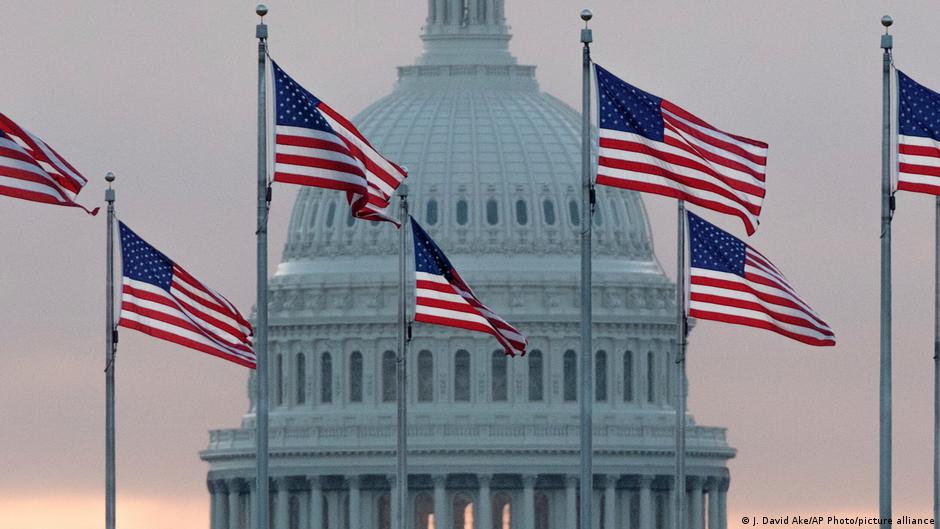
The US House of Representatives has voted to begin consideration of a bill associated with the late Senator Lindsey Graham that would give President Donald Trump authority to impose tariffs on countries purchasing Russian energy resources, opening the way for a substantive debate on legislation described by media outlets as a package of “hellish” sanctions against Russia.
The procedural vote took place on Tuesday, September 15, and was approved by a narrow margin of 214 to 211. According to The Hill, the rule governing debate on the bill, prepared by the relevant House committee, passed with the support of two Democrats who broke with their party’s position.
For Washington, the vote is significant less because it completes the bill’s passage than because it moves the measure onto the House floor at a moment when US policy toward Russia, Ukraine, China and global energy flows is under intense scrutiny. The legislation would allow Trump to impose 100% tariffs on the five largest buyers of Russian oil and gas, as well as on five countries accused of helping Russia evade energy sanctions.
The bill would also extend existing US sanctions against Iran, tying the Russia-focused tariff authority to a broader sanctions framework. If adopted by the full House, the measure would be sent to Trump for signature. He has previously expressed support for the initiative.
Business Stakes for US Companies
For American businesses, the proposal carries direct implications for pricing, supply chains and exposure to global energy markets. A tariff of 100% on major purchasers of Russian oil and gas could affect countries that are deeply embedded in global manufacturing and trade. That, in turn, could feed into import costs for US companies that rely on overseas production, energy-intensive inputs or international suppliers.
Democratic critics of the bill have framed that risk as central to their opposition. They argue the legislation would sharply expand Trump’s tariff powers without requiring mandatory sanctions against Russia itself. Representatives Don Beyer, Gregory Meeks and Richard Neal warned that the measure would raise prices for Americans and, over the longer term, weaken support for Ukraine.
“This will lead to higher prices for Americans and in the long term undermine support for Ukraine,” the lawmakers warned, according to the source account.
The criticism reflects a broader business concern in Washington: measures designed to pressure Russia can also introduce uncertainty for US companies when they operate through tariffs rather than more targeted sanctions. Tariffs can quickly alter the economics of imports, contracts and procurement, particularly for firms with exposure to countries that continue to buy Russian energy or are alleged to facilitate sanctions evasion.
Supporters of the measure, however, cast the legislation as a strategic signal. During a Rules Committee hearing on Monday, September 14, Republican Representative Michael McCaul of Texas described the next day’s vote as “exceptionally important” as a message to Russian President Vladimir Putin about American support for Ukraine. He also said it would serve as a warning to Chinese President Xi Jinping against any attempt to show aggression toward Taiwan.
That framing gives the bill a wider geopolitical meaning for US executives and investors. The proposed tariffs are not only a Russia policy tool; they are being presented by supporters as part of a broader deterrence posture involving Ukraine, Russia, China and Taiwan. For companies with Asian supply chains or exposure to energy markets, that linkage could matter as much as the text of the bill itself.
A Narrow Vote, a Wider Fight
The 214-211 vote shows how closely divided the House remains on sanctions and trade authority. The support of two Democrats proved decisive in advancing the rule, despite broader Democratic objections to the bill’s tariff provisions. That narrow margin suggests that the final House vote, expected before the end of the current week, could become a major test of congressional alignment on Russia policy and presidential trade powers.
The measure is widely referred to as the “Graham bill” in memory of Lindsey Graham, who helped develop and actively promote it. Its central mechanism would give Trump discretion to target the largest buyers of Russian oil and gas and countries assisting Moscow in bypassing energy sanctions. The source article says the bill would not itself impose mandatory sanctions against Russia, a point critics have used to argue that it gives the White House broad leverage while leaving key decisions to the president.
For US business leaders, that discretion is a central point. Mandatory sanctions generally create clearer compliance requirements, even when they are costly. Broad tariff authority can be more flexible, but also more unpredictable, especially if companies must assess whether suppliers, customers or trading partners could be caught in a future tariff action.
The political bottom line is that the House has not yet passed the bill itself. It has approved the rule that allows the chamber to begin considering it on the merits. Still, that procedural step matters because it moves a high-impact sanctions and tariff proposal closer to a final House vote. If the measure passes in full and reaches Trump’s desk, it could become a major new instrument in US pressure on Russia and a fresh source of cost and compliance questions for American companies.
The legislation now heads into a decisive stage. A full House vote is expected before the end of the week. If the “hellish” sanctions package receives support at that stage, the bill will be sent to Trump, who has previously indicated backing for the initiative.



