Houthi Missile Attempt on Riyadh Raises New Risks for US Energy and Gulf Policy
Saudi Arabia says it intercepted a ballistic missile aimed at Riyadh as Red Sea disruptions deepen pressure on oil routes central to US business interests.
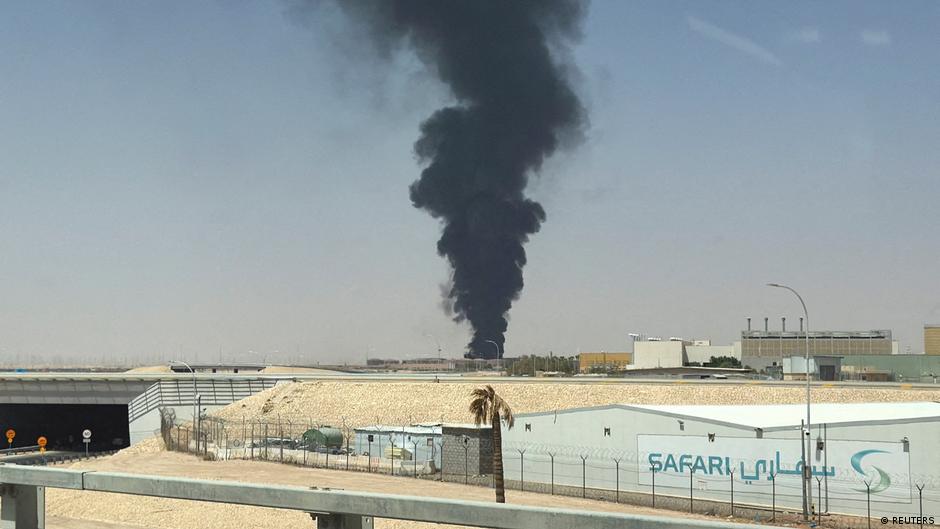
Saudi Arabia said Yemen’s Iran-aligned Houthi rebels attempted to strike Riyadh with a ballistic missile overnight, marking what the Saudi-led Coalition to Restore Legitimacy in Yemen described as the first such attempt against the kingdom’s capital. The missile was “intercepted and destroyed,” coalition spokesman Brig. Gen. Turki al-Maliki said Saturday, September 19, in a post on X.
The incident triggered an overnight air-raid alert in Riyadh, where some residents reported hearing an explosion. Saudi authorities did not report casualties or damage. Later, a column of smoke was visible near the airport. AFP, citing its correspondent, reported that a fuel tank belonging to Saudi Aramco, the kingdom’s largest oil company, was burning and that the fire was extinguished. It remained unclear whether the fire was connected to the attempted missile strike. Aramco did not respond to journalists’ requests for comment.
For Washington and US companies, the attempted strike underscores a widening security challenge around the Gulf and Red Sea at a time when energy markets, shipping routes and regional alliances are already under strain. Saudi Arabia remains a pivotal oil supplier and a major US security partner, while Aramco infrastructure and Red Sea ports are closely watched by refiners, traders, insurers and logistics firms exposed to disruptions in global crude flows.
Energy Infrastructure Under Pressure
Saudi authorities also said the Houthis attempted to attack civilian infrastructure, including targets in the Red Sea port city of Yanbu, but that the attempts were thwarted. The Houthis, for their part, claimed they had used drones, cruise missiles and ballistic missiles to strike “important facilities” in Riyadh and Aramco infrastructure in Yanbu.
The competing accounts point to the same broader risk: Saudi energy infrastructure is again becoming a front line in a regional conflict with direct commercial consequences.
Yanbu is especially important because it is the western terminus of Saudi Arabia’s East-West pipeline, a route that has gained greater importance since the start of the US and Israeli war with Iran, which has significantly complicated tanker passage through the Strait of Hormuz. Saudi Arabia increased exports through the East-West pipeline after those conditions worsened in the Gulf.
On September 11, the Financial Times reported that Saudi Arabia had halted operations on the East-West pipeline after drone attacks launched from Iraqi territory. On September 18, Bloomberg reported that Saudi Aramco had notified at least two European refineries that it would not supply them with oil in October. According to Bloomberg, the pipeline was expected to be partially restarted within days and fully restored within a month and a half.
The practical concern for US businesses is not limited to the spot price of oil. Disruptions around Saudi infrastructure can flow through insurance costs, freight rates, refinery planning, petrochemical inputs and broader inflation expectations. American companies that depend on predictable energy costs, maritime logistics or Gulf-linked supply chains may face more volatility if the attacks continue or expand.
Red Sea Chokepoints Add Washington Stakes
The latest Riyadh incident comes as pressure has grown on routes through the Red Sea. In recent weeks, the capacity of the Saudi export route has declined because of Houthi attacks on Saudi tankers in the Red Sea. In August, about 2.5 million barrels per day were shipped through Yanbu, the lowest level since 2013, according to the International Energy Agency.
On September 11, Reuters and AFP reported that the Houthis had seized strategically important islands in the Bab el-Mandeb Strait, which connects the Red Sea with the Arabian Sea. Around 12% of global cargo traffic passes through the strait, including oil trade, making it especially important for Saudi Arabia after the closure of Hormuz. The Houthis said shipping through Bab el-Mandeb was “safe for all commercial vessels except Saudi ones.”
Separately, it emerged on the eve of the Riyadh announcement that the Houthis had taken control of the port of Mokha on Yemen’s coast along the Bab el-Mandeb Strait. Reuters reported that the Houthi advance was being directed by Iran’s Islamic Revolutionary Guard Corps. Sources in Tehran said Iran was seeking to open a new front in its confrontation with the United States.
That allegation, if acted on by policymakers, could harden the debate in Washington over how directly to respond to attacks on Saudi and maritime targets. The Biden administration’s successors and congressional leaders would face pressure from competing priorities: protecting commercial shipping and allied infrastructure, avoiding a broader regional war, and limiting inflationary shocks that could hit US consumers and manufacturers.
The Saudi-led coalition also said on September 16 that the Houthis had attacked the Muslim holy city of Mecca with a drone, which it said was shot down on approach. The Yemeni rebels denied the accusation. Even without confirmed damage in Riyadh, the sequence of claims and counterclaims signals a widening battlespace that now includes Saudi cities, oil infrastructure, ports, tankers and strategic islands.
For US businesses, the bottom line is that the Red Sea and Saudi export system are becoming less predictable at the same moment alternative routes are more important. For Washington, the attempted strike on Riyadh adds another test of whether deterrence can be restored without deepening the confrontation with Iran and its regional allies.



