Kolesnikova Urges Europe to Pair Belarus Diplomacy With Sanctions Leverage
The Belarusian activist says Washington’s talks with Minsk show how calibrated sanctions relief can free prisoners and limit Russia’s influence.
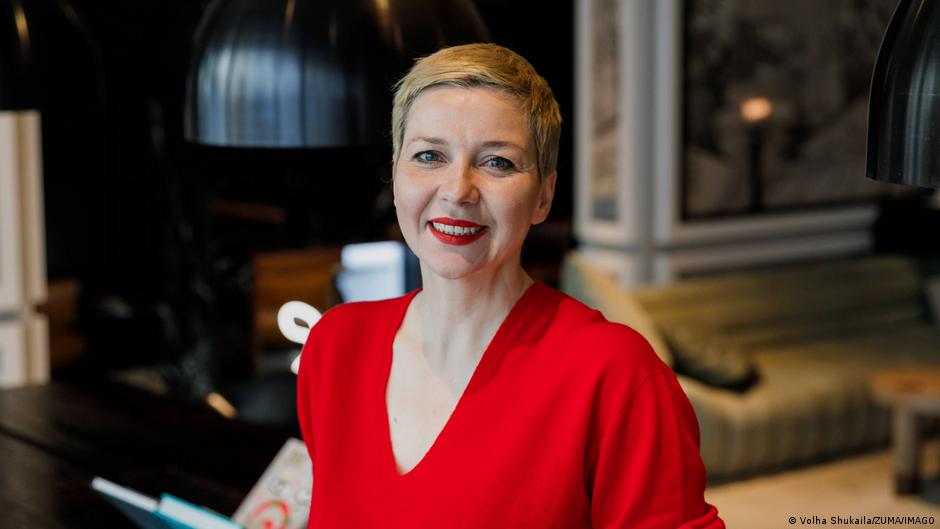
Belarusian activist, musician and former political prisoner Maria Kolesnikova is urging the European Union to follow the United States in using diplomacy alongside sanctions as a practical tool to secure the release of political prisoners in Belarus.
In an interview with DW, Kolesnikova rejected claims that her growing emphasis on dialogue reflects a softer attitude toward the government of Alexander Lukashenko. She argued instead that diplomacy can be a means of exerting pressure, setting objectives and saving lives. Her own release, she said, is evidence that negotiations can produce concrete results when tied to leverage.
“We are talking here now precisely because diplomacy was used as a tool of influence, as a tool for achieving certain goals,” Kolesnikova said.
For Washington, the message is directly tied to the policy trade-offs facing U.S. officials and American businesses with exposure to Eastern Europe. Belarus remains under heavy Western sanctions, but Kolesnikova pointed to a U.S.-Belarus negotiation track that, according to her account, led to the release of roughly 500 political prisoners in exchange for eased sanctions on Belarusian companies. She argued that if that channel worked, Europe should use a similar approach.
Kolesnikova said more than 800 people convicted under political articles remain imprisoned in Belarus. Her appeal therefore places human rights policy inside a broader strategic question for the United States and its allies: whether sanctions should remain a static punishment tool or be calibrated to extract measurable concessions from authoritarian governments.
Washington’s Belarus Track Becomes a Model
Kolesnikova specifically cited the U.S. approach as a model for Europe. In her view, the United States demonstrated that negotiations with Minsk, combined with sanctions pressure, could lead to releases that would otherwise be difficult to obtain.
That matters for U.S. policymakers because Belarus sits at the intersection of sanctions enforcement, Russia policy and European security. Minsk has long been politically and economically dependent on Moscow, and any Western opening carries risks of legitimizing the Lukashenko government. Kolesnikova’s argument is that engagement should not be directed at the regime for its own sake, but at Belarusian society and at specific outcomes such as prisoner releases.
She framed European openness toward Belarus and Belarusians, rather than toward the regime, as a way to reduce Russia’s sphere of influence inside the country. Kolesnikova described that objective as part of Europe’s security architecture, an issue that also has consequences for U.S. defense planning and business risk across the region.
For American companies, the distinction is important. Any easing of restrictions on Belarusian firms could affect compliance programs, supply chain decisions and regional investment analysis. But the source article does not identify which Belarusian companies were covered by the sanctions relief or provide financial figures. The bottom-line implication is therefore policy-driven rather than numerical: sanctions may become more conditional, transactional and tied to human rights deliverables if Washington’s model gains traction in Europe.
Poland’s Role Signals European Movement
Kolesnikova also pointed to recent talks between Polish Foreign Minister Radoslaw Sikorski and Belarusian Foreign Minister Maxim Ryzhenkov in New York on the sidelines of the 81st session of the United Nations General Assembly. After the meeting, Sikorski said, among other things, that Warsaw was preparing to open a new embassy building in Minsk.
For U.S. observers, Poland’s role is notable. Warsaw is one of Washington’s closest security partners in Europe and a front-line NATO member watching both Russia and Belarus. If Poland begins reopening diplomatic channels with Minsk while keeping pressure on political imprisonment, it may help define a European version of the U.S. track Kolesnikova praised.
The challenge is whether such contacts can be structured in a way that benefits Belarusian citizens without giving Lukashenko an unconditional diplomatic win. Kolesnikova’s comments suggest that she sees the balance as possible: pressure through sanctions, dialogue through diplomatic channels and a narrow focus on securing prisoner releases.
Her position also pushes back against a common criticism of diplomatic engagement with authoritarian governments: that talking means conceding. Kolesnikova said years in prison did not change her view of the political system in Belarus. Instead, she argued that diplomacy was part of the pressure that brought her and others out of prison.
Kolesnikova was arrested in September 2020 over opposition activities. In a criminal case described in the source article as fabricated, a Minsk court sentenced her on September 6, 2021, to 11 years in prison. She was released on December 13, 2025, together with Nobel Peace Prize laureate Ales Bialiatski and 121 other political prisoners after negotiations between Belarusian ruler Alexander Lukashenko and a U.S. delegation led by John Cole, the special envoy for Belarus.
Her release now serves as a political argument in itself. Kolesnikova is not calling for Europe to abandon pressure on Minsk. She is calling for pressure to be used with a negotiating strategy aimed at tangible results. For Washington, that keeps Belarus on the agenda as more than a secondary Russia file. For American businesses, it points to a sanctions environment that could change selectively when diplomacy produces measurable outcomes.



