Latvia Says Leipzig Sabotage Suspect Lived in Russia for Recent Years
Riga says it is assisting German investigators while Berlin’s response raises fresh questions for European security, sanctions enforcement and cross-border commerce.
Latvia’s state security service says a Latvian citizen suspected of involvement in a sabotage case at Leipzig airport had been living in Russia on a permanent basis in recent years, adding a new dimension to an investigation that is already shaping Germany’s response to Moscow and sharpening the security debate across Europe.
The statement, carried Thursday, September 3, by the Latvian news agency Leta, said the suspect, described as a native of Russia holding a Latvian passport, had not been living in Latvia in recent years. The agency also said Latvian authorities are cooperating with German investigators and providing the support they need, but declined to give further details because the investigation is ongoing.
Germany’s federal prosecutor has not yet issued official public comment on the investigation.
For U.S. businesses and policymakers, the case matters beyond its immediate criminal dimension. The alleged use of drones near cargo aircraft at a major European logistics hub underscores the vulnerability of transport infrastructure linked to transatlantic supply chains, while Berlin’s decision to answer the incident with diplomatic closures, tighter border scrutiny and more pressure on Russia’s so-called shadow fleet signals a widening compliance and risk-management burden for companies operating across Europe.
German response broadens commercial and policy stakes
German investigators had previously identified two suspects in the attempted sabotage case, according to reporting cited from Süddeutsche Zeitung and broadcasters NDR and WDR. According to those reports, the attempted attack on a Ukrainian transport aircraft involved a native of Russia with Latvian citizenship and a Belarusian with Russian citizenship.
The second suspect, according to those reports, entered the Schengen area using an Italian tourist visa. That visa was issued in late April by an Italian diplomatic mission in Minsk. After that information became public, Rome said it would review the circumstances under which the suspect received the visa.
The Italian response points to a broader concern now facing European governments and their U.S. partners: the possibility that hostile activity can rely on individuals without criminal records who attract little initial suspicion.
“An investigation will be carried out. However, all this confirms that there are attempts by a number of countries ... to take action against the EU, including by using people who have no criminal record and do not arouse suspicion. That is precisely why I have good reason to call for vigilance: I know what methods they use. I know what tools these countries have always used, even in the past, and therefore we must continue to remain on guard.”
That was how Italian Foreign Minister Antonio Tajani described the issue, in remarks cited by Euractiv.
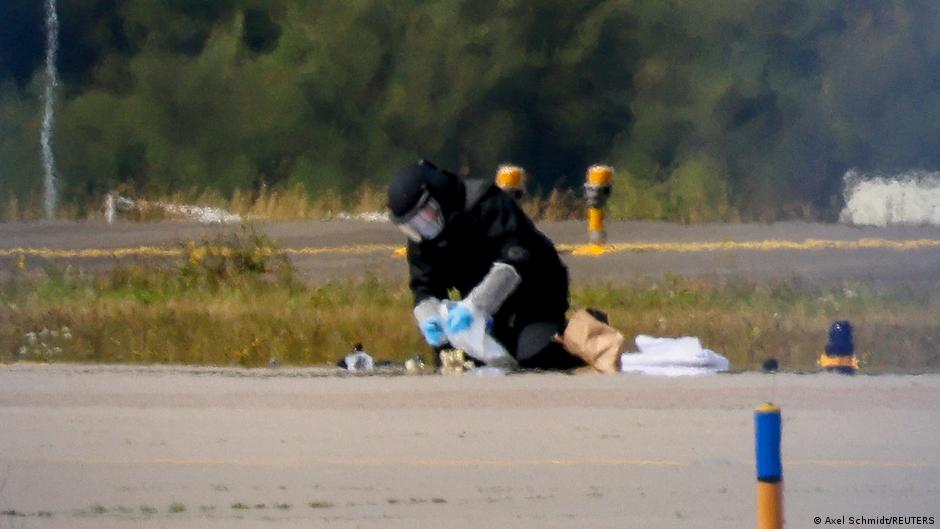
The suspected sabotage attempt against a Ukrainian Antonov An-124 cargo plane allegedly took place on August 4. Investigators say at least three drones were involved. One of them, equipped with explosives, was found near several Ukrainian cargo aircraft. A second likely crashed into a DHL cargo plane just minutes after the first drone was discovered. A third drone was found 10 days later, on August 14, in a field west of the airport. Investigators found about 50 grams of a substance nearby that was initially assessed as likely hexogen.
Those details are likely to resonate in Washington, where lawmakers and agencies have spent years focusing on supply-chain resilience, aviation security and the commercial effects of geopolitical disruption. Leipzig is a major cargo center, and the mention of DHL gives the incident a direct business dimension for global logistics operators, insurers and companies that depend on time-sensitive freight movement through Europe.
Even without direct U.S. involvement in the investigation, the case may add momentum to closer scrutiny of cargo security standards, drone threats around airports and sanctions-evasion networks tied to Russia’s war against Ukraine. For American multinationals with European operations, that can translate into higher compliance costs, more due diligence requirements and the need for updated contingency planning around freight routes and political risk.
Berlin blames Russia, Moscow rejects the allegations
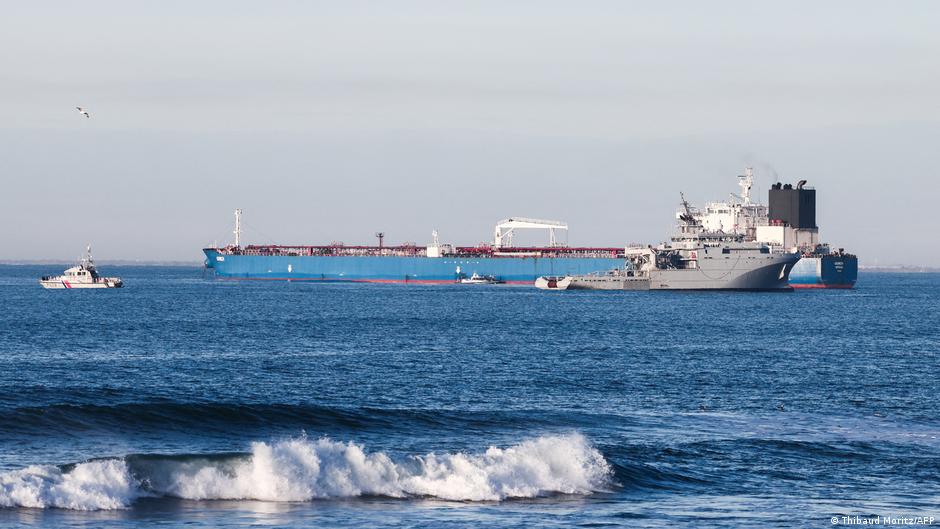
Berlin has placed responsibility for the incident on Russia. In response, the German government decided to close Russia’s consulate general in Bonn and terminate the agreement governing the operation of the Russian House in Berlin. Germany also said it would tighten checks on Russian citizens entering the country and strengthen measures against Russia’s “shadow fleet,” which Moscow uses to circumvent European Union sanctions imposed over the war in Ukraine.
From a U.S. business perspective, those measures matter because they point to a continuing hardening of the European operating environment around Russia-related exposure. Companies in shipping, finance, trade compliance, aviation and industrial supply chains are likely to watch whether Berlin’s moves lead to broader EU coordination or trigger additional enforcement actions affecting transport documentation, port access, customer screening and beneficial-ownership reviews.
Moscow has denied the allegations of organizing the sabotage in Leipzig. In response to the closure of the Russian House in Berlin, Russian authorities said they would close the branches of the Goethe-Institut operating in Russia, located in Moscow, St. Petersburg and Novosibirsk.
The immediate facts of the Leipzig case remain under investigation, and several official details are still limited. But even at this stage, the episode is doing more than test criminal investigators. It is feeding a wider Western assessment that infrastructure, logistics networks and civilian commercial systems remain part of the pressure points in Europe’s confrontation with Russia.
For Washington, that means the incident is not only a security story from Germany and Latvia. It is also a reminder that threats to European transport hubs can carry downstream consequences for U.S. corporate operations, allied sanctions policy and the broader commercial architecture supporting Ukraine and the transatlantic economy.