Latvian Nationals Detained After Breach at UK Base Hosting US, NATO Intelligence
British counterterrorism police say two Latvian citizens damaged a fence and entered RAF Molesworth, a site tied to US and NATO intelligence operations.
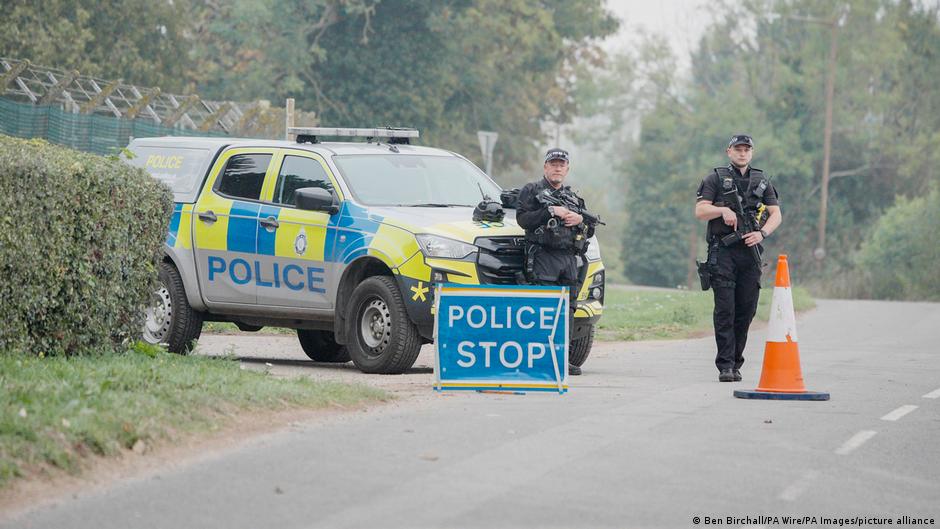
British counterterrorism police have detained two Latvian citizens after they entered the grounds of RAF Molesworth, a military air base in southeastern England that houses intelligence centers used by NATO and the United States. The incident puts a fresh spotlight on the security of facilities that support allied defense operations at a time when Washington is closely watching risks to US personnel, military assets and intelligence infrastructure in Europe.
The two men, aged 32 and 36, allegedly damaged fencing around the perimeter of the site before entering the base. British police said the breach occurred overnight on October 8. According to law enforcement officials cited in the Russian-language source article, the men’s goal was to “cause damage to the United Kingdom.” An investigation is under way.
For US policymakers and companies working in defense, intelligence, cybersecurity and critical infrastructure, the case is a reminder that physical security risks at allied military sites can carry broader operational and financial consequences. RAF Molesworth is not merely a British facility; the source article identifies it as a base where NATO and US intelligence centers are located. That makes any breach relevant to Washington’s defense posture and to American contractors whose work depends on secure overseas installations.
Police said the men intended to “cause damage to the United Kingdom,” according to the source report.
Why the incident matters in Washington
The breach comes at a sensitive moment for US and allied security planning in Europe. While the source article does not describe any damage beyond the fencing, the location of the incident is significant. Bases connected to US and NATO intelligence activity form part of the security architecture that supports American strategic decision-making, military coordination and allied deterrence. A security incident at such a site can trigger reviews of access controls, perimeter defenses and risk assumptions across similar facilities.
For Washington, the immediate question is likely to be whether the incident was isolated, coordinated, politically motivated or connected to other recent security concerns near British military installations. British police have not publicly established such a link in the source article. A police representative said there was so far “nothing to indicate” a connection between the RAF Molesworth case and an incident in late September at RAF Fairford, another Royal Air Force base in the United Kingdom.
That distinction matters for US business and defense stakeholders. A lone breach may produce a narrow local response. A pattern of incidents near bases associated with US military activity could lead to broader security upgrades, tighter contractor access procedures and higher compliance costs for firms operating around allied defense sites. The source article does not say whether any US personnel, US-owned equipment or classified systems were affected at RAF Molesworth.
Fairford case adds to security concerns
The Molesworth breach follows a separate episode at RAF Fairford in late September. In that case, a local resident reported “suspicious” activity near the base. Police later found three vans containing “some amount” of gasoline. The area was cordoned off, and residents of a nearby village were evacuated. Seven suspects were detained, but all were later released under certain conditions, according to the source article citing dpa.
The Fairford episode drew particular attention because the United States decided to withdraw American B-1 bombers that had been based there. US President Donald Trump explained the decision by referring to “threats” from people he said were “connected to Iran.” The source article does not provide further details about those alleged links or about the operational reasoning behind the bomber withdrawal.
For American companies tied to defense logistics, aviation support, base services or security technology, such decisions can have bottom-line consequences. Moving aircraft and adjusting deployments can affect maintenance schedules, subcontracting arrangements, local procurement and security staffing. Even when no attack occurs, the cost of responding to perceived threats can ripple through the supply chain that supports US military activity abroad.
The Molesworth case also highlights the challenge of protecting overseas nodes of the US security presence. American military and intelligence operations in allied countries depend on host-nation policing, local emergency response and shared threat assessments. When an incident occurs on British soil at a site linked to US and NATO intelligence, the political implications do not stop at the base fence. They can reach parliamentary oversight in London, interagency discussions in Washington and risk planning inside private contractors that support allied missions.
There is no indication in the source article that British authorities have accused the two Latvian citizens of acting on behalf of any foreign government. Nor does the report say they possessed weapons, explosives or other materials at RAF Molesworth. The confirmed facts are narrower: two Latvian men entered the base after damaging the perimeter fence, British counterterrorism police detained them, authorities said they intended to cause damage to the United Kingdom, and an investigation continues.
Still, the incident lands in a wider environment in which military facilities connected to US operations are being watched closely. For Washington, the practical concern is whether allied bases remain sufficiently protected against low-cost disruption attempts. For US businesses in the defense and security ecosystem, the commercial question is whether governments respond with new spending on perimeter protection, surveillance, vetting, emergency planning or contractor oversight.
Until investigators provide more detail, the RAF Molesworth breach remains a developing security case rather than evidence of a larger campaign. But because the base hosts NATO and US intelligence centers, even a limited intrusion is likely to be treated seriously by officials on both sides of the Atlantic.



