Macron Says He and Trump Seek Moratorium on Strikes in Ukraine
The French president said he and Donald Trump discussed protecting Ukraine’s energy and civilian infrastructure as UN diplomacy opens in New York.
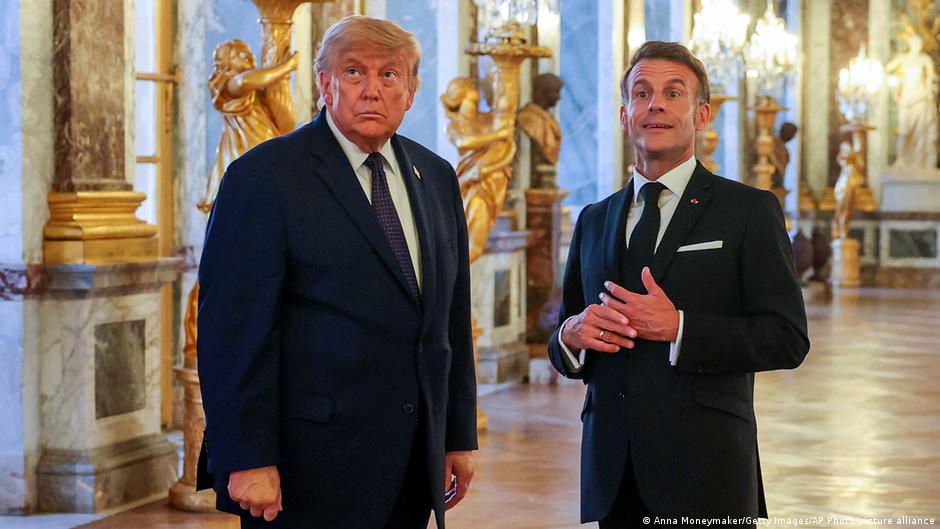
French President Emmanuel Macron said he and U.S. President Donald Trump discussed a joint push to secure a moratorium on strikes against Ukraine’s energy and civilian infrastructure, a proposal that would place Washington at the center of renewed diplomacy over the war while also sharpening the defense and economic stakes for American companies.
Macron wrote Monday, September 21, on X that the two leaders met in New York and focused on initiatives aimed at halting attacks on energy facilities during Russia’s war against Ukraine. The discussion came as world leaders gathered for the 81st session of the United Nations General Assembly, which runs from September 22 to 26 in New York and is expected to bring together nearly 130 leaders.
“We will also combine our efforts to achieve a moratorium on strikes on Ukraine’s energy infrastructure and civilian infrastructure,” Macron said. “The civilian population must be protected, and we must begin serious negotiations as soon as possible on the terms of peace between Russia and Ukraine.”
For Washington, the issue is both diplomatic and commercial. Ukraine’s energy grid has been a repeated target during the war, and any moratorium proposal would test whether the Trump administration can translate allied coordination into pressure on Moscow. It would also affect the operating environment for U.S. defense contractors, energy technology suppliers and infrastructure firms that are tied to Ukraine’s air defense needs, emergency power systems and future reconstruction market.
Air defense remains central to the U.S. role
Speaking to reporters after his meeting with Trump, Macron said the two leaders agreed on the need to help Ukraine strengthen its defense capacity. According to Macron, the discussion included providing Kyiv with additional interceptor missiles to protect the country against Russian air attacks.
That detail is likely to resonate in Washington because air defense has become one of the clearest measures of Western support for Ukraine. Additional interceptors would require political backing, procurement decisions and coordination among allies at a time when U.S. lawmakers are weighing the cost and strategic value of continued assistance. For American defense companies, demand for interceptor missiles and related air defense systems is directly linked to these policy choices.
The French position, as described by Macron, aligns two goals that have often moved together in Ukraine policy: protecting civilians and sustaining Ukraine’s ability to withstand Russian attacks. A moratorium on strikes could reduce damage to power generation, transmission and civilian infrastructure, but the call for more interceptors suggests Paris and Washington are not assuming Moscow will comply without credible defensive pressure.
The timing also matters. The UN General Assembly gives Ukraine and its supporters a global stage, but it also places the Trump administration under scrutiny from allies, adversaries and U.S. political actors. A coordinated message from Macron and Trump would signal that the United States and France are still seeking a structured diplomatic route, even as they continue to discuss military support.
Zelensky presses sanctions message in New York
Macron’s diplomacy was not limited to the White House. According to a DW correspondent, a bilateral meeting between Macron and Ukrainian President Volodymyr Zelensky also began in New York on the evening of September 21.
Before that meeting, Zelensky met with American lawmakers and thanked them for passing the law associated with the late Senator Lindsey Graham on “hellish sanctions” against Russia. “I want the sanctions to start working,” the Ukrainian leader said.
That message puts Congress back in the frame. Sanctions policy is one of the main levers through which the United States can raise the cost of Russia’s war while limiting the direct deployment of American forces. It also carries bottom-line consequences for U.S. businesses, particularly companies with exposure to energy markets, shipping, finance, insurance, industrial goods and compliance-heavy cross-border transactions.
If the sanctions regime expands or begins to bite more visibly, American firms will have to monitor counterparties, supply chains and financing links with renewed caution. At the same time, companies positioned around defense production, grid resilience, cybersecurity and reconstruction planning could see stronger demand if Washington and European capitals move from diplomatic statements to funded programs.
Zelensky is also expected to meet Trump on September 22. That meeting could clarify whether the U.S. administration intends to make the infrastructure moratorium a major diplomatic initiative, pair it with additional air defense commitments, or frame it as part of a broader push toward negotiations between Russia and Ukraine.
Macron’s comments indicate that France is seeking to keep civilian protection, military support and peace talks linked in one package. For the United States, the challenge is more complicated: any move must navigate congressional politics, alliance management, defense production constraints and the economic ripple effects of sanctions and security assistance.
The proposal for a moratorium on strikes against Ukraine’s energy and civilian infrastructure is therefore not only a humanitarian appeal. It is a test of whether Washington and its European allies can create enough military, political and economic leverage to shape Russian behavior while preparing for the long-term costs of Ukraine’s survival and reconstruction.



