Macron Says Russian Mobilization of 300,000 Is Plausible as Europe Warns of Hybrid Threats
The French president said Russia may view Europe as Ukraine’s strategic rear, raising security and business risks for U.S. firms with European exposure.
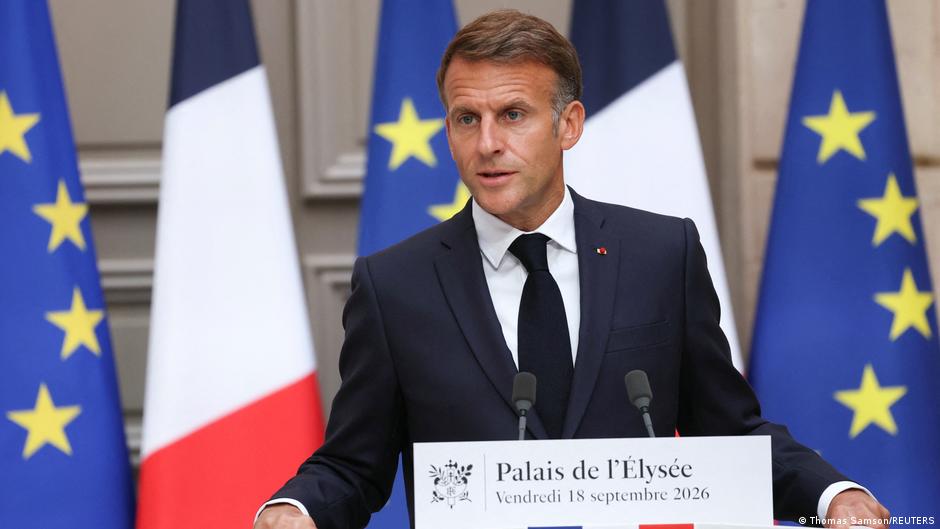
French President Emmanuel Macron said France considers it plausible that Moscow could mobilize roughly 300,000 people, warning that Russia’s hostile activity across Europe has intensified and that the continent could become a target because of its support for Ukraine.
Speaking Thursday, September 24, on TF1 and France 2, Macron said Russian authorities had waited for elections to the State Duma, held from September 18 to 20, before moving toward such a step. He said it remained unclear whether any mobilization would be announced publicly or carried out covertly.
“They waited for their elections, the elections have passed, and today it is clear that Russia will do this,” Macron said.
The comments matter well beyond Paris. For Washington, they add urgency to debates over Ukraine assistance, NATO readiness, sanctions enforcement and the protection of critical infrastructure. For American companies, especially those operating in energy, logistics, cloud services, cybersecurity, finance and manufacturing across Europe, Macron’s warning points to a wider risk environment in which military escalation and hybrid attacks can directly affect operations and costs.
Washington Faces a Broader Risk Map
Macron said there had been “several signs” that Russia was preparing for a mobilization and described the scenario as credible in light of intelligence from the United States, Europe and Ukraine. He did not say whether the move would be formally declared, a distinction that could matter for Western governments assessing the speed and scale of Russia’s war effort.
For U.S. policymakers, the prospect of a large new Russian call-up would likely sharpen questions about whether Moscow is preparing for a prolonged conflict rather than a near-term settlement. A mobilization on the scale Macron described would also strengthen arguments in Washington that Ukraine’s defense needs should be assessed over a longer time horizon, including ammunition production, air defense, intelligence sharing and industrial capacity.
The French president also framed Russia’s posture toward Europe in strategic terms. According to Macron, Moscow considers Europe to be Ukraine’s “strategic rear” because Europeans help Ukrainians and because Kyiv has struck oil refineries and other facilities inside Russia in an effort to force an end to the war.
“And therefore Europe can become a target,” Macron said, citing attacks in the information sphere through the spread of falsehoods and in cyberspace.
That warning lands squarely in a U.S. political debate already shaped by concerns over cyberattacks, disinformation and sabotage. If European infrastructure is increasingly treated as part of the battlefield, Washington may face more pressure from allies to coordinate deterrence, intelligence and defensive measures across civilian networks as well as military systems.
Business Exposure Moves From Geopolitics to Operations
For American companies, Macron’s remarks underline how quickly geopolitical risk can become operational risk. A rise in suspected hybrid attacks across Europe could affect supply chains, data centers, financial networks, ports, rail systems, energy infrastructure and corporate communications. Companies that view the war in Ukraine mainly as a sanctions or compliance issue may now have to account for broader disruption scenarios.
Macron said hostile actions across Europe had increased in recent weeks. He said that the previous week he convened representatives of political forces to warn them about the evolution of the threat and its consequences for France. Earlier, on September 18, he said France was preparing a plan to protect critical infrastructure amid the growing threat of hybrid attacks by Russia.
The business implications for U.S. firms are practical. Cybersecurity budgets may face renewed pressure. Insurers may reassess political violence, cyber and business interruption coverage. Boards may ask management teams to stress-test European operations for outages, sabotage, misinformation campaigns or cross-border transport disruptions. Companies with government contracts, defense exposure or sensitive technologies may face heightened scrutiny over access controls and vendor risk.
The source article noted that Russia had previously been accused of interfering in elections and using migrants as an instrument of pressure on Europe. It said European intelligence services now suspect a Russian connection in acts of sabotage, arson, attacks on critical infrastructure and violations of airspace.
Those allegations point to a risk landscape that is more diffuse than a conventional military confrontation. Hybrid activity can be hard to attribute publicly, can unfold below the threshold of open conflict and can impose costs on private companies before governments issue formal warnings or sanctions. That ambiguity is especially difficult for multinational corporations, which must make security and investment decisions without always knowing what governments know.
Sources cited in the Russian-language article said many incidents, including cyberattacks and hacks, are not publicly reported, meaning the scale of Russia’s hybrid attacks is significantly larger than is visible. For U.S. executives, that is a reminder that public incident data may understate the threat environment in Europe.
Macron’s comments do not establish that Moscow has publicly announced a mobilization of 300,000 people. Rather, he said France views such a scenario as plausible and credible based on signs observed by intelligence services in the United States, Europe and Ukraine. That distinction is important for investors and policymakers weighing probability against confirmed action.
Still, the bottom-line message is clear: European security risks are becoming more intertwined with U.S. political decisions and American corporate exposure. If Russia expands manpower while hybrid activity spreads across Europe, Washington’s Ukraine policy and the resilience planning of U.S. businesses will increasingly be part of the same calculation.



