Merz Says Era of Unconditional Transatlantic Friendship May Be Over
Germany’s chancellor frames the chill with Washington as a strategic test with direct consequences for security, trade and U.S. business interests.
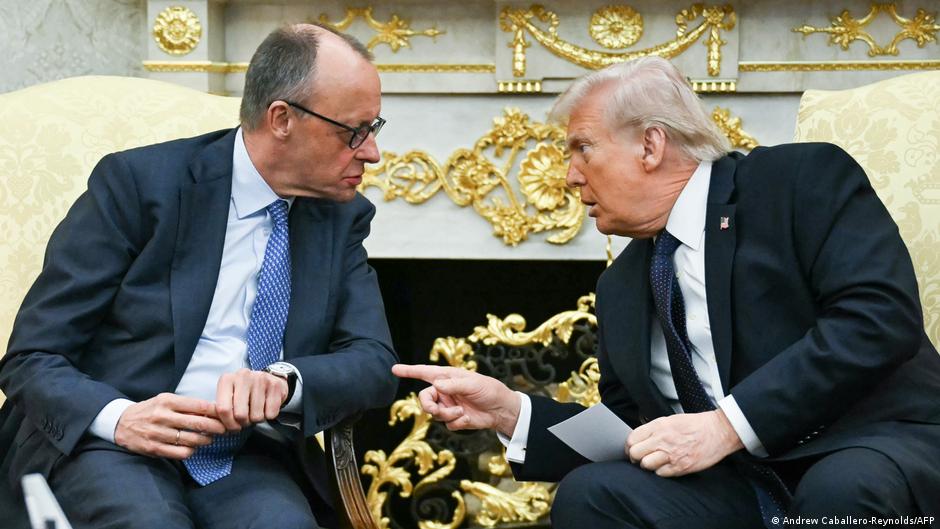
German Chancellor Friedrich Merz has said the era of “unconditional transatlantic friendship” may be gone for the long term, a blunt assessment that underscores how far relations between Berlin and Washington have deteriorated during Donald Trump’s presidency and how much is now at stake for American business and U.S. foreign policy.
Speaking at a campaign event for the Christian Democratic Union in Berlin on Thursday, September 17, Merz said Germany was watching a political shift across the Atlantic that would have been difficult to imagine in earlier decades. The comment, reported by dpa, came as tensions with the White House have intensified over the U.S. and Israeli war against Iran, Trump’s trade conflicts and Washington’s increasingly visible support for Germany’s right-wing populists.
“We are observing on the other side of the Atlantic a change in political approaches and in the assessment of the transatlantic alliance that we perhaps could not have imagined,” Merz said.
For Washington, the message from Berlin is not simply rhetorical. Germany remains Europe’s largest economy and a central market for U.S. companies, defense contractors, manufacturers, technology groups and financial institutions. A more transactional relationship between the two governments could affect everything from defense procurement and sanctions policy to shipping routes, tariffs and corporate planning across the Atlantic.
A Strained Partnership With Business Consequences
According to the source account, Trump initially treated Merz favorably at the start of his second presidential term. Relations worsened after Merz declined to support the United States in the war with Iran. Trump then began criticizing German authorities, including by attributing false statements to Merz.
The friction has coincided with trade wars launched by the White House, adding another layer of uncertainty for companies operating between the United States and Europe. For American exporters, automakers, suppliers and logistics firms, Germany’s response to Washington’s trade posture matters because Berlin helps shape the broader European economic and regulatory environment. A Germany that sees Washington as less predictable may push harder for European self-reliance, including in defense, industrial policy and supply-chain security.
Trump’s domestic political interventions in Germany have added to the strain. Earlier in September, he congratulated the far-right Alternative for Germany party on its victory in state elections in Saxony-Anhalt. The move was described as another gesture of support from Washington toward German right-wing populists, a pattern that has previously drawn criticism in Berlin.
German officials reacted with irritation. Metin Hakverdi, the German government’s coordinator for transatlantic cooperation, said Germans were capable of deciding for themselves how to handle migration and whom to elect. “We do not need advice from the White House on this,” he said, according to the source text.
Security Spending and a More Self-Reliant Germany
Merz also cast the deterioration in relations as an opportunity Germany should not miss. He said the country must use the moment to take more responsibility for its own security and development, pointing in particular to the federal government’s significant increase in defense spending.
That shift carries clear implications for U.S. defense and technology companies. Higher German defense budgets could create opportunities for American contractors, but a stronger emphasis on European autonomy could also redirect spending toward domestic or European suppliers. For U.S. policymakers, the German debate poses a familiar dilemma: Washington has long pressed allies to spend more on defense, but a Europe that spends more while trusting the United States less could become a more independent strategic actor.
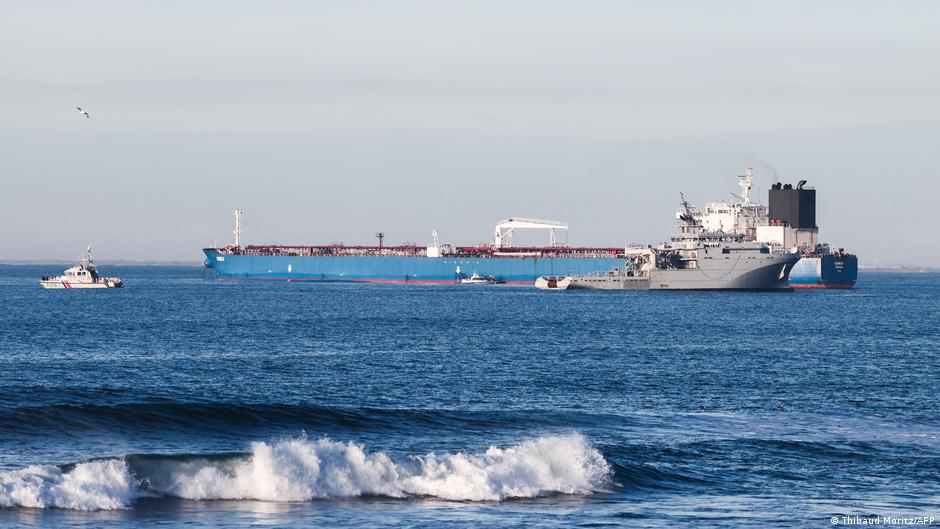
The dispute over Iran adds urgency to that question. Later on Thursday, German government spokesperson Stefan Kornelius said Merz and Trump held a phone call that Berlin had previously postponed. In the call, Merz addressed the “next steps to end” Russia’s war against Ukraine, welcomed the U.S. Congress’s adoption of a sanctions package against Russia initiated by Senator Lindsey Graham, and discussed shipping problems in the Strait of Hormuz and the Red Sea caused by the war in Iran.
Those issues are central to the bottom line for U.S. businesses. Sanctions policy shapes exposure for banks, energy firms and industrial companies. Disruption in the Strait of Hormuz and the Red Sea affects shipping costs, insurance, supply chains and energy markets. If Berlin and Washington are no longer aligned by default, companies may face a more fragmented policy environment at precisely the moment geopolitical risks are driving up operational costs.
Economic Recovery, With Reform Still on the Table
Merz also pointed to signs of economic recovery in Germany after several years of stagnation. He said forecasts suggested the German economy would grow by about 1.3 percent in 2026. “We have emerged from this valley of a shrinking or stagnating economy,” he said, while adding that Germany still needed reforms.
For U.S. firms, even modest German growth matters. Germany is a major industrial hub, and an improving outlook could support demand for American goods, software, services and investment. But Merz’s warning that reforms remain necessary signals that the country’s recovery is not yet assured. Trade tensions, security spending, energy-market instability and political friction with Washington could all weigh on business confidence.
The delayed Trump-Merz phone call also carried symbolic weight. It had originally been planned around the anniversary of the September 11, 2001, terrorist attacks, but Berlin postponed the conversation the day before it was due to take place, without giving a reason. The postponement followed Trump’s praise for Alternative for Germany after its strong win in the Saxony-Anhalt state parliament elections.
The result is a transatlantic relationship that remains active but visibly less automatic. Merz is not calling for a rupture with Washington. He is signaling that Germany can no longer base its security and economic assumptions on unconditional alignment with the United States. For the White House, Congress and American boardrooms, that warning lands at a consequential moment: Europe’s largest economy is preparing for a future in which U.S. partnership is still important, but no longer taken for granted.