New York mayor Mamdani unveils $29 million plan to combat antisemitism
The city strategy raises hate-crime funding, adds security support for synagogues and puts a contentious mayor at the center of a national debate.
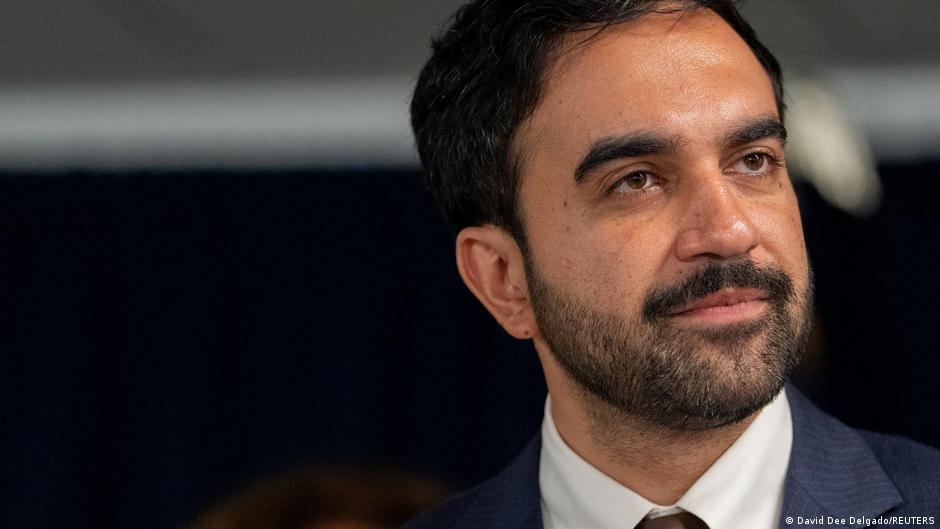
New York Mayor Zohran Mamdani on Tuesday, September 29, presented a broad city strategy to counter antisemitism and hate crimes targeting Jews, a move with immediate significance for the nation’s largest municipal economy and for political leaders in Washington watching the issue of public safety, religious freedom and Middle East politics collide in America’s biggest city.
The plan would increase New York’s annual budget for combating hate crimes from $3 million to $29 million. City officials also intend to provide additional funding for synagogue security and restore a working group focused on the safety of Jewish houses of worship. For businesses, nonprofits and major institutions operating in New York, the proposal signals a larger municipal commitment to security around religious and cultural sites at a time when hate-crime concerns can shape staffing, insurance, event planning and neighborhood foot traffic.
The strategy also includes citywide public information campaigns against antisemitism and an expansion of educational programs about the Holocaust. Millions of dollars are planned for Jewish cultural centers and nonprofit organizations, including a Holocaust memorial being created in Queens and a new Jewish Culture Center in Brooklyn.
A City Budget Move With National Political Resonance
Mamdani framed the plan as a response to police data showing that antisemitic offenses make up a disproportionate share of reported hate crimes in the city. In a video address posted on X, he said the city had an obligation to act.
“Although our Jewish neighbors make up only 12% of New York’s population, police statistics show that antisemitic crimes account for more than half of all reported hate crimes. This is not only unacceptable, it is something we are obliged to change, and city authorities will take the lead,” Mamdani said.
The scale of the funding increase is likely to draw attention beyond City Hall. New York is home to major financial firms, media companies, universities, hospitals, cultural institutions and a large nonprofit sector. For executives and boards, local security spending is not an abstract policy matter. It affects whether institutions can host public events, maintain accessible campuses and reassure employees and visitors in a climate of heightened religious and political tension.
The proposal also arrives in a national environment in which antisemitism has become a central subject in congressional hearings, campus disputes and party politics. Washington lawmakers have scrutinized the responses of universities, city governments and law enforcement agencies to antisemitic incidents. A high-profile plan from New York’s mayor is therefore likely to be viewed as both a local safety initiative and a test of how Democratic-led cities handle rising community pressure.
Mamdani’s Israel Record Complicates the Rollout
The political stakes are sharpened by Mamdani’s own profile. He is the first Muslim mayor of New York and is known for his pro-Palestinian position and criticism of Israel. Those views have alienated part of the city’s Jewish community, though Mamdani also has supporters among New York Jews.
That background makes the antisemitism strategy more than a routine budget announcement. For some Jewish institutions, the central question will be whether the promised funding and working groups translate into practical protection and sustained engagement. For Mamdani’s critics, the plan may be judged against his past statements on Israel and the broader Israeli-Palestinian conflict. For his allies, the proposal could serve as evidence that criticism of Israeli policy can be separated from a firm municipal response to antisemitism.
The tension has already reached the international stage. Israeli Prime Minister Benjamin Netanyahu, speaking at the United Nations General Assembly in New York, called the city’s mayor an antisemite. During the 2026 election campaign, Mamdani said that if Netanyahu visited New York, he would seek his arrest on the basis of a warrant issued by the International Criminal Court in 2024. After taking office as mayor, however, he acknowledged that he did not have the authority to do so.
For Washington, that sequence underscores a complicated political dynamic. The United States remains Israel’s principal ally, while Democratic politics in large cities include a widening range of views on Israel, Gaza and Palestinian rights. New York’s mayor is now trying to advance a citywide antisemitism response while carrying the political baggage of positions that some Jewish leaders and Israeli officials strongly reject.
Bottom-Line Impact for New York Institutions
The business implications are practical as well as reputational. Additional city spending on hate-crime prevention and synagogue security may reduce pressure on private organizations to shoulder security costs alone. Jewish cultural centers, nonprofits and houses of worship often rely on a mix of public grants, private philanthropy and volunteer capacity. A larger city role could influence how these institutions budget for guards, cameras, training, emergency planning and public programming.
For companies with large New York workforces, the announcement also touches workplace climate. Antisemitic incidents and the public arguments surrounding them can affect employee safety concerns, diversity and inclusion policies, and corporate communications. Firms headquartered in or heavily exposed to New York will be watching whether the city’s strategy reduces risk around neighborhoods, campuses and public venues where employees and clients gather.
The plan’s educational and cultural components also point to a longer-term effort to shape civic norms, not just respond to individual crimes. Funding for Holocaust education, memorial projects and Jewish cultural organizations may have indirect economic effects by supporting nonprofit employment, tourism, school programming and neighborhood cultural life in Queens and Brooklyn.
Still, the measure will ultimately be judged by implementation. The city has promised a much larger hate-crime budget, more synagogue security support, revived institutional coordination and public education campaigns. The political challenge for Mamdani is to convince skeptical constituents that the plan is not symbolic damage control but a durable commitment to Jewish safety in a city whose local debates frequently become national arguments.