Protests in Kyiv Demand Reinstatement of Former Ukrainian Defense Minister Amid Political Reforms
Hundreds demonstrate in Kyiv and other cities calling for Mikhail Fedorov’s return as defense minister, challenging President Zelensky’s recent appointments.
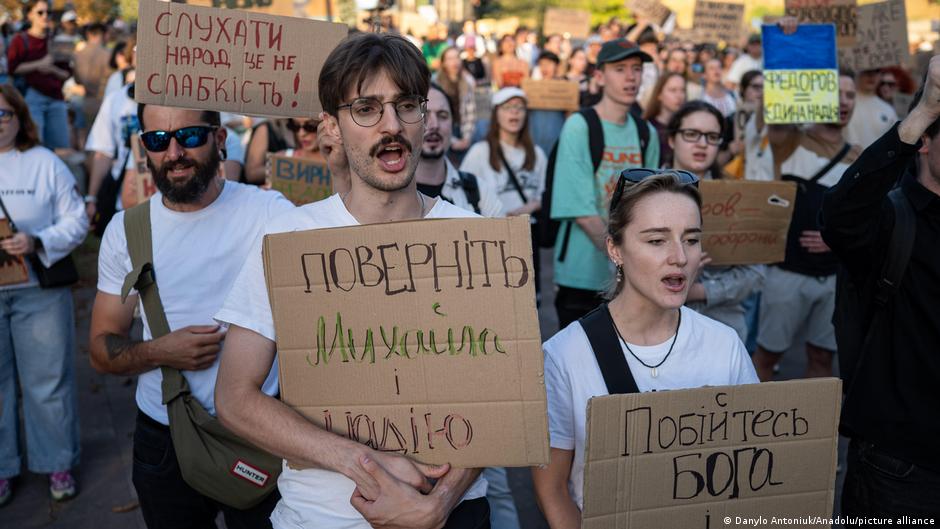
On August 16, protests resumed in Kyiv and several other Ukrainian cities as hundreds of demonstrators called for the reinstatement of Mikhail Fedorov as Ukraine’s defense minister. These protests mark the 32nd consecutive day of public demonstrations emphasizing demand for key leadership changes in Ukraine’s defense sector.
The protest, described by Ukrainian media as a "protest action supporting dialogue and reforms in the defense sector," began near the Freedom Arch in central Kyiv. Participants marched through major city streets including Khreshchatyk, the Alley of the Heavenly Hundred Heroes, and Olhynska Street, culminating in a rally at Ivan Franko Square near the Presidential Office.
Observers noted a broad demographic turnout dominated by younger activists. The demonstrators expressed dissatisfaction not only with Fedorov’s removal but also with President Volodymyr Zelensky’s recent personnel decisions. In particular, they criticized the appointment of former Defense Minister Rustem Umerov as Chief of Foreign Intelligence Service and Vitaliy Kim, former head of the Mykolaiv Regional Military Administration, as Minister for Veterans Affairs.
Implications for U.S. Business and Strategic Interests
The ongoing political unrest highlights a critical juncture in Ukraine’s defense and governance reform processes. For Washington, this raises concerns about the stability of key Ukrainian institutions tasked with defense modernization and anti-corruption initiatives—areas directly linked to U.S. aid and military cooperation.
American industries engaged in defense, cybersecurity, and reconstruction stand to be affected by Ukraine’s internal political dynamics. The uncertainty surrounding leadership in the Ministry of Defense could slow down procurement, joint ventures, and transparency measures coveted by U.S. businesses operating or investing in Ukraine.
"Continuing reforms in Ukraine's defense sector is vital not only for Kyiv’s sovereignty but also for ensuring accountability and openness that American partners rely on," said an expert on Eastern European security.
Moreover, the protests underscore broader political challenges President Zelensky faces in balancing reform momentum with coalition-building. The opposition to appointments like Umerov and Kim signals potential friction within Ukraine’s ruling elite, which Washington monitors closely given its strategic support and funding commitments.
For U.S. policymakers and businesses, the unfolding events emphasize the need to recalibrate engagement strategies that reinforce institutional stability and reform continuity in Ukraine. Strong and transparent defense leadership is essential to maintaining Ukraine’s resilience against external threats and fostering an environment conducive to foreign investment.
As Ukraine approaches critical decision points over its defense and foreign policy direction, these protests reveal both the domestic political pressures and the stakes for international allies, including the United States, invested in the country’s success.