Putin Backs Using Medically Unfit Russians for Drone Defense Duties
The proposal underscores Moscow’s manpower pressures as the war in Ukraine continues to shape security risks and costs for governments and companies.
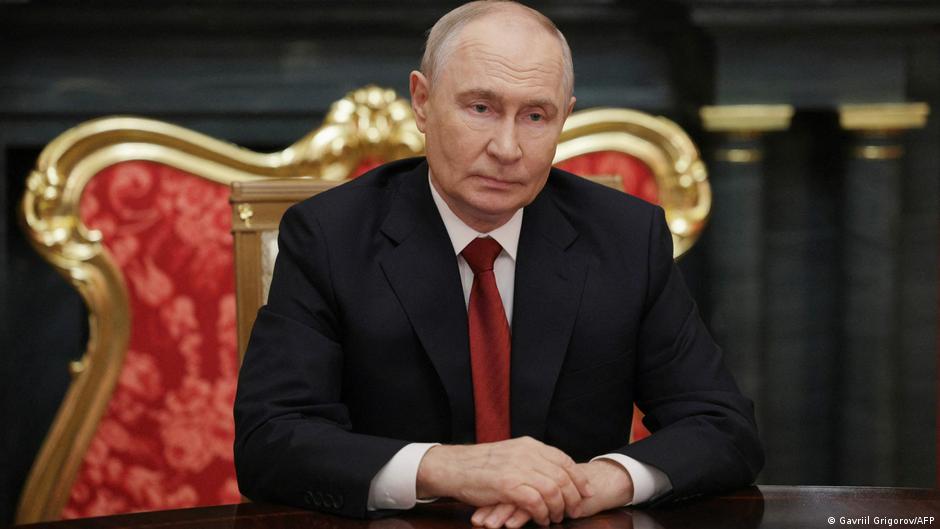
Russian President Vladimir Putin has backed a proposal to involve volunteers formally deemed completely unfit for military service in efforts to defend rear-area facilities from drones, according to Russian-language reports cited in the source article.
The idea was put forward by pro-Kremlin war correspondent Yevgeny Poddubny and received support from Putin during a meeting of the leadership of the ruling United Russia party. The proposal would allow citizens with the Russian health category “D,” meaning “absolutely unfit for military service,” to take part in tasks connected to the war against Ukraine, particularly guarding facilities away from the front line against unmanned aerial vehicle attacks.
For Washington and U.S. businesses, the move is another signal that Russia is seeking ways to stretch its manpower base while avoiding, at least publicly, a new nationwide mobilization. It comes as drone warfare has become a defining feature of the conflict, affecting military planning, energy infrastructure, logistics, insurance, sanctions exposure and supply-chain risk across markets linked to Russia, Ukraine and Europe.
Rear-Area Drone Defense and Manpower Pressure
According to the reports, Poddubny said the request came from fighters who had received category “D” as a result of combat wounds. He argued that such people remained capable of performing duties in regional units, for example in responding to Ukrainian drone attacks away from the “front line.” Putin supported the proposal at the same meeting.
The proposal would apply to citizens in category “D,” a designation for people considered absolutely unfit for military service under Russian rules.
Category “D” is assigned in cases of severe chronic illness and disability. The source article lists active tuberculosis, HIV infection, cancer, schizophrenia, missing limbs, blindness and deafness among the conditions covered by the designation. Russians in this category are removed from military registration, and their personal files are sent to archives. Under current Russian law, they cannot sign a contract with the Ministry of Defense.
The proposal therefore points to a politically sensitive area for the Kremlin: how to deepen participation in wartime security tasks without openly acknowledging the need for a broader mobilization. The distinction between front-line service and rear-area defense may matter legally and rhetorically, but for Western policymakers and companies tracking Russia risk, it also suggests that the pressure created by Ukrainian drone operations is spreading beyond the battlefield into domestic security management.
Putin Denies Mobilization Plans
Putin’s support for the idea followed his latest public rejection of rumors about a new mobilization wave. At the plenary session of the Eastern Economic Forum in Vladivostok on September 3, he said there was “no scenario that would require mobilization,” calling such claims an “information attack” by the adversary ahead of State Duma elections and an attempt to influence the result.
It was his second statement on the issue in a short period. After the Shanghai Cooperation Organization summit in Bishkek, Putin dismissed the fears as “nonsense,” according to the source article.
Yet the 2022 decree on partial mobilization has not formally been canceled and remains in effect. Russians have reported draft notices, military training call-ups and intensified recruitment efforts for the war against Ukraine. Pro-war Z channels reported in July that forced conscription to the front could affect 1.2 million Russians and could be accompanied by quiet arrangements with neighboring countries that would make it impossible for men of draft age to leave for adjacent states.
Those claims have not been presented in the source article as official policy, but they are part of the information environment surrounding the Kremlin’s manpower decisions. For U.S. analysts, the gap between Putin’s public denials and continuing recruitment pressure is relevant to assessing Russia’s staying power, domestic political constraints and the trajectory of the war.
Implications for Washington and U.S. Companies
The bottom-line impact for American businesses is indirect but significant. Any Russian move that expands the pool of people involved in wartime defense duties may point to a longer conflict and a higher baseline of disruption. Companies with exposure to European energy markets, shipping, aviation, cyber risk, defense technology, commodities or sanctions compliance have to price in the possibility that Moscow will continue adapting its domestic systems to sustain operations.
The drone-defense emphasis also matters for the U.S. defense sector. Ukraine’s use of drones against Russian military and rear-area targets has driven demand for counter-drone systems, air-defense components, sensors, electronic warfare tools and hardened infrastructure. If Russia is mobilizing even medically disqualified volunteers for rear-area protection, it reflects the operational importance of drone threats and the limits of existing security capacity.
For policymakers in Washington, the development adds to evidence that attrition remains central to the war. The Institute for the Study of War said that in August, total Russian troop losses exceeded 40,000 for the second consecutive month, according to the source article. The Financial Times, citing sources, reported that the Kremlin and Russia’s Ministry of Defense instructed Russian regions to recruit 409,000 contract soldiers by the end of 2026 for participation in the war. To meet that target, the authorities are increasing pressure on local officials.
Those figures, if sustained, would reinforce the expectation that Russia will keep leaning on regional governments, contract recruitment and unconventional personnel categories rather than rely only on formal national mobilization. For U.S. companies, that means continued volatility around sanctions enforcement, defense procurement, export controls and regional security spending. For the Biden-era and post-2024 Washington policy establishment, it keeps the focus on whether Russia can replenish personnel faster than Ukraine and its partners can degrade Russian military capacity.
The immediate proposal is narrow: using volunteers who are legally and medically outside the normal military system to help guard rear-area facilities from drones. Its broader significance is that Russia appears to be searching for additional human capacity at the edges of its own rules, while continuing to deny that a new mobilization is needed.



