Putin Blames West for Ukraine War and Revives Nuclear Threats at Valdai
The Russian president’s remarks underscored rising geopolitical risks for Washington, NATO allies and companies exposed to Europe’s security environment.
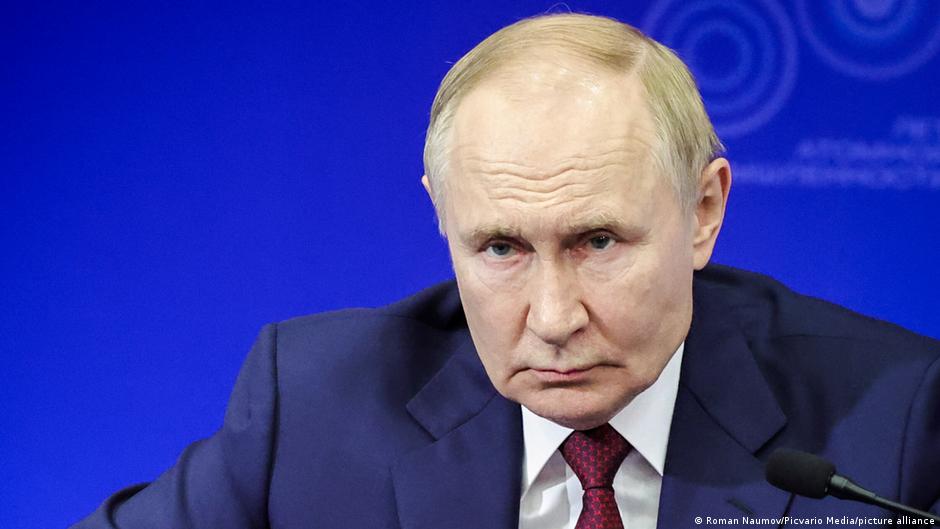
Russian President Vladimir Putin used a high-profile foreign policy forum on Thursday, October 1, to again accuse the West of aggression against Moscow, deny Russian responsibility for starting the war in Ukraine, and warn that nuclear escalation could bring catastrophic consequences for the world.
Speaking at the plenary session of the Valdai Discussion Club, which was moved this year from Sochi to the Moscow region because of security concerns, Putin described the situation in Europe and globally as “very dangerous.” His comments add to the strategic uncertainty facing Washington, NATO governments and multinational companies with operations, supply chains or risk exposure tied to Europe.
Putin said the world could face a scenario leading to “fatal consequences,” noting that several countries possess weapons “capable of destroying all living things.” Asked by himself whether he could be confident such weapons would not be used, he answered in the negative.
“If we want to live — and everyone wants to live — let us live together,” Putin said, warning that further escalation could mean “there will be no school textbooks and no one to study them.”
The Russian leader compared nuclear weapons to a gun hanging on a theater stage, invoking the dramatic principle that such a weapon is expected to fire. He said the “laws of the struggle for survival” apply not only in nature but also in social communities, and argued that Russia could be forced to take extreme measures. At the same time, he said the task should be to ensure that “this gun” does not fire.
Washington Watches Nuclear Rhetoric and Battlefield Claims
For U.S. policymakers, Putin’s remarks are likely to reinforce concern that Moscow is using nuclear signaling as a tool of pressure while continuing its campaign in Ukraine. The speech came as the war, now in its fifth year, remains central to U.S. debates over military aid, sanctions, NATO deterrence and the security of European markets that are deeply connected to American business interests.
Putin again claimed that Russia “did not start the war” and that Moscow’s invasion of Ukrainian territory was a response to actions by NATO and Ukraine. “The truth is that it was not we who wanted and started to fight, but they started fighting with us,” he said.
According to Putin’s version of events, the West spent years encouraging “aggressive nationalism and Russophobia” in Ukraine in order to turn the country into an “instrument” against Russia. He also claimed that “radicals in Kyiv” were pushed toward a “coup,” and that NATO allegedly planned to place bases on what he called Russia’s “historical territories.” He once again accused Western countries of “aggressive aspirations.”
These claims directly contradict the Western and Ukrainian position that Russia launched an unprovoked full-scale invasion of Ukraine. For Washington, the remarks signal that the Kremlin is not retreating from the narrative it has used to justify the war, even as the conflict continues to affect energy markets, defense spending, sanctions compliance and corporate planning across Europe.
Territorial Claims and Business Risk
Commenting on the battlefield, Putin claimed that Russian forces had captured 3.5 times more territory over the past month than during the previous month. He also asserted that Russia now controls 89% of the Donetsk region. The Institute for the Study of War, however, says Russia currently controls 81% of Donbas.
Several days earlier, Kyiv said that during three seasons of the counteroffensive operation “Vivaldi,” Ukrainian forces had retaken 176 square kilometers of Ukrainian territory. Putin nevertheless repeated his confidence that Russia would seize all of those territories and said there was no point in Ukraine holding onto them.
For American companies, the immediate significance is less about individual battlefield figures than the durability of the conflict. A prolonged war keeps sanctions regimes in place, complicates insurance and logistics in the region, sustains pressure on European defense budgets and increases uncertainty for firms involved in energy, technology, agriculture, shipping and advanced manufacturing.
Putin also called for the development of a new convention on the conduct of warfare, citing the rapid development of artificial intelligence technologies. He referred to the 1983 case of Soviet officer Stanislav Petrov, who did not give an order to launch a nuclear strike despite being required by protocol to do so. Putin argued that artificial intelligence would have acted differently.
The AI reference carries relevance for U.S. technology firms and defense contractors as Washington debates the role of automated systems in military decision-making. Putin’s comments suggest Moscow is also framing artificial intelligence as a strategic arms-control issue, particularly where nuclear command, targeting and escalation risks are concerned.
Threats Toward Europe and a Moved Forum
Asked about the possibility of strikes on military enterprises in Europe, Putin said Russia would “not necessarily” take such action, but would “monitor threats.” He added that Moscow considers Western countries’ participation in strikes on Russian territory to be a direct threat.
That warning will be closely read in European capitals and in Washington, where officials are assessing how far military support for Ukraine can go without triggering a broader confrontation with Russia. It also matters for U.S. defense and aerospace companies operating in or supplying European markets, as Russian rhetoric increasingly links Western industrial support to potential security risks.
The Valdai Club session itself reflected the changed security environment. This year’s meeting was moved from Sochi to the Moscow region, where Russia has concentrated more air defense systems. The British newspaper Financial Times, citing four sources, reported that the relocation was driven by security concerns amid intensified Ukrainian attacks. Two of those sources said the venue change took place at the insistence of Putin’s security service.
For Washington, Putin’s speech offered no sign of a diplomatic off-ramp. Instead, it combined nuclear warnings, claims of Russian battlefield momentum, accusations against NATO and the West, and concern over emerging military technologies. For U.S. businesses, the bottom-line message is that geopolitical risk tied to Russia’s war in Ukraine remains structural, not temporary, and could continue shaping sanctions exposure, defense demand, energy volatility and investment decisions across the transatlantic economy.