Putin’s G20 Invitation Tests Russia’s Ukraine Talks Posture, Germany Says
German Foreign Minister Johann Wadephul said a ceasefire in Ukraine would show whether Moscow is prepared for serious negotiations.
A U.S. invitation for Russian President Vladimir Putin to attend the December G20 summit in Miami is emerging as a diplomatic test with direct implications for Washington, allied unity and the risk calculations facing American businesses exposed to geopolitical volatility.
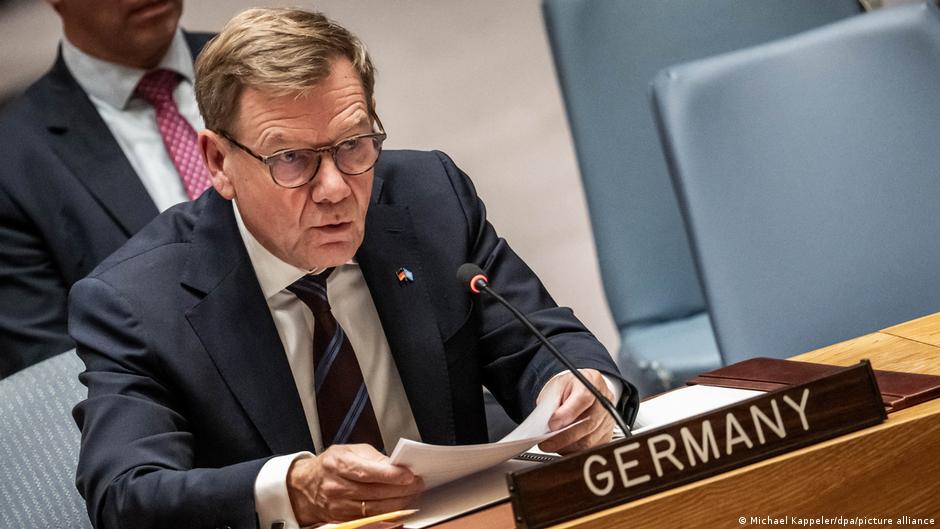
German Foreign Minister Johann Wadephul said Friday, September 25, that Putin’s possible participation in the summit would serve as a “litmus test” of the Kremlin’s readiness to enter serious negotiations on ending the war in Ukraine. Speaking in Ottawa during a meeting with Canadian Foreign Minister Anita Anand, Wadephul said the clearest signal would be a ceasefire in Ukraine.
Germany and other Western countries supporting Ukraine have repeatedly urged Russian authorities, and Putin personally, to come to the negotiating table, Wadephul said. But he framed any meaningful talks as dependent on tangible movement from Moscow, rather than on attendance at a major diplomatic forum alone.
“Russia must negotiate — the sooner, the better,” Wadephul said.
Washington Faces Pressure Over the Miami Summit
The issue places the Trump administration at the center of a politically sensitive choice: whether to use the G20 as an opening for diplomacy or to avoid granting Putin a platform on U.S. soil while Russia continues its war in Ukraine.
U.S. Secretary of State Marco Rubio earlier said the Kremlin leader had been invited to the G20 summit, which is scheduled to take place in December in Miami. Rubio said such a visit would give Putin an opportunity to hold talks with U.S. President Donald Trump and other heads of state and government. The Kremlin has not yet decided how to respond to the invitation.
For Washington, the invitation carries both diplomatic and domestic political weight. The United States would be hosting not only a global economic summit but also a potential encounter between Trump and Putin at a time when Ukraine policy remains a defining issue in transatlantic relations and on Capitol Hill.
According to The Washington Post, a bipartisan group of 14 U.S. senators has urged Trump to withdraw the invitation. In an appeal to the White House, Republican and Democratic lawmakers argued that Putin bears sole responsibility for Russia’s full-scale war of aggression against Ukraine and warned that giving him access to a G20 summit in the United States raises serious concerns about legitimizing and normalizing authorities that continue daily strikes on civilian targets in Ukraine.
The senators also noted that Putin and other members of the Russian delegation are subject to U.S. sanctions over actions Washington considers a threat to national security. They argued that if Putin is not isolated from the international community, he will have less incentive to end the war in Ukraine.
Diplomacy Versus Boycott
Wadephul, asked whether countries should boycott the G20 if Putin continues military operations, stressed that Russia’s participation remains “very hypothetical.” He urged observers to wait for developments in the coming weeks before drawing conclusions about whether Putin will attend or how allies should respond.
Anand also said Putin’s potential participation would not be a reason to boycott the summit. Her position underscored a view shared by some Western officials that difficult diplomacy may still require staying in the room, even when governments sharply disagree over Russia’s conduct.
“Diplomacy means that we must remain at the negotiating table and have difficult conversations,” Anand said.
That stance does not resolve the political dilemma for the United States. A boycott by major allies could fracture the summit and undercut its economic agenda. But hosting Putin without evidence of a ceasefire or serious negotiating intent could invite criticism that Washington is giving Moscow symbolic relief without extracting concessions.
For American companies, the debate matters beyond protocol. The war in Ukraine has affected energy markets, defense spending, sanctions compliance, supply chains and risk planning across sectors. Any signal of a ceasefire could influence expectations around commodity prices, European stability and longer-term reconstruction opportunities. Conversely, a failed diplomatic opening or a high-profile summit dispute could reinforce uncertainty for firms with exposure to Europe, global logistics, industrial inputs and financial compliance.
The senators’ sanctions argument is also a bottom-line issue for U.S. business. Companies operating internationally must navigate restrictions tied to Russian individuals, entities and state-linked activity. If the United States hosts sanctioned Russian officials for a major summit, businesses will watch closely for any indication of policy flexibility or, alternatively, renewed enforcement emphasis.
Wadephul’s remarks therefore place the threshold squarely on Moscow: participation alone is not enough. In his view, the practical test is whether Russia stops fighting and demonstrates readiness for substantive talks with Kyiv. Until then, the Miami summit remains a prospective diplomatic arena and a live political problem for Washington.