Russia Opens Three-Day Duma Vote With Ukraine War and AI Claims in Focus
The parliamentary election extends voting to occupied Ukrainian territories, raising verification concerns with implications for Washington and U.S. firms.
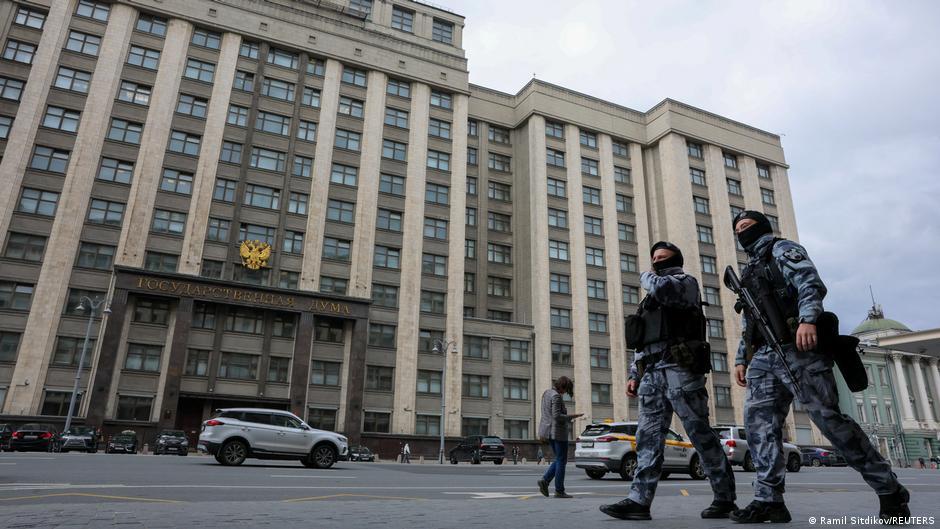
Russia officially opened a three-day election for the State Duma on Friday, September 18, with polling stations beginning work at 8:00 a.m. in the country’s easternmost regions, including Kamchatka and Chukotka. Voting is scheduled to continue through September 20, with polling places in Russian regions operating until 8:00 p.m. local time.
The contest will determine the composition of the 450-seat lower house of Russia’s parliament. Half of the deputies are expected to be chosen in single-mandate districts, where voters select individual candidates. The remaining 225 seats will be distributed through party lists. Ten parties are listed for the party-list portion after Yabloko, a party that had consistently criticized the war in Ukraine, was removed from participation on formal grounds. Yabloko candidates remain present in some regions as single-mandate contenders.
For Washington, the vote is less a question of parliamentary suspense than of political signaling. The election takes place against the backdrop of Russia’s continuing war in Ukraine, expanded voting in occupied territories, and an information environment in which Russian pro-government media have promoted warnings about allegedly artificial intelligence-generated “fakes” from polling places. Those themes will be watched by U.S. policymakers assessing Moscow’s domestic political consolidation, sanctions policy, and the operating risks facing American companies exposed to Russia-related regulation, compliance and supply chains.
Occupied Territories Expand the Political Stakes
The previous Russian State Duma election was held in 2021. This time, voting has been extended to occupied territories of Ukraine. According to representatives of various Russian structures, participants in Russia’s full-scale invasion of Ukraine and residents of territories occupied by Russia voted early, from late August through September 17.
Observers have noted that, even setting aside the question of legitimacy in those regions, the Russian Central Election Commission organized voting there in a way that makes the results nearly impossible to verify. Authorities did not publish data on members of regional election commissions or the addresses of polling stations. Open video monitoring was not organized at those sites. The use of mobile ballot boxes was also allowed.
The Central Election Commission further permitted local election commissions, if necessary, to print ballots on site and not immediately transfer them to higher-level bodies after the count. For governments and businesses outside Russia, those procedures matter because the results may be used by Moscow to project political control over territories that the United States and its allies regard as occupied Ukrainian land.
Observers say the voting arrangements in the occupied regions make the results practically impossible to verify.
The United States has already treated Russia’s annexation claims and occupation structures as a core sanctions issue. Any attempt by Moscow to fold these territories more deeply into national political processes could sharpen debate in Washington over enforcement, secondary sanctions exposure, export controls and the treatment of companies accused of facilitating Russian state activity.
AI Claims Add a New Information-Warfare Layer
Before voting began, pro-government resources in Russia circulated videos suggesting that footage of falsifications or ballot stuffing at polling stations could be generated by artificial intelligence. Ella Pamfilova, chair of Russia’s Central Election Commission, also said that such technologies could allegedly “replace the picture” from polling stations during live broadcasts.
The claim places AI at the center of Russia’s election narrative before the main days of voting are completed. For U.S. officials, technology platforms and cybersecurity teams, the episode underscores how generative AI can be invoked not only to create false material but also to preemptively cast doubt on authentic documentation. That has direct relevance for American companies managing content moderation, disinformation monitoring, cybersecurity services and reputational risk around politically sensitive markets.
U.S. businesses with international exposure are already operating in a compliance climate shaped by Russia sanctions, export restrictions, payment constraints and heightened scrutiny of technology transfers. The Russian election adds another layer: corporate risk teams may need to monitor whether post-election claims, contested evidence or alleged AI manipulation become part of broader geopolitical messaging that affects regulatory expectations in Washington.
None of the ten parties presented in the 2026 State Duma election has condemned the continuing war in Ukraine. Yabloko was initially admitted to the election despite its criticism of the war, but it was later excluded from party lists on formal grounds. Individual Yabloko members are still participating as candidates in single-mandate districts.
Some of those candidates later faced pressure and removal from races on various grounds, often linked to old photos and social media posts, including references to Alexei Navalny. The treatment of such candidates will likely reinforce the view among many Western officials that electoral competition in Russia remains tightly managed, particularly where antiwar politics or opposition affiliations are involved.
Shortly before the election, opposition figures Yulia Navalnaya and Maxim Katz called on Russians to vote for the strongest single-mandate candidates who are not members of United Russia. Yabloko criticized that idea and advised voters instead to spoil their ballots.
For the U.S. political and business audience, the bottom line is that the Duma vote is a domestic Russian event with external consequences. It may not change Russia’s strategic direction, but it can affect how the Kremlin claims legitimacy, how Washington assesses the durability of Russia’s war policy, and how American companies calculate exposure to sanctions, disinformation risk and political uncertainty tied to Russia.