Russia to Shut Goethe Institute Branches After Berlin Targets Russian Center
Moscow said it will close all three Goethe Institute branches in Russia after Germany moved to end the agreement covering the Russian House in Berlin.
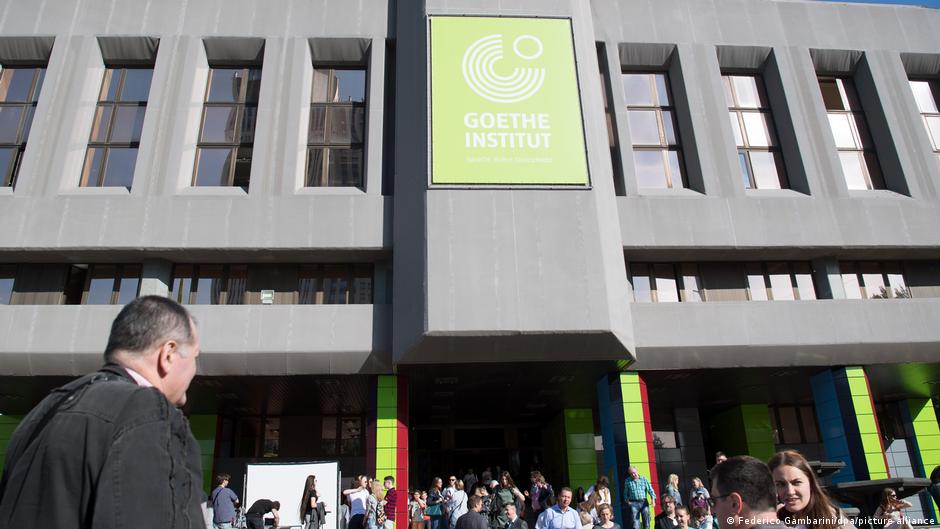
Russia will close all three branches of Germany’s Goethe Institute in the country after Berlin decided to terminate its agreement with Moscow over the operation of the Russian House in Berlin, Russian Foreign Minister Sergei Lavrov said on Thursday, September 3.
Lavrov made the announcement at the Eastern Economic Forum in Vladivostok, in remarks broadcast on the Russian Foreign Ministry’s YouTube channel. The decision marks a further deterioration in the cultural dimension of Russian-German relations as Europe’s largest economy tightens pressure on Moscow and broadens the fallout from a security incident in Germany.
For U.S. businesses and policymakers, the episode is another sign that Russia’s confrontation with major Western governments is moving beyond trade and finance into institutions that once remained insulated from the broader sanctions clash. While the immediate action centers on German cultural outposts, the underlying message is that retaliatory measures are continuing to spread across diplomatic, regulatory and operational channels.
“Of course, they will be closed, after our cultural center was kicked out from there. Otherwise we would not respect ourselves,” Lavrov said, referring to Goethe Institute offices in Russia.
Lavrov said Germany had branches of the Goethe Institute “in Moscow, and in St. Petersburg, and in Yekaterinburg.” However, according to the institute’s own information, its third branch in Russia is located not in Yekaterinburg but in Novosibirsk.
According to the Russian foreign minister, German authorities had “consciously” taken a step that “clearly means the end of their cultural presence in the Russian Federation,” which he said had remained in place despite what he described as the “Ukrainian vicissitudes” in Russia’s relations with the West.
Germany Tightens Measures After Leipzig Drone Incident
Lavrov’s comments came a day after German authorities announced tougher sanctions against Russia, placing responsibility on Moscow for a drone incident at Leipzig airport in August. German officials said the decision followed an examination of the drone’s settings and certain components that had also been used in other hybrid incidents.
German Interior Minister Alexander Dobrindt said those findings informed Berlin’s response. As part of the measures, the German government ordered the closure by September 18 of the last remaining Russian consulate general in the country, located in Bonn. German officials also said they would terminate the agreement governing the activities of the Russian House in Berlin.
German Foreign Minister Johann Wadephul said that same agreement also regulated the operation of the Goethe Institute in Russia. In addition, Berlin said it would tighten entry controls for Russian citizens and strengthen measures targeting Russia’s so-called shadow fleet.
The sequence of moves underscores how quickly a security incident can spill into broader state-to-state restrictions with operational consequences far outside the immediate event. For Washington, which has pushed allies to sustain pressure on Moscow while keeping sanctions coordination aligned across the Atlantic, Germany’s latest actions reinforce the trend toward more expansive countermeasures touching mobility, logistics, diplomatic infrastructure and cultural institutions.
That matters for American companies because Germany is both a major U.S. ally and one of the most important commercial hubs in Europe. Any escalation in Berlin’s Russia policy can influence compliance expectations, risk assessments and partner due diligence for U.S. firms with supply chains, customers or service providers that intersect with German-regulated markets. Even when U.S. companies are not directly involved in Russia, they often must track secondary exposure created by European enforcement changes and retaliatory steps from Moscow.
In that sense, the planned closure of the Goethe Institute’s branches in Russia is more than a symbolic cultural dispute. It adds to a pattern in which institutional ties that once served as limited channels of engagement are being reduced or removed altogether. For corporate planners, that narrows the space for normal interaction and raises the likelihood that future policy shocks will reach sectors that were once seen as peripheral to sanctions strategy.
The impact is also political. In Washington, lawmakers and executive branch officials have closely watched how European governments respond to alleged Russian hybrid activity. Germany’s decision to escalate after the Leipzig airport incident is likely to be read as evidence that Berlin is prepared to widen the cost imposed on Moscow when it believes Russian responsibility has been established. Russia’s response, in turn, suggests the Kremlin is willing to match those moves by targeting foreign institutional presence on its own territory.
DW said it had sought comment from Goethe Institute management.
What happens next will likely depend on whether Berlin and Moscow treat this latest round as a contained exchange or as the beginning of a broader rollback in remaining bilateral structures. For now, the immediate outcome is clear: Germany has moved to end the agreement covering the Russian House in Berlin, and Russia says the result will be the closure of all three Goethe Institute branches operating in the country.