Russian Combined Strike Hits Zaporizhzhia, Killing Five and Wounding Twenty
Russian forces launched a coordinated missile and aerial bomb attack on Zaporizhzhia, resulting in multiple casualties and infrastructure damage.
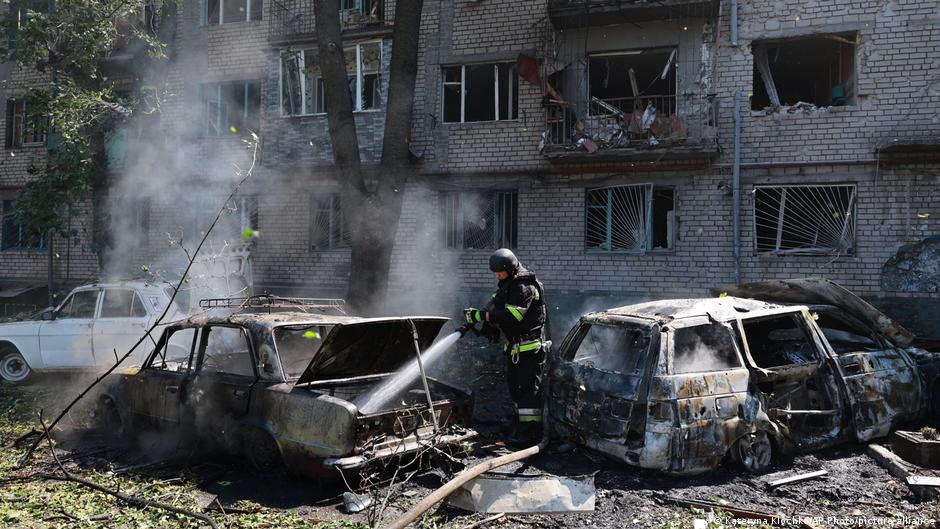
On August 11, Russian armed forces conducted a combined missile and aerial bomb strike on the Ukrainian city of Zaporizhzhia, causing significant casualties and damage to critical infrastructure. According to Ivan Fedorov, head of the Zaporizhzhia regional military administration, five people were killed and twenty others wounded during the attack.
Impact on Civilians and Infrastructure
The city center suffered extensive damage as Russian missiles and air bombs struck industrial facilities, residential homes, non-residential buildings, and a garage cooperative. The strikes also led to widespread power outages and multiple fires, further complicating emergency response efforts. Video footage released by Fedorov shows burning buildings and vehicles, underscoring the severity of the attack.
Throughout the night, air raid alerts were sounded repeatedly in Kyiv amid fears of ballistic weapon use by Russia. An incident at 1:20 a.m. local time involved one reported injury in Kyiv, with medical teams dispatched to the Shevchenkivskyi district, according to the city’s mayor, Vitali Klitschko.
Additionally, in the Poltava region, remnants of a Russian drone fell on the roof of a multi-story building. While no injuries were reported, the event highlights the expanding reach of Russian military activity beyond frontline zones.
"The attacks targeted both industrial infrastructure and civilian areas, causing casualties and disrupting essential services," Ivan Fedorov said in a statement.
Broader Implications for US Business and Politics
This escalation of Russian military operations in Ukraine carries significant implications for Washington and American companies with interests in the region. The increased use of combined missile and drone attacks against urban and industrial targets threatens supply chains and infrastructure critical to both local economies and global markets.
US policymakers face mounting pressure to calibrate their strategic support for Ukraine, balancing military aid and diplomatic efforts amidst rising civilian casualties and infrastructure damage. For American businesses, particularly those in energy, manufacturing, and logistics sectors, the conflict's volatility poses risks to investments and operational continuity.
Moreover, the attacks underscore the persistent threat posed by Russian aggression in Eastern Europe, reinforcing the need for robust US engagement to stabilize the region and protect transatlantic economic and security interests.