Russian Drone Strikes Hit Kyiv Fuel Stations and Ukraine Port Infrastructure
The attacks on Kyiv, Odesa and Zaporizhzhia underscored risks to Ukraine’s logistics network as Washington weighs the war’s costs.
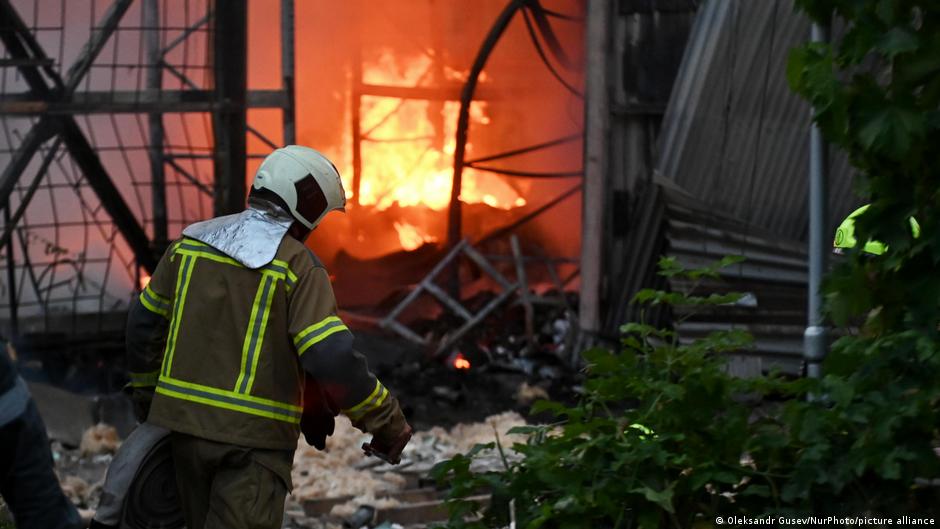
Russian drone strikes hit gas stations and warehouse facilities in Kyiv and targeted civilian infrastructure in the Odesa region, Ukrainian authorities said Tuesday, September 15, in an escalation with direct implications for Ukraine’s logistics system and for the Western-backed effort to keep the country’s economy and military supplied.
Kyiv Mayor Vitali Klitschko said Russian drones struck filling stations in the city’s Darnytskyi and Holosiivskyi districts. Seven people were injured in the Kyiv attacks, he said, with all of the wounded taken to hospitals. Two were in serious condition. Klitschko later said one of those hospitalized had died.
The Kyiv City Military Administration also reported a Russian strike on warehouse premises in the Obolonskyi district in the north of the capital. An air alert was declared in Kyiv and the surrounding region with a yellow danger level.
For U.S. policymakers and companies following Ukraine’s war economy, the reported targets are notable. Fuel stations, warehouses, ports and transport facilities sit at the center of the civilian supply chains that support commerce, humanitarian distribution and military logistics. Attacks on those nodes can raise costs, slow deliveries and complicate the operations of Ukrainian and foreign businesses working in or with the country.
Ports and Logistics Under Pressure
In the Odesa region, Russian forces carried out what local officials described as a massive attack on civilian infrastructure. Oleg Kiper, head of the Odesa Regional Military Administration, said residential buildings, logistics sites, port infrastructure and transport infrastructure came under attack.
“Residential buildings, logistics facilities, port and transport infrastructure were under attack,” Kiper wrote on Telegram, adding that roofs, facades and windows of private homes, along with dozens of garages and vehicles, were damaged.
Odesa is a critical region for Ukraine’s commercial lifelines. The source report did not specify which facilities were hit or the scale of operational disruption, but damage to port and transport infrastructure is closely watched in Washington because it can affect export flows, insurance costs, shipping decisions and the broader resilience of Ukraine’s economy.
For American firms with exposure to agriculture, shipping, energy services, insurance or reconstruction planning, repeated attacks on logistics infrastructure are part of the risk calculus. Even when companies do not operate directly in Ukraine, disruptions can affect commodity routes, maritime risk premiums and the timing of future investment. The attacks also feed into the political debate in Washington over how much military and economic support Ukraine needs to defend infrastructure that is central to its fiscal stability.
Ukrainian authorities also reported a Russian drone attack in the Zaporizhzhia region. Regional officials said an infrastructure facility was hit and that emergency services were working to extinguish a fire at the scene. One person was killed and another was injured, the regional administration said.
Ukraine Says 200 Drones Were Launched
The Ukrainian Air Force said Russia attacked Ukraine using 200 strike drones, including Shahed-type drones, Gerbera drones and Parody-type decoy drones. According to preliminary Ukrainian data, air defense units shot down or suppressed 187 Russian drones. Ukrainian officials reported impacts by aerial attack weapons at seven locations and the fall of intercepted debris in three places.
The scale of the reported drone launch is significant for U.S. defense and political audiences because Ukraine’s ability to intercept low-cost aerial threats remains one of the central tests of Western air defense support. Large drone barrages can force Ukraine to expend interceptor resources, stress detection networks and expose gaps around cities, energy assets, depots and transportation hubs.
The Russian Defense Ministry, which is in the fifth year of its full-scale war against Ukraine, claimed that the strikes targeted “logistics centers and ports of Ukraine, as well as maritime vessels used in the interests of the Armed Forces of Ukraine.” Ukrainian regional officials, by contrast, described damage to civilian infrastructure, residential buildings, private homes, garages and vehicles.
The competing accounts reflect a familiar information pattern in the war, but the practical concern for Washington is more direct: attacks on logistics and port infrastructure can erode Ukraine’s economic base and increase its reliance on foreign support. They also sharpen questions for U.S. lawmakers about air defense deliveries, sanctions enforcement and the cost of allowing Russia to keep striking infrastructure that supports both civilian life and military resilience.
For U.S. businesses, the bottom-line impact is measured less in one day’s damage than in accumulated uncertainty. Each strike on storage sites, fuel distribution points or port infrastructure can complicate due diligence, financing, insurance and contract execution. Companies considering work tied to reconstruction, energy repair, transport services or agricultural exports must price in the possibility that assets far from the front line remain vulnerable to long-range drones.
The latest reported attacks therefore carry significance beyond the immediate casualty figures in Kyiv and Zaporizhzhia. They point to Russia’s continued pressure on Ukraine’s urban and commercial infrastructure and to the persistent challenge facing Ukraine’s partners: sustaining defenses not only at the front, but across the networks that keep the state and its economy functioning.