Russian Drone Strikes Hit Southern Ukraine, Killing Three Civilians
The overnight attacks on Zaporizhzhia and Odesa regions targeted civilian, port and other infrastructure as Washington weighs the business costs of the war.
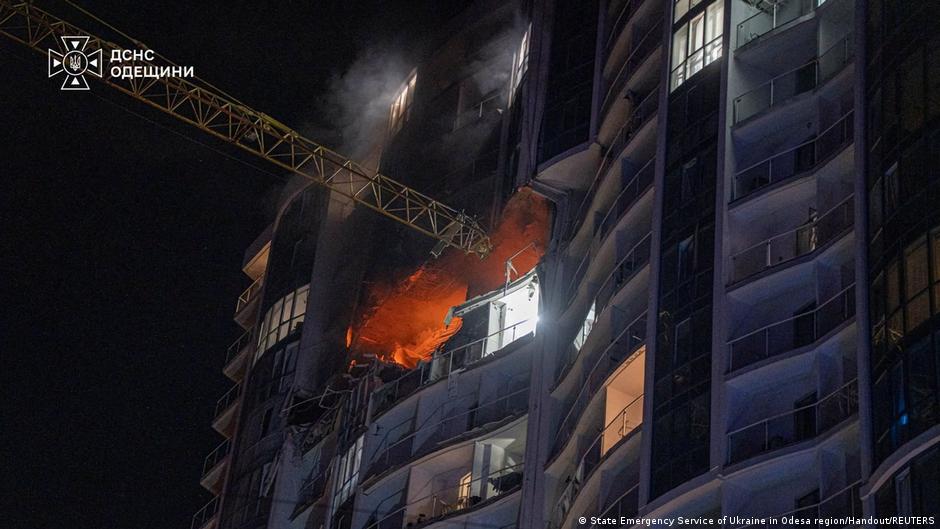
Russian attack drones struck Ukraine’s Zaporizhzhia and Odesa regions overnight on Sunday, September 27, killing at least three civilians and injuring four others, according to preliminary information from local authorities. The attacks hit communities in southern Ukraine and included strikes on port and civilian infrastructure, reinforcing the continuing risks to people, transport routes and commercial assets tied to the war.
In Zaporizhzhia region, acting head of the regional military administration Mykhailo Semykin said Russian forces attacked the settlement of Kamyshevakha and the village of Novotavriyske. Preliminary data cited by the authorities indicated that three civilians were killed and four more were wounded.
One of the deadliest incidents occurred in Novotavriyske, where Russian forces attacked a car traveling through the village. According to Semykin, the vehicle caught fire after it was hit, and a man and a woman died at the scene. In Kamyshevakha, one house was destroyed and several neighboring homes were damaged, local authorities said.
Russia also struck port and civilian infrastructure in the city of Kiliia in Odesa region, the Izmail district administration reported. Preliminary information indicated that no one was injured in that attack. A fire that broke out at the strike site was extinguished by emergency services.
Why the attacks matter in Washington
For Washington, the latest overnight strikes add to the political and economic calculus surrounding continued support for Ukraine. Civilian casualties in Zaporizhzhia and damage to infrastructure in Odesa region feed directly into the policy debate over air defense, sanctions, reconstruction financing and the cost of instability along key commercial corridors.
The Odesa region is especially significant because attacks on port and civilian infrastructure carry implications beyond the immediate battlefield. For U.S. policymakers and companies, southern Ukraine’s ports are part of a broader picture involving food exports, shipping risk, insurance costs and the resilience of trade routes disrupted by Russia’s full-scale war. Even when a strike causes no reported casualties, damage to port-linked infrastructure can affect confidence among carriers, logistics companies and investors assessing exposure to the region.
American businesses are not operating in a vacuum when they evaluate Ukraine-related risk. Agriculture traders, energy firms, defense contractors, insurers, banks and logistics providers all watch the security environment closely. Drone attacks on civilian communities and infrastructure can raise the cost of doing business, delay reconstruction planning and complicate due diligence for firms considering future participation in Ukraine’s recovery.
Preliminary reports from Zaporizhzhia region said three civilians were killed and four others were wounded after Russian drone attacks overnight.
The strikes also underline the continuing demand for air defense and drone countermeasures, areas where U.S. defense companies and policymakers remain central players. Each new attack gives lawmakers another data point in debates over military assistance, procurement capacity and the long-term industrial base needed to sustain Ukraine’s defense. The bottom-line question for Washington is not only how much support to provide, but how quickly systems and supplies can be delivered and replenished.
At the same time, the attacks have a domestic political dimension in the United States. Ukraine policy has become tied to budget negotiations, election-year messaging and broader arguments over America’s role in European security. Civilian deaths in places such as Novotavriyske and damage in areas such as Kiliia are likely to be cited by supporters of continued aid as evidence that Russia’s campaign continues to target communities and infrastructure far from traditional front-line military positions.
Business risk extends beyond the strike sites
The immediate facts reported by local authorities are limited but stark: Russian drones attacked Odesa and Zaporizhzhia regions during the night; in Zaporizhzhia region, three civilians were reported killed and four wounded; in Novotavriyske, a car was hit and caught fire, killing a man and a woman at the scene; in Kamyshevakha, a home was destroyed and nearby houses were damaged; in Kiliia, port and civilian infrastructure were struck, with no preliminary reports of casualties and a fire extinguished by emergency workers.
For U.S. companies, those facts translate into practical concerns. Infrastructure damage can interrupt local supply chains and create uncertainty for contract performance. Civilian casualties can intensify political pressure for new sanctions or tighter enforcement of existing measures. Port-related strikes can alter shipping assumptions and risk premiums even when operations outside the specific strike zone continue.
The southern Ukraine attacks also reinforce the challenge facing investors and reconstruction planners: the war’s economic consequences are not confined to front lines or military targets. Homes, cars, ports and civilian facilities can all become part of the risk landscape. That makes forecasting costs harder for businesses seeking to understand when and how Ukraine’s postwar rebuilding can scale.
For the Biden administration, Congress and U.S. corporate leaders, the latest strikes are another reminder that the conflict remains a live operational risk with humanitarian, diplomatic and financial consequences. The deaths reported in Zaporizhzhia region are first and foremost a civilian tragedy. They also sharpen the policy question at the center of the U.S. debate: how to reduce Russia’s ability to strike Ukrainian communities and infrastructure while managing the budgetary and business implications at home.



