Russian-Flagged Ship Registry Jumps 36% as Shadow Fleet Faces Pressure
A CREA analysis says sanctions pressure is pushing tankers toward Russia’s registry, raising enforcement, insurance and trade risks for U.S. business.
Russia’s ship registry expanded by 36% between January 2025 and June 2026 as diplomatic pressure mounted on Moscow’s so-called shadow fleet, according to an analysis by the Centre for Research on Energy and Clean Air, or CREA, published Friday, September 25.
The findings carry direct implications for Washington’s sanctions strategy and for American businesses exposed to global shipping, energy markets, maritime insurance and compliance. As open registries move to block vessels carrying sanctioned cargo, CREA says the shadow fleet is being forced into a narrowing set of choices: risk detention while operating under false flags, move into the Russian ship registry, shift to more permissive flags, or continue operating without a recognized flag.
Over the period studied, 107 vessels were added to the Russian-flagged registry. The sharpest monthly increase came in December 2025, when 25 new entries were added. CREA described the numbers as a response to changing policies among open registries that are increasingly refusing to admit or retain vessels involved in transporting sanctioned cargo.
For U.S. policymakers, the trend underscores a familiar problem in sanctions enforcement: pressure can close one route while redirecting activity into channels that are harder to police. For U.S. companies, the bottom-line risk is practical. Banks, commodity traders, insurers, ship managers, ports and logistics firms face greater exposure to vessels whose ownership, flag history, cargo record and sanctions status may be difficult to verify quickly.
Flag Changes Become a Sanctions Pressure Point
CREA said Barbados and Palau have fully cleared their registries of sanctioned vessels. Panama, one of the world’s most important shipping registries, reduced the number of such vessels by almost two-thirds from a peak recorded in May 2025. The world’s largest ship registries have also launched a shared database, known as RISC, to combat reflagging and other forms of sanctions evasion, CREA noted.
That tightening appears to be pushing some vessels into Russia’s own registry. By June, 46 vessels that had previously sailed under the flags of the Comoros or Gambia were registered in Russia. Other vessels moved under the flags of Sierra Leone and Equatorial Guinea, while some continued operating without a recognized flag.
The sanctions profile of the ships added to Russia’s registry is significant. CREA said 93 of the 107 vessels had previously been sanctioned, and 90 were under restrictions imposed by more than one jurisdiction. Vessels that carried Russian oil before the first sanctions were introduced changed flags three times more often than before. Sixteen of those vessels also transported Iranian or Venezuelan oil.
That pattern matters in Washington because it links Russia’s maritime sanctions evasion to broader U.S. concerns about sanctioned energy flows involving Iran and Venezuela. It also complicates due diligence for American companies whose exposure may come indirectly through counterparties, financing, insurance arrangements, port services or cargo chains rather than direct dealings with Russian entities.
After switching to the Russian flag, the vessels continued transporting Russian fuel around the world, according to CREA. Oil worth 5.2 billion euros went primarily to China. Ship-to-ship transfer schemes were also used in Egypt and the Red Sea, the analysis said.
For U.S. businesses, such routing is not an abstract geopolitical detail. Ship-to-ship transfers can obscure cargo origin, complicate sanctions screening and increase the risk that a company unknowingly touches restricted trade through documentation, finance, marine services or downstream supply chains. The issue is especially relevant for firms handling energy trading, compliance software, port calls, maritime claims, commodity finance and reinsurance.
Arctic Metagaz Highlights Safety and Liability Risks
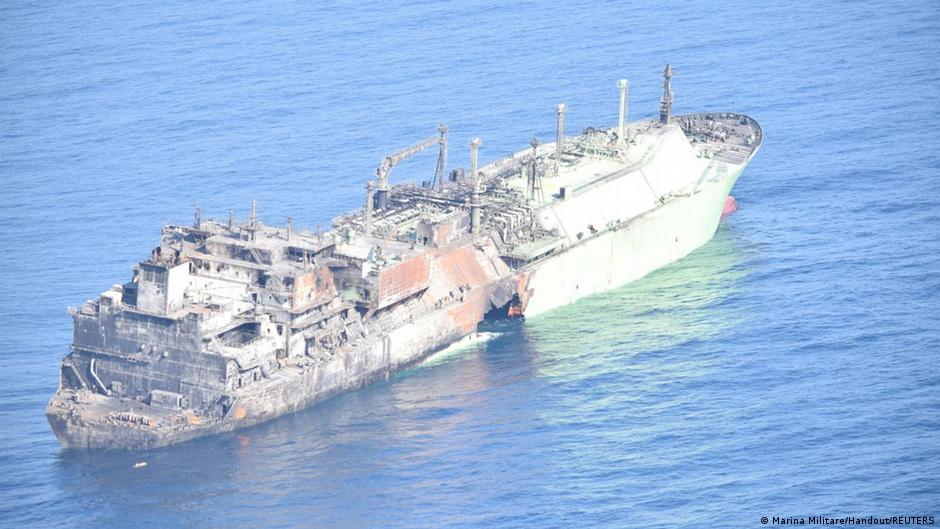
CREA also pointed to a March incident in the Mediterranean involving the Russian liquefied natural gas carrier Arctic Metagaz, which caught fire. Libya, Malta and Italy were forced to manage the crisis on their own.
“The Arctic Metagaz incident showed the Russian flag for what it really is: a shield for dangerous vessels that provides no support in the event of a disaster and leaves coastal states to manage the risks and consequences,” analyst Luke Wickenden said.
The Arctic Metagaz is one of about ten gas carriers used to transport sanctioned LNG from Russia’s Arctic LNG 2 terminal to the port of Beihai on China’s southern coast. In February 2026, the vessel left the port of Murmansk after loading and was probably headed toward Egypt’s Port of Suez, gCaptain reported. The ship has been under U.S. and U.K. sanctions since 2024.
The incident illustrates why the registry shift is not only a sanctions issue but also a safety, liability and environmental risk. If vessels carrying sanctioned energy products operate under a flag that provides limited practical support during emergencies, coastal states and private actors may be left bearing the operational and financial consequences of accidents.
That risk can reverberate through insurance markets and maritime services. U.S.-linked insurers and reinsurers may need to reassess exposure to counterparties connected to opaque fleets. Port operators and shipping customers may face more stringent checks. Energy companies and traders may confront higher compliance costs as sanctioned cargoes continue to move through complex routes.
The findings also pose a policy question for Washington: whether pressure on open registries is enough if sanctioned vessels can consolidate under the Russian flag and continue operating. The emergence of shared tools such as RISC suggests registries are trying to coordinate against evasive flag changes, but CREA’s data indicate that Russia’s own registry has become a growing refuge for ships already under restrictions.
For American companies, the immediate lesson is that sanctions risk now travels with vessel histories as much as with corporate names or cargo descriptions. A ship’s current flag may tell only part of the story. Its previous flags, sanctions record, ship-to-ship transfer activity and links to Russian, Iranian or Venezuelan oil flows may increasingly determine whether a transaction can proceed without legal, financial or reputational exposure.



