Russian Overnight Strikes Hit Kyiv, Odesa and Sumy, Injuring Children
The attacks on Ukrainian cities add pressure on Washington as U.S. policymakers weigh security support and business exposure to the war.
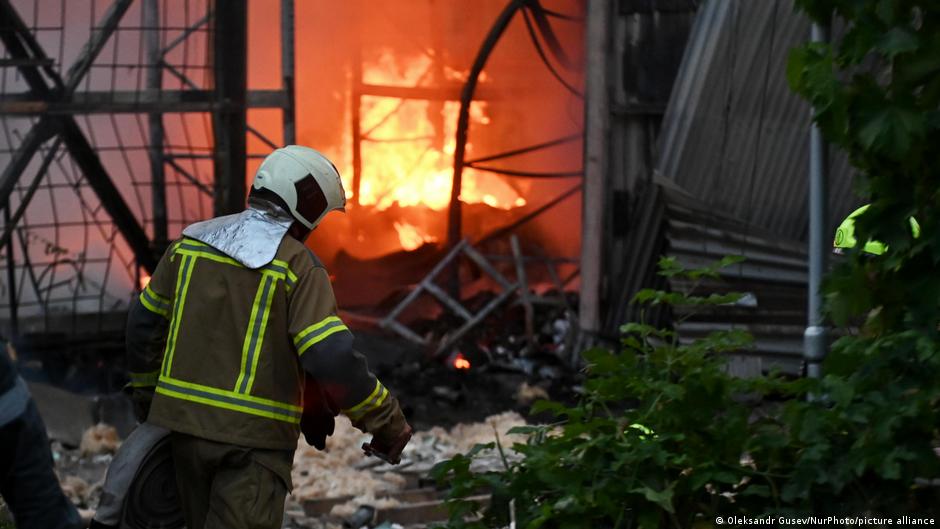
Russia carried out overnight attacks on Kyiv and Odesa, injuring civilians including children, while a separate strike in Sumy killed one person and wounded nine others, Ukrainian officials said. The latest barrage, reported in the early hours of Thursday, September 17, underscored the continued civilian and economic costs of the war as Washington faces renewed questions over military assistance, sanctions enforcement and the risks confronting companies with exposure to Eastern Europe.
In Kyiv, at least 12 people were injured as a result of Russian strikes, according to the city’s mayor, Vitali Klitschko, who reported the toll on Telegram. Among the injured were two children, ages 10 and 12. Klitschko said nine of the wounded were hospitalized.
“Nine of the injured are in hospitals,” Klitschko wrote, according to the report.
The Kyiv City Military Administration earlier said on Telegram that the 10-year-old child injured in the Russian attack was a girl. No deaths were reported in the Kyiv strikes in the source account, but officials described damage across several districts of the Ukrainian capital, including warehouse facilities, residential buildings, an office building and a university building.
Damage Across Kyiv Districts
By morning, Ukrainian officials said warehouse premises had been damaged in Kyiv’s Solomianskyi and Dniprovskyi districts. The city administration also said a residential building was damaged in Dniprovskyi district.
Klitschko separately reported that glazing and the facade of a three-story office building were damaged in the Dniprovskyi district. Windows were blown out in several residential buildings, he said. In the Sviatoshynskyi district, according to Klitschko, a nonresidential building was damaged.
Ukraine’s State Emergency Service said the facade and glazing of a four-story university building in Kyiv’s Holosiivskyi district were also damaged. The name of the institution was not specified. According to the emergency service account, there were no deaths or injuries from that particular incident.
The Ukrainian Air Force had reported overnight on Telegram that missiles were moving toward Kyiv. The report did not provide a full accounting of the weapons used or intercepted, but the scale of damage described by city officials pointed to another night in which civilian infrastructure and nonmilitary urban property were hit or threatened.
Odesa and Sumy Also Report Casualties
In Odesa, the head of the city military administration, Serhiy Lysak, said at least three people were injured in the Russian attack on the city, including a four-year-old child. He said all were receiving necessary medical assistance.
“Everyone is being provided with the necessary medical care,” Lysak said, according to the post cited in the source report.
Lysak had earlier reported that a multi-story building in Odesa was damaged as a result of the Russian attack. The source account did not specify the extent of the damage or whether the building was residential or commercial.
In Sumy, Ukraine’s State Emergency Service said the previous evening that Russian airstrikes killed one person and injured nine others, including two children. The emergency service said guided aerial bombs destroyed and damaged private residential houses, outbuildings and civilian vehicles.
Those casualty figures, taken together, point to the continuing spread of risk across Ukraine’s major population centers and regional cities. Kyiv remains the country’s political and administrative center. Odesa is a major Black Sea port city with broader significance for trade, logistics and food exports. Sumy, near Ukraine’s northeastern border, has been repeatedly exposed to cross-border and aerial attacks.
Why Washington Is Watching
For the United States, the latest Russian strikes carry implications beyond the immediate battlefield. Civilian casualties, particularly those involving children, are likely to reinforce pressure on U.S. lawmakers and administration officials over the scale, speed and conditions of security assistance to Ukraine. They also keep sanctions policy and export-control enforcement near the center of Washington’s Russia debate.
American companies are not direct parties to the conflict, but the war continues to affect business planning through energy markets, shipping risk, insurance costs, cybersecurity exposure and compliance obligations tied to Russia-related sanctions. Attacks on cities such as Kyiv and Odesa can ripple through supply chains and investor sentiment, especially for firms involved in agriculture, logistics, infrastructure, defense technology, energy and financial services.
For U.S. defense contractors, the attacks may strengthen arguments for continued production of air-defense systems, interceptors, drones, munitions and related technologies. For multinational companies, they add another reminder that operations connected to Ukraine, the Black Sea region or Russian counterparties remain politically sensitive and operationally fragile.
The reported damage to warehouses, office property, residential buildings, civilian vehicles and educational infrastructure also illustrates the practical economic burden Ukraine faces in maintaining normal life under repeated attacks. Each strike can create costs in repair, relocation, medical care, emergency response and lost productivity, even when the casualty toll is limited.
The latest overnight strikes therefore land in Washington as both a humanitarian event and a policy signal. They sharpen the debate over how much support the United States should continue to provide, how quickly it can replenish defense stocks, and how American businesses should price the risks of a war that remains capable of disrupting civilian life and commercial activity far from the front line.



