Russian Strike on Kyiv Kills Two as Maternity Hospital Area Is Hit
Kyiv officials said missile debris damaged areas near a maternity hospital and other districts, underscoring risks to Ukraine’s infrastructure and civilian services.
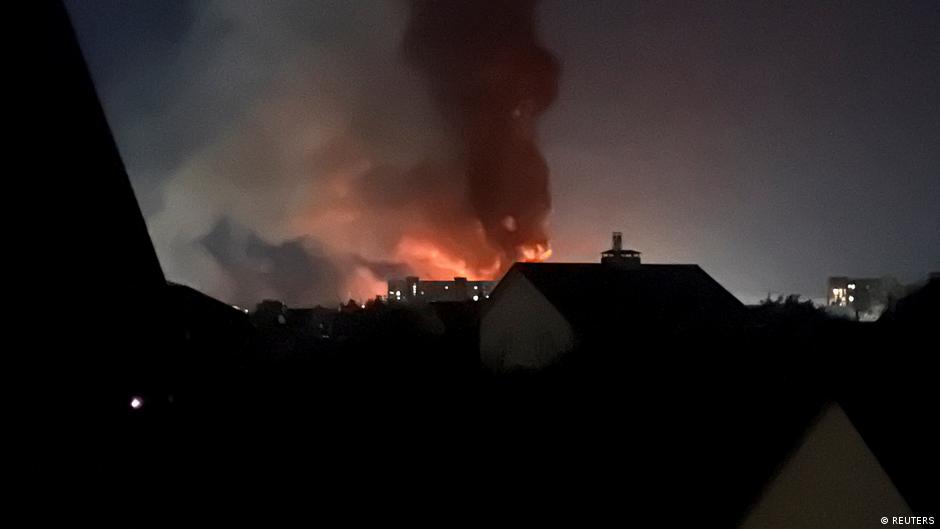
Two people were killed and six others were injured after Russian armed forces struck Kyiv overnight, according to the Ukrainian capital’s mayor, Vitali Klitschko, in an attack that also damaged the area around a maternity hospital and several residential and administrative sites.
Klitschko said in a Telegram post early Thursday, September 24, that two of the injured were in serious condition. The reported strike hit multiple districts of Kyiv, with missile fragments falling on roads, nonresidential property, residential courtyards and the grounds of private homes.
For Washington, the attack lands in a familiar but consequential pattern: Russian strikes on Ukrainian cities continue to place civilian infrastructure, medical services and energy systems under pressure, keeping Ukraine’s resilience at the center of U.S. foreign policy and budget debates. For American companies with exposure to Ukraine, Europe’s energy market, logistics, security services or reconstruction planning, the latest reported damage is another reminder that the war’s business risks remain immediate and operational rather than abstract.
Damage Reported Across Kyiv Districts
According to Klitschko, missile debris fell on a roadway in Kyiv’s Darnytskyi district. In the Solomianskyi and Podilskyi districts, debris landed on the territory of nonresidential development. In the Dniprovskyi district, fragments were found in the courtyard of a 16-story residential building and a private house, as well as on an administrative building.
The mayor said private estate areas were affected, and that one home sustained destruction. In the Podilskyi district, missile debris hit a parking lot near a maternity hospital, triggering a fire involving vehicles. Windows and part of the building’s facade were damaged.
Preliminary information indicated that no one inside the medical facility was injured, Klitschko said. He added that a nearby clinical and diagnostic center also sustained damage.
“All relevant services are at the sites. Operational headquarters are being deployed to provide assistance to people,” Serhiy Lysak wrote, according to the report.
The Russian strike on Kyiv was described by the Ukrainian Telegram channel Insider UA as involving around 20 missiles of different types fired at the capital over 35 minutes. The channel wrote that the main target of the attack was the power sector.
The reported focus on energy infrastructure is significant for U.S. policymakers and companies because Ukraine’s power grid has repeatedly been a central target of wartime strikes. Each attack that threatens electricity generation, distribution or emergency services can raise the cost of stabilization and recovery, increase pressure on allied governments to supply defensive systems, and complicate business continuity planning for firms operating in or near the region.
Odessa Also Reports Damage
The same overnight period brought reports of a Russian attack on Odessa. Serhiy Lysak, head of the Odessa city military administration, said on Telegram that medical and educational institutions were damaged, along with residential buildings.
Lysak said emergency and support services were working at the affected locations and that operational headquarters were being set up to assist residents. The report did not provide casualty figures for Odessa.
The strikes on Kyiv and Odessa add to the broader wartime challenge confronting Ukraine’s civilian administration: keeping hospitals, schools, homes and utility networks functioning while absorbing continued attacks. The reported damage near a maternity hospital in Kyiv is likely to sharpen attention in Western capitals because attacks affecting medical facilities carry strong political resonance and often become focal points in debates over air defense and sanctions policy.
For U.S. businesses, the bottom-line implications run through several channels. Companies involved in energy equipment, construction materials, engineering services, cybersecurity, logistics and insurance continue to face a market where demand for recovery and protection is substantial, but risk levels remain high. Damage to transport routes, utility networks and public facilities can affect delivery schedules, project timelines and the pricing of political risk coverage.
American multinationals with European supply chains also monitor such attacks because Ukraine’s stability is tied to regional energy planning, shipping patterns and investor confidence. Even when a company has no direct operations in Kyiv or Odessa, continued strikes can influence procurement costs, compliance reviews and contingency planning across Eastern Europe.
In Washington, the latest reports are likely to feed into ongoing arguments over the scale and timing of support for Ukraine. Civilian casualties, damage to medical-adjacent infrastructure and claims that energy assets were targeted are all issues that tend to shape congressional scrutiny, executive-branch messaging and pressure for allied coordination.
Klitschko’s account emphasized that the immediate aftermath was still being assessed, including the condition of the injured and the extent of damage across Kyiv’s districts. The preliminary finding that no one was hurt inside the maternity hospital may limit the human toll at that specific site, but the broader strike still left two dead, six injured and multiple urban areas damaged.
As Ukraine enters another cycle of emergency repairs and damage assessment, the overnight attacks demonstrate how civilian life and critical infrastructure remain intertwined on the front line of the war’s economic consequences. For U.S. officials and companies alike, the strategic question is not only how long Ukraine can endure such attacks, but how much capital, equipment and political support will be needed to keep basic systems operating while the war continues.