Russian Strikes Kill Four in Ukraine as Kyiv Presses for Sustained Support
The latest attacks on Kherson, Odesa, Sumy and Kyiv region underscore the civilian and infrastructure costs shaping Washington’s Ukraine debate.
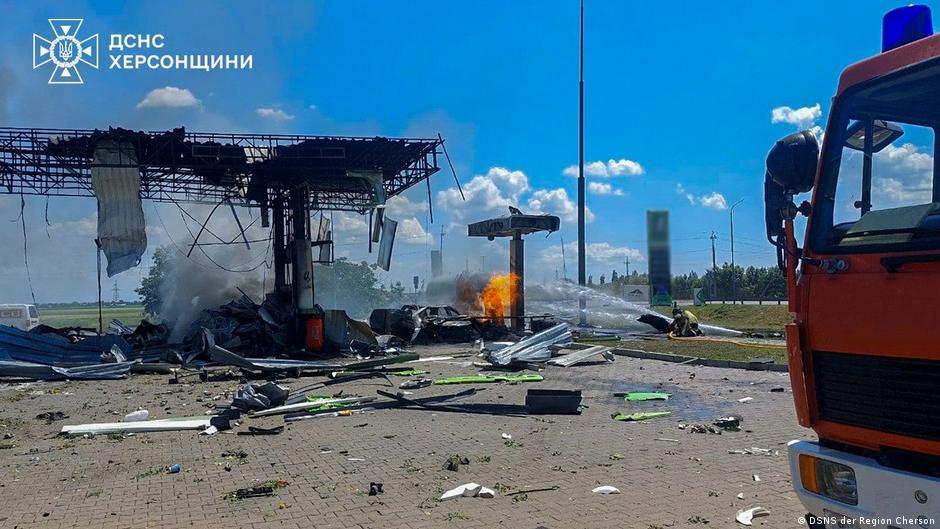
Four people were killed in Ukraine after a new wave of Russian attacks hit several regions, adding to the human and infrastructure toll that continues to shape the political debate in Washington and the risk calculations of U.S. companies tied to Ukraine’s reconstruction, logistics and defense supply chains.
In the Kherson region, two people died after a Russian drone strike in the settlement of Tekstylne on Friday evening, September 18, according to Oleksandr Prokudin, head of the regional military administration. Prokudin said the attack took place at around 6 p.m.
“As a result of the enemy drone strike, two men sustained injuries incompatible with life,” Prokudin wrote on Telegram.
Throughout the evening, Prokudin repeatedly reported air alerts in the region, including warnings linked to possible Russian launches of guided aerial bombs, known by the Ukrainian acronym KAB. On the same day, one of Kherson’s city hospitals was also attacked when a drone dropped explosives on the grounds of the facility. No casualties were reported in that incident.
Odesa Hit Twice at Same Building
Ukraine’s State Emergency Service in the Odesa region reported the aftermath of additional Russian attacks on September 18. One strike hit an 11-story administrative building, setting off a fire. After some time, while emergency crews were working at the scene, the same building was attacked again.
Officials reported 10 people injured in the Odesa incident, including two rescuers. The double strike on a site where emergency personnel were already responding adds to concerns over the operational risks facing first responders and civilian infrastructure crews in Ukrainian cities far from the front line.
Odesa was attacked again overnight into September 19. After an air alert was declared in the city and reports circulated of incoming small Russian missiles, local residents posted footage on social media showing a fire that had broken out in a residential building within the city. Initial details about that incident were not provided.
For U.S. policymakers, repeated attacks on Odesa carry significance beyond the immediate local damage. The port city has been central to Ukraine’s economy and to broader discussions about Black Sea security, export flows and the durability of civilian infrastructure under Russian pressure. Each attack reinforces the practical question facing Washington: how long Ukraine’s cities, emergency services and logistics networks can withstand persistent strikes without continued outside assistance.
Deaths Reported in Sumy, Warehouses Hit Near Kyiv
Russian strikes also hit the city of Sumy on the evening of September 18. One munition struck a multi-story residential building, with reports indicating it was a guided aerial bomb. The blast damaged several apartments, and the building partially collapsed.
According to preliminary data from local authorities, at least two people were killed in the Sumy strike and seven others were injured. The attack adds to the pattern of damage to residential areas that has kept civilian protection at the center of Ukraine’s requests for air defense support.
The military administration of the Kyiv region also reported damage from Russian strikes on the evening of September 18. Tymur Tkachenko, the head of the regional military administration, said two men were injured in the Bucha district after warehouse facilities were struck. Warehouse facilities were also damaged in the Boryspil district of the region.
Those warehouse strikes are especially relevant for businesses watching Ukraine’s war economy. Storage sites, distribution facilities and transport-linked infrastructure are part of the operating environment for humanitarian suppliers, contractors, exporters and companies preparing for eventual reconstruction work. Damage in the Kyiv region, close to the country’s administrative and commercial center, highlights how the war’s risks extend beyond frontline communities.
The latest attacks come as Ukraine’s defense needs remain a recurring issue in U.S. politics. Although the source reports did not identify specific weapons systems used in every strike, they described drone attacks, guided aerial bombs and reports of small missiles. That mix reflects the range of threats Ukrainian authorities say they face across different regions, from Kherson in the south to Sumy in the northeast, Odesa on the Black Sea and districts around Kyiv.
For American companies, the bottom-line impact is indirect but increasingly visible. Defense manufacturers, logistics providers, energy and infrastructure firms, insurers and agricultural businesses all follow Ukraine’s security picture because it shapes procurement decisions, investment timelines and risk premiums. Attacks on administrative buildings, residential blocks, hospitals and warehouses complicate any near-term assumptions about stable operations or predictable reconstruction demand.
For Washington, the civilian deaths in Kherson and Sumy, the injuries in Odesa and Kyiv region, and the reported damage to public, residential and warehouse infrastructure add fresh detail to the argument that Ukraine’s air-defense and emergency-response capacity remains under pressure. The political question for U.S. leaders is not only how to respond to each incident, but how to assess the cumulative cost of allowing Russia’s strike campaign to continue degrading Ukraine’s cities and economic base.



