Russian Strikes on Sumy and Mykolaiv Kill Civilians, Hit Port Assets
The attacks on a shopping center parking area and port infrastructure underscore the continuing risks facing Ukraine’s civilian economy.
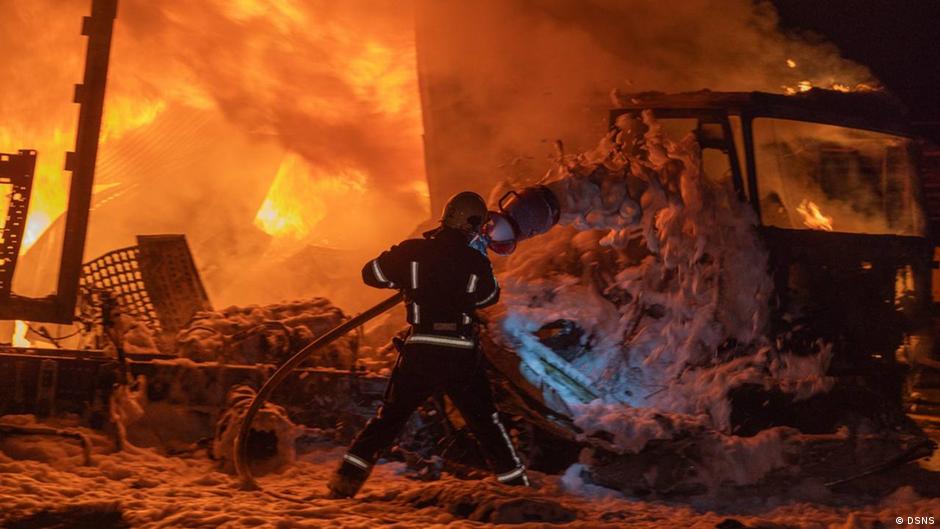
Russian forces struck the northeastern Ukrainian city of Sumy and continued attacks on the southern port city of Mykolaiv, killing civilians, injuring dozens and damaging infrastructure central to Ukraine’s wartime economy, according to regional officials and emergency authorities cited in the source report.
The Sumy strike hit a parking area near the Manufaktura shopping center on the evening of Wednesday, September 9. Oleh Hryhorov, head of the local regional military administration, said two 21-year-olds, a young man and a young woman, were killed. Preliminary information indicated that about 20 other people were injured.
Officials said two men and one woman were in serious condition, while another Sumy resident was in extremely serious condition. Teenagers were among the injured. Rescue workers and municipal services were operating at the site after the strike, and regional authorities warned that the threat of further attacks remained.
Regional authorities said the threat of repeated attacks in Sumy region remained in force after the strike.
For Washington, the latest attacks reinforce a central question in U.S. policy toward Ukraine: how to sustain military and economic support when Russia continues to target civilian areas and the infrastructure that keeps Ukraine’s economy functioning. While the direct casualties are Ukrainian, the broader effects reach supply chains, insurers, logistics firms and companies that depend on stability in Black Sea-adjacent trade routes.
Port Damage Adds Business Risk
In Mykolaiv, Russian forces continued strikes over the course of September 9. Regional military administration chief Heorhiy Reshetilov said port infrastructure was damaged, two people were killed and at least 12 were injured. Among the wounded was a one-year-old child.
Ukraine’s State Emergency Service said some of the Russian strikes hit warehouse facilities where vegetables were stored, as well as a post office branch. The combination of damage to port assets, warehouses and postal infrastructure illustrates the way military attacks can disrupt both export-oriented logistics and everyday commercial networks.
Mykolaiv has strategic and economic significance because of its role in southern Ukraine’s port and industrial systems. Damage there matters not only for local residents and Ukrainian businesses, but also for foreign companies assessing operational exposure in the region. For U.S. businesses, the bottom-line concern is not limited to immediate physical destruction. It includes higher transport costs, greater insurance uncertainty, delayed shipments, added compliance burdens and the risk that commercial activity tied to Ukraine will face repeated interruptions.
The reported damage to vegetable storage facilities points to pressure on food logistics inside Ukraine. Even where goods are not destined for American consumers, disruption in agricultural storage and movement can influence regional markets and humanitarian supply planning. The strike on a post office branch also signals risks to civilian distribution systems that are necessary for payments, documents, parcels and small-business activity.
The attacks followed an earlier large-scale Russian assault overnight into September 9, when drones and ballistic missiles struck the region. Authorities said port and civilian infrastructure, as well as residential buildings, were damaged in that wave of attacks. Officials had reported one woman killed and four people injured.
Washington’s Policy Stakes
The facts reported by Ukrainian regional and emergency officials are likely to feed into ongoing U.S. political debate over the scale, duration and terms of support for Kyiv. Civilian casualties, damage to ports and attacks on ordinary commercial facilities are central to arguments from Ukraine’s backers that air defense and broader security assistance remain necessary to protect both lives and economic capacity.
At the same time, U.S. lawmakers and business groups are likely to view the damage through a cost-and-risk lens. American companies with exposure to logistics, commodities, insurance, reconstruction planning, technology services or humanitarian contracting must account for a conflict environment in which civilian and commercial infrastructure can be hit repeatedly. That risk complicates investment decisions and increases the value of government-backed guarantees, sanctions clarity and coordinated allied policy.
The Sumy attack, which struck near a shopping center, highlights the danger to civilian spaces far from the front-line image often associated with the war. The Mykolaiv attacks, by contrast, show the economic dimension of the same campaign: ports, warehouses and delivery networks remain vulnerable. Together, the incidents point to a pattern with both humanitarian and commercial consequences.
No new U.S. policy response was included in the source material. But the reported strikes arrive in a context where Washington’s choices on defense support, sanctions enforcement and reconstruction finance carry direct implications for Ukraine’s ability to keep businesses operating under fire. For American firms, the takeaway is clear: the war’s infrastructure risk remains active, and any planning tied to Ukraine or surrounding trade corridors must treat security disruption as a continuing business variable.
Ukrainian emergency and regional authorities said rescue and municipal teams responded after the Sumy strike, while officials in both affected regions reported deaths, injuries and damage to civilian or economic infrastructure. The threat of further attacks in Sumy region, according to local authorities, remained in place.