Schröder’s Russia Retail Role Draws German Fire and Business Risk Questions
The former German chancellor’s post at Hyperglobus has reignited scrutiny of Western corporate exposure in Russia and political ties to Moscow.
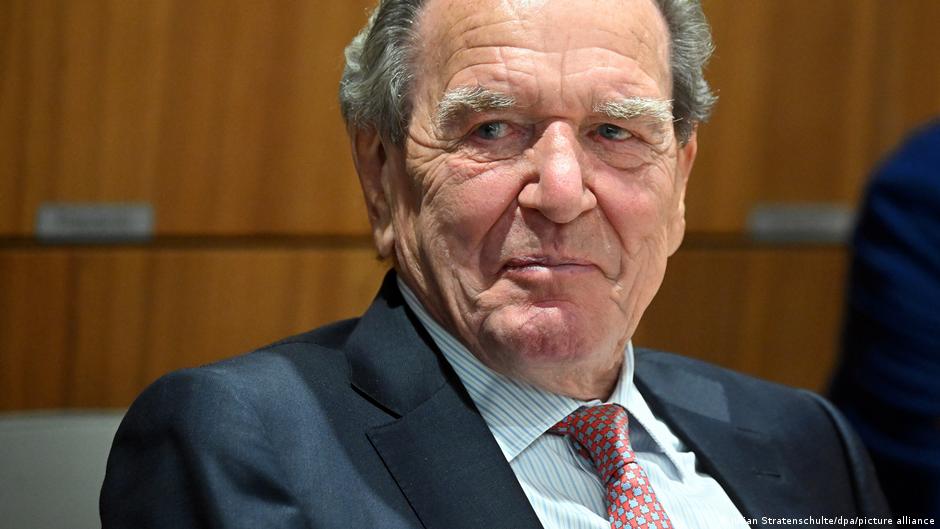
Former German Chancellor Gerhard Schröder has become a member of the supervisory board of Hyperglobus, the company operating the Globus hypermarket network in Russia, prompting sharp criticism from German politicians and economists and raising fresh questions about Western business exposure in the Russian market.
The appointment, confirmed by the company’s press service to DW on October 2, places Schröder in a leadership role at a retailer connected to one of Germany’s best-known hypermarket brands. According to the confirmation, Schröder will be involved in the retailer’s “strategic development.” For Washington and U.S. businesses, the controversy is less about German retail alone than about the broader risks facing companies, investors and executives whose assets or partnerships remain linked to Russia.
Schröder’s new role comes as Russia continues to test the limits of foreign corporate control over local operations. German economist Janis Kluge, head of a research department at the Berlin-based German Institute for International and Security Affairs, argued that bringing Schröder into Hyperglobus management amounts to the company buying “lifetime insurance” against the kind of action that affected German retailer Metro, whose Russian assets were transferred into temporary administration by decree of Vladimir Putin.
“Schröder is once again monetizing his access to Putin,” Kluge wrote on X.
That assessment speaks directly to a concern familiar to U.S. multinationals: in Russia, political access can become a form of risk management, and legal ownership may offer limited protection when the Kremlin decides to intervene. For American firms, lenders, insurers and compliance departments, the Hyperglobus case is another reminder that Russia-linked operations can carry reputational, political and asset-control risks long after formal restructuring or separation.
German Criticism Puts Russia Ties Back in Focus
Several German public figures reacted angrily to Schröder’s appointment. On Saturday evening, October 3, Roderich Kiesewetter, a Bundestag member and foreign policy expert from the governing Christian Democratic Union, called Schröder’s new post a “betrayal of Europe and his own country.”
Kiesewetter also suggested that public gestures toward Schröder now carry political meaning. “Anyone who publicly and demonstratively shakes Schröder’s hand thereby wants to demonstrate their position,” he wrote on X.
Thomas Jäger, a professor of political science at the University of Cologne, described the appointment as another lobbying assignment for the former chancellor. “Schröder has a new lobbying order. In Russia. Where else?” Jäger wrote on X. He also asked whether German President Frank-Walter Steinmeier knew about the matter when he greeted Schröder several days earlier.
The references to a handshake appeared to point to the September 28 ceremony marking the 75th anniversary of Germany’s Federal Constitutional Court in Karlsruhe. Steinmeier attended the event and, upon entering the hall, shook hands with Schröder, who was seated in the front row as an honorary guest.
For U.S. political observers, the episode illustrates how Russia-related business appointments can spill into domestic politics among Washington’s allies. Germany remains central to U.S. strategy on sanctions, Ukraine policy, energy security and NATO coordination. When a former German leader takes a senior role connected to Russian operations, the debate can quickly move beyond corporate governance into questions of alliance discipline and political signaling.
Corporate Separation Does Not End the Debate
Globus Gruppe has emphasized that its Russian business has been legally and organizationally independent since January 1, 2025. Isabel del Alcazar von Buchwald, a spokeswoman for Globus Gruppe, said as much in a comment to DW. At the same time, the Russian Hyperglobus shareholders are the same German businesspeople as those behind the rest of the group.
That distinction matters for companies trying to manage Russia risk. Legal separation may reduce some operational exposure, but it does not necessarily eliminate reputational scrutiny or political questions, particularly when ownership links remain visible. U.S. businesses evaluating counterparties with Russia-linked histories may draw a similar lesson: corporate architecture alone may not settle public or regulatory concerns.
Jan Schnellenbach, a German economist and professor of microeconomics at Brandenburg University of Technology in Cottbus, accused Schröder of “shamelessness.” He referred to earlier claims that the former chancellor was too ill to appear before a German court. “Were we not told that he was too sick to stand before a German court? Do Russian money have healing powers?” Schnellenbach wrote on X.
Schröder has long been viewed by many observers in Germany as a lobbyist for Russian companies. He previously worked in the management of Rosneft and in the operator company for Nord Stream. Those past roles have made him one of the most prominent European political figures associated with Russian corporate interests, especially in debates over energy policy and Moscow’s influence in Europe.
The Hyperglobus appointment therefore arrives with a lengthy political backstory. It is not simply a board seat at a retailer, but another example of how Russia-linked appointments involving former senior officials can become tests of public trust, corporate judgment and Western unity.
Bottom-Line Impact for U.S. Companies
For American companies, the immediate financial exposure may be indirect, but the strategic implications are concrete. The case underscores the importance of due diligence on beneficial ownership, board composition, political exposure and Russia-linked assets, particularly where European partners are involved. Companies with global supply chains, financing relationships or joint ventures may face questions from shareholders, regulators and customers if counterparties appear to rely on politically connected figures to protect assets in Russia.
The controversy also highlights a broader reality for Washington policymakers: sanctions and political pressure do not operate in a vacuum. Western companies and former officials can still occupy gray zones in which formal legality, public perception and geopolitical risk diverge. The appointment of Schröder at Hyperglobus shows how a corporate governance decision in Russia can quickly become a signal watched across Europe and the United States.
As long as Russia remains a high-risk market for Western capital, board appointments tied to Kremlin access will attract scrutiny. For businesses, the lesson is straightforward: Russia exposure is no longer measured only by revenue, stores or assets. It is also measured by the political relationships that appear to protect them.



