South Korea Threatens Ukraine With Further Measures in POW Disclosure Dispute
The clash over North Korean prisoners tests a key U.S. partner’s Ukraine policy as Washington presses allies to share more of the war burden.
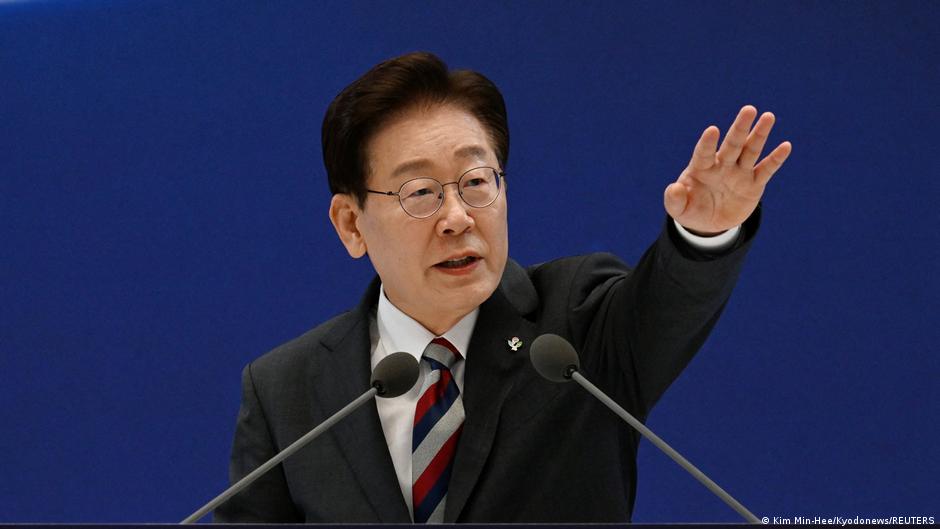
South Korean President Lee Jae Myung has warned Ukraine that Seoul will take “further measures” if Kyiv refuses to publicly acknowledge what South Korea says was a confidentiality agreement over the transfer of two captured North Korean soldiers and does not apologize for disclosing the information.
Lee did not specify what those measures would be. But the dispute, unfolding between two U.S.-aligned governments, lands directly in Washington’s strategic field of vision: South Korea is a major American treaty ally, Ukraine remains heavily dependent on Western support, and North Korea’s role in Russia’s war has become an increasingly urgent concern for U.S. policymakers and defense companies tracking demand across Europe and Asia.
“If acknowledgment of the facts and a public apology continue to be rejected, we will take further measures,” Lee wrote on X overnight Friday, October 2.
Lee said the issue concerned “the honor of the Korean people and state,” adding that Seoul could not ignore it. He also accused Kyiv of making South Korea look like “a liar.”
The dispute centers on Ukrainian President Volodymyr Zelensky’s statement at the United Nations General Assembly in late September that Kyiv had handed two North Korean prisoners of war to South Korea. Seoul sharply criticized the disclosure, saying it could endanger the prisoners’ relatives in North Korea and harm relations between Seoul and Pyongyang.
For U.S. officials, the row complicates an already delicate balancing act. Washington has urged allies to sustain pressure on Russia while also containing North Korea’s expanding military cooperation with Moscow. South Korea has so far provided Ukraine mainly with non-lethal military equipment, including demining gear, while some Western countries have recently pressed Seoul to begin supplying lethal weapons as well, according to Reuters.
Washington Watches an Ally’s Red Line
Ukraine’s Foreign Minister Andrii Sybiha said Kyiv is interested in resolving the diplomatic dispute quickly and continuing cooperation with Seoul. Speaking with journalists in Kyiv hours before Lee’s post, Sybiha sought to lower the temperature, saying he would not want to call the matter an incident.
“Let’s say it is a diplomatic misunderstanding,” Sybiha said, according to RBC-Ukraine.
Sybiha said that in recent days he had personally spoken every day with his South Korean counterpart. He emphasized that South Korea is an important country for Ukraine and said he hoped for continued momentum, cooperation and concrete results between the two governments.
That language matters for Washington because South Korea sits at the intersection of several U.S. priorities: the defense of the Korean Peninsula, sanctions pressure on North Korea, support for Ukraine, and the stability of global defense supply chains. A breakdown in trust between Kyiv and Seoul could make it harder for the United States and European governments to persuade South Korea to expand military support for Ukraine.
South Korea’s first vice foreign minister, Park Yoon-joo, previously said Ukraine’s denial of the confidentiality agreement undermined mutual trust and demanded official explanations and an apology from Kyiv. Ukrainian presidential communications adviser Dmytro Lytvyn said there had been no agreement between Kyiv and Seoul that information about the fate of the prisoners of war could not be disclosed. South Korea’s presidential office expressed “deep regret” over those statements.
Yonhap reported on September 28 that South Korea’s Foreign Ministry summoned Ukraine’s ambassador over Kyiv’s disclosure of information about the North Korean prisoners of war. AFP reported on September 30, citing South Korean lawmaker Youn Kun-young, that both prisoners had arrived in South Korea in mid-September. After questioning and a security review, Seoul authorities are expected to decide whether to grant them protection and begin a resettlement process.
Business Stakes for Defense and Supply Chains
The immediate dispute is diplomatic, but the commercial stakes are real for U.S. defense contractors and multinational companies operating across allied supply chains. South Korea is a major arms producer and an increasingly important defense exporter. Any shift in Seoul’s willingness to support Ukraine with lethal systems could influence procurement decisions, ammunition flows and industrial planning across NATO and partner countries.
American companies are also watching how North Korea’s involvement in Russia’s war changes demand for air defense, intelligence, surveillance, logistics, cybersecurity and munitions. Zelensky wrote on social media last week that, according to his information, about 8,000 North Korean troops are currently in Russia and another 10,000 are preparing to be sent there for the war against Ukraine.
If those figures shape allied threat assessments, they could strengthen arguments in Washington for deeper coordination among the United States, South Korea, Japan and European partners. At the same time, Seoul’s anger over the prisoner disclosure shows how quickly sensitive intelligence and humanitarian issues can disrupt coalition management.
Domestic politics in South Korea may also constrain the government’s next steps. Shin Yul, a political science professor at Myongji University, told AFP that Seoul’s handling of the diplomatic conflict with Ukraine “could prove problematic” in the context of South Korean domestic politics, given the current administration’s restrained position toward its nuclear-armed northern neighbor.
That restraint is significant for Washington. The United States may want South Korea to play a larger role in the Ukraine war effort, but Seoul must weigh that against the risk of escalation with Pyongyang and the potential exposure of North Korean defectors, prisoners or relatives left behind.
For now, Lee’s threat of unspecified “further measures” raises the pressure on Kyiv to find a face-saving settlement. For U.S. business and policy audiences, the bottom line is that the dispute could affect more than diplomatic optics. It may influence whether South Korea remains a cautious provider of non-lethal aid or moves closer to the more direct military support that some Western governments have sought.